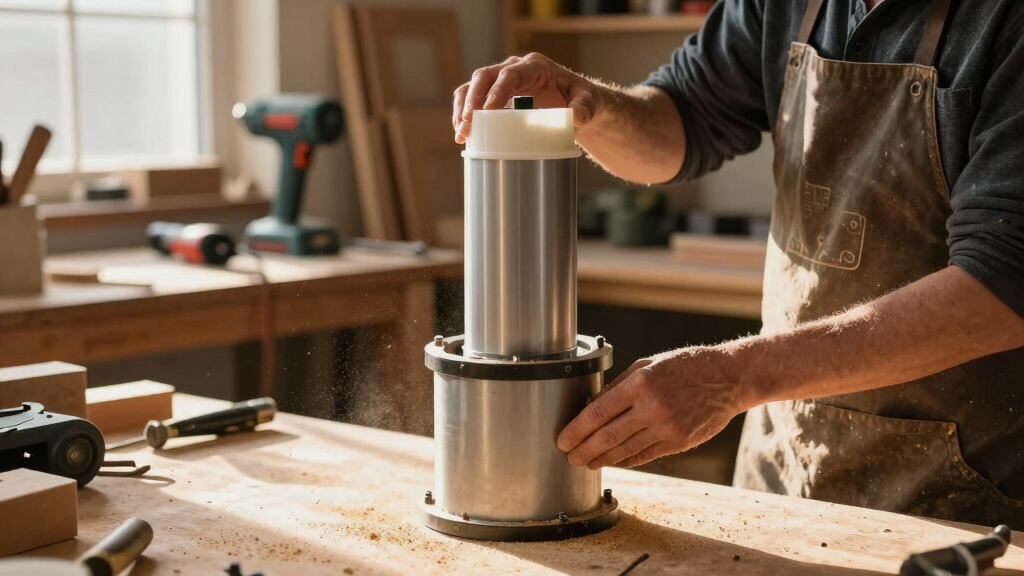

Finding the best dust collector for woodworking depends on your shop size, budget, and dust collection needs. The WEN DC1300 stands out as the overall best due to its high airflow and large capacity, ideal for serious workshops. The Rockler Dust Right 650 CFM offers a streamlined wall-mount design perfect for smaller spaces, while the POWERTEC 1 HP Dust Collector balances affordability and performance. Choosing the right model often involves tradeoffs between power, capacity, and ease of installation. Continue reading for a detailed breakdown of each option and how they compare to meet your woodworking dust collection needs.
Complete the kit


Key Takeaways
- High CFM ratings significantly improve dust extraction, especially in larger shops.
- Larger collection capacities reduce downtime but often come with higher price tags and space needs.
- Wall-mounted models save space but may have limited power compared to standalone units.
- Mobile bases add flexibility but can increase overall cost and complexity.
- Micron rating of collection bags impacts air cleanliness; lower microns mean better filtration.


| dust collector for woodworking | Motor Power |
|---|---|
| WEN Woodworking Dust Collector | 5.7 amps |
| Rockler Dust Right 650 CFM Wal | — |
| WEN DC1300 1,300 CFM 14-Amp 5- | — |
| WEN Woodworking Dust Collector | 7.4 amps |
| VEVOR Wall Mount Dust Collecto | 1 HP |
| POWERTEC 1 HP Dust Collector w | 1 HP |
More Details on Our Top Picks
WEN Woodworking Dust Collector, 5.7-Amp Motor, 12-Gallon Capacity, Mobile Base, Wall Mount Option
This WEN model stands out for combining portability with flexible installation options, making it ideal for small to medium workshops where space is limited. Its 5.7-amp motor and 660 CFM airflow provide solid dust collection performance, comparable to larger units like the WEN DC1300 but in a more compact form. The lockable swivel casters and wall-mount feature allow for easy storage and mobility, though it sacrifices some capacity and power found in bigger models. Regular filter maintenance is necessary to keep performance high, and the absence of variable speed limits control options. Overall, this pick is perfect for hobbyists or DIYers who need a reliable, space-efficient dust collector without the bulk of industrial units.
Pros:- Powerful 5.7-amp motor with high airflow for effective dust collection
- Compact design with lockable swivel casters for mobility
- Versatile setup options including wall mount
Cons:- Limited capacity compared to larger models like the WEN DC1300
- Requires regular filter maintenance to sustain performance
- No variable speed control for fine-tuning airflow
Best for: Small woodworking shops or hobbyists needing a portable, versatile dust collector
Not ideal for: Heavy-duty professional shops that require high airflow and large capacity for continuous use
- Motor Power:5.7 amps
- Capacity:12 gallons
- Airflow:660 CFM
- Dust Port Size:4 inches
- Dimensions:34.25 x 13 x 14.2 inches
- Weight:17 pounds
- Filter Type:Zippered collection bag, 5-micron
Our verdict“This dust collector suits hobbyists and small shops seeking flexibility and ease of use without high capacity demands.”
Rockler Dust Right 650 CFM Wall Mount Dust Collector for Woodworking Shops
This wall-mounted unit excels in small workshops where space is at a premium, supporting multiple tools simultaneously with a 650 CFM airflow. Its design minimizes floor clutter, making it ideal for shops with limited footprint. Compared to the WEN Dust Collector, it offers less airflow but supports cleaner organization and easier maintenance via a clear bag window and zipper access. However, it isn’t suitable for plumbed-in, multi-branch systems, and its noise level of 80-85 dB might be loud for some users. This model is best for hobbyists or small commercial shops that need a reliable, space-efficient dust extractor supporting multiple tools.
Pros:- Space-saving wall-mounted design
- Supports multiple tools simultaneously
- Easy to maintain with clear bag window and zipper
Cons:- Not recommended for plumbed-in systems or extensive ductwork
- Decibel level may be loud in quiet environments
- Upgrade filters entail additional costs
Best for: Small workshops needing space-efficient, multi-tool dust collection
Not ideal for: Large professional shops requiring high airflow and extensive ducting options
- Flow Rate:650 CFM
- Bag Capacity:15 Gallons
- Decibel Rating:80-85 dB at 3m
- Amps:12
- Volts:110
- Height:48 inches
- Filter Type:Bag
Our verdict“Ideal for small shops prioritizing space efficiency over maximum airflow capacity.”
WEN DC1300 1,300 CFM 14-Amp 5-Micron Woodworking Dust Collector with 50-Gallon Collection Bag and Mobile Base
This WEN model delivers impressive airflow—up to 1,300 CFM—making it suitable for large workshops with multiple power tools. Its 50-gallon collection bag reduces the frequency of emptying, a clear advantage over smaller capacity units like the WEN Dust Collector, especially in demanding environments. The dual inlets allow for connecting several tools simultaneously, and the mobile base with swivel casters facilitates easy repositioning around a busy shop. The tradeoff involves its size and weight, which can make placement and mobility more challenging in smaller spaces. This unit is best suited for professional or very active woodworking shops that need continuous, high-capacity dust collection.
Pros:- High airflow capacity of 1,300 CFM for effective dust removal
- Large 50-gallon bag minimizes emptying interruptions
- Dual 4-inch inlets support multiple tool connections
- Mobile base with swivel casters for easy relocation
Cons:- Single-speed operation limits airflow control
- Requires significant space for setup and movement
- Power cord length not specified, possibly limiting placement options
Best for: Large woodworking shops or professional environments with multiple tools
Not ideal for: Small hobbyist shops that lack space for a large, heavy unit
- Capacity:50 gallons
- Maximum Suction:1300 CFM
- Power:14 amps
- Number of Inlets:2
- Inlet Size:4 inches
- Wheels:4 swivel casters
- Color:Black
Our verdict“This model is ideal for busy shops needing high-capacity, continuous dust collection with maximum airflow.”
WEN Woodworking Dust Collector with 7.4-Amp Motor and 15-Gallon Bag
This WEN model balances power and capacity, featuring a 7.4-amp motor and a 15-gallon bag, making it suitable for dedicated woodworking spaces that need more than basic dust collection. Its 600 CFM airflow is adequate for most typical shop tasks, outperforming smaller, less powerful units like the Dust Right wall mount. The inclusion of a 9-inch impeller enhances airflow efficiency, and the mobility options—swivel casters and optional wall mounting—add flexibility. However, it can be heavy and requires wall mounting for optimal performance, which might not suit all users. It fits best in shops that want reliable, moderate-capacity dust collection without the bulk of larger units like the DC1300.
Pros:- Powerful 7.4-amp motor with high airflow
- Large 15-gallon collection bag reduces emptying frequency
- Mobility with swivel casters and wall-mount options
- Includes onboard handle for transport
Cons:- May be heavy for some users to move regularly
- Requires wall mounting for best operation
- Limited to woodworking dust collection
Best for: Mid-size woodworking shops or serious hobbyists with space for a dedicated unit
Not ideal for: Small workshops or users who prefer completely portable, lightweight options
- Motor Power:7.4 amps
- Impeller Size:9 inches
- Air Flow:600 CFM
- Dust Port:4 inches
- Collection Bag Capacity:15 gallons
- Size:43.3 x 17.7 x 20.1 inches
- Warranty:2 years
Our verdict“This dust collector hits a sweet spot for shops needing more power and capacity without the size of industrial units.”
VEVOR Wall Mount Dust Collector 1 HP, 560 CFM with 2.5 Micron Bag for Woodworking
This VEVOR wall-mounted unit provides a solid balance of airflow and filtration, supporting fine dust removal with a 2.5-micron bag. Its 560 CFM capacity and 1 HP motor make it suitable for capturing both coarse and fine particles, unlike some less sophisticated models. The large 21-gallon capacity reduces the need for frequent emptying, and the easy debris removal via bottom zipper simplifies maintenance. Compared to larger units like the DC1300, it offers less airflow but excels in air quality improvement thanks to its micro-filtration. Its bulk might be an issue for tiny workshops, and wall mounting can limit placement flexibility. This system works best for users prioritizing air quality and fine dust filtration in smaller spaces.
Pros:- Efficient airflow with 560 CFM for effective dust capture
- Large 21-gallon bag reduces frequent emptying
- Micro filtration enhances air quality and safety
- Easy-to-empty bag with bottom zipper
Cons:- May be bulky for very small workshops
- Requires wall mounting space
- Noise level could be noticeable in quiet environments
Best for: Workshops focused on fine dust control and air quality in small to medium spaces
Not ideal for: Large shops requiring maximum airflow or high-volume debris removal
- Airflow:560 CFM
- Motor Power:1 HP
- Collection Capacity:21 gallons
- Filtration:2.5 microns
- Noise Level:≤ 90dB
Our verdict“Ideal for workshops prioritizing fine dust filtration and air cleanliness over maximum airflow capacity.”
POWERTEC 1 HP Dust Collector with 1 Micron Dust Bags and Mobile Base
The POWERTEC 1 HP Dust Collector stands out for its combination of power and portability, making it a versatile choice for many workshops. Its 800 CFM suction capacity outperforms smaller models like the WEN Dust Collector with 7.4 amps, providing more effective dust extraction for larger tools or more aggressive woodworking environments. The inclusion of a 1-micron filtration bag enhances air quality, though it requires regular replacement to maintain performance. Its sturdy mobile base with casters simplifies movement around the shop, a feature that makes it more adaptable than wall-mounted options like the Rockler Dust Right. However, the noise level can be high at full speed, and it demands space for setup, which could be a concern in tighter workshops. Overall, this model suits those who need a powerful, flexible dust collector that can adapt to different shop layouts without sacrificing suction capacity.
Pros:- Powerful 1 HP motor with high suction capacity (800 CFM)
- Portable design with casters for easy movement
- Includes dust collection bags and mounting hardware
- Versatile setup options for stationary or centralized use
Cons:- Can be noisy during operation, especially at high speeds
- Requires adequate space for setup and movement
- Filter bags need regular replacement to maintain efficiency
Best for: Woodworkers seeking a portable, high-capacity dust collector capable of handling multiple machines without permanent installation.
Not ideal for: Small hobbyists with limited space or those who prioritize quiet operation, as it can be loud and requires substantial room for setup.
- Motor Power:1 HP
- Voltage:120V/240V
- Air Suction Capacity:800 CFM
- Filtration:1 micron
- Base Dimensions:15-1/4″ x 25-1/2″
- Speed:3450 RPM
Our verdict“This dust collector is ideal for woodworkers who need robust suction and mobility, but it’s less suited for small, quiet, or space-constrained workshops.”
How We Picked
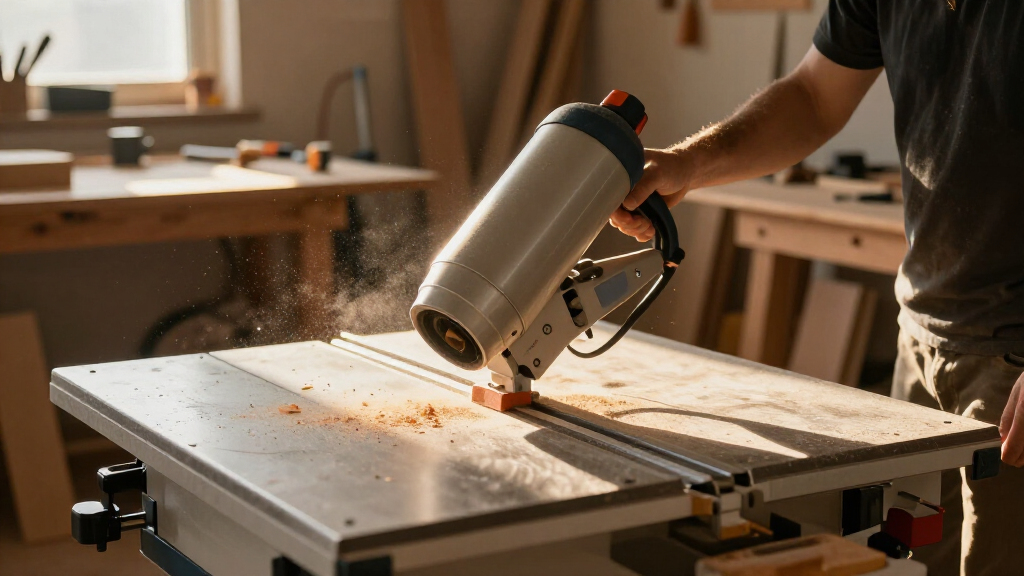
Products were evaluated based on airflow capacity (CFM), collection capacity, build quality, ease of installation, versatility, and value for money. We prioritized models that deliver consistent dust collection performance suitable for different workshop sizes. Additional features like mobility options and filtration quality were also considered, ensuring each pick addresses distinct user needs. The ranking reflects a balance between power, usability, and affordability, helping different types of woodworkers find their best fit.Factors to Consider When Choosing Best Dust Collector For Woodworking
Choosing the best dust collector for woodworking involves understanding several key factors. Not all units are created equal, and the right choice depends on your shop size, dust generation volume, and budget. Beyond raw power, consider how easily the unit integrates into your space and workflow. Making a well-informed decision helps prevent issues like insufficient dust removal or excessive noise, which can impact safety and comfort.Airflow Capacity (CFM)
CFM measures how much air the dust collector can move, directly affecting its ability to capture dust at the source. Higher CFM ratings generally mean better performance, especially in larger or more complex shop setups. However, more powerful units can come with increased noise and higher energy consumption. For smaller shops, a lower CFM might suffice, while larger workshops benefit from units with 800+ CFM ratings.
Collection Capacity
The size of the collection bag or drum influences how often you need to empty it. Larger capacities reduce downtime during long projects but often require more space and may add to the unit’s weight and cost. Consider your typical workload and available space—smaller shops might prefer more compact models, even if it means more frequent emptying.
Filtration Quality
Filtration efficiency, often indicated by micron ratings, determines how fine the dust particles the unit can trap. Lower micron ratings (like 1 or 2 microns) mean cleaner air and less health risk, especially important for fine dust from hardwoods. Upgrading filtration can improve air quality but may raise initial costs and maintenance complexity. Always check if the filters are easy to replace and maintain.
Size and Space Requirements
Assess your available space carefully. Standalone units with large drums require significant room, while wall-mounted models save space but may have limited power. Consider the shop layout and how mobility impacts your workflow. If space is tight, a wall-mounted or compact model might be the best fit, even if it sacrifices some airflow capacity.
Ease of Use and Maintenance
Look for features like easy-to-access filters, simple hose connections, and mobility options such as wheels or wall mounts. Regular maintenance, including filter cleaning or replacement, is essential for consistent performance. Some units include quick-release bags or tools to simplify servicing, reducing downtime and frustration.
Frequently Asked Questions
Can I use a smaller dust collector for a large workshop?
Using a smaller dust collector in a large workshop can lead to inadequate dust removal, creating health risks and mess. These units may struggle to maintain sufficient airflow across multiple tools, especially in bigger spaces. For smaller workshops or occasional projects, a lower CFM model might suffice, but for more frequent or large-scale woodworking, investing in a higher-capacity unit is advisable to ensure effective dust control.
Is a wall-mounted dust collector as effective as a standalone unit?
Wall-mounted dust collectors can be very effective in saving space and reducing clutter, especially in smaller shops. However, their performance depends heavily on the CFM rating and design. They often have lower airflow compared to larger standalone units, which can limit their effectiveness in bigger workshops or with multiple tools running simultaneously. The best choice depends on your shop size and dust collection demands.
What micron rating should I look for in a dust collection bag?
For woodworking, a micron rating of 1 to 2 microns is ideal, as it captures the finest dust particles that pose health risks. Cheaper or higher-micron bags might trap larger debris but allow fine dust to escape back into the air. Upgrading to a lower micron filter can significantly improve indoor air quality, especially if you work with hardwoods or fine dust-producing tools.
How important is noise level in choosing a dust collector?
Noise level can be a significant factor, especially if your workshop is in a shared space or near living areas. High-powered units tend to be louder, which can cause fatigue or require hearing protection. Some models feature noise-reduction designs or quieter motors, which improve comfort without sacrificing performance. Evaluate your tolerance for noise and consider models with sound-dampening features if noise is a concern.
Should I prioritize power or capacity when choosing a dust collector?
Power (measured by CFM) and capacity (size of the collection drum) both matter but serve different needs. For small shops or light-duty tasks, a lower CFM unit with a smaller drum may be enough and easier to manage. Larger workshops or those with multiple tools benefiting from higher airflow may need a more powerful, high-capacity model. Balancing these factors based on your typical workload ensures better performance and value.
Conclusion
For serious woodworkers with large workshops and frequent use, the WEN DC1300 offers unmatched power and capacity, making it the best overall choice. Hobbyists or those with limited space might prefer the Rockler Dust Right 650 CFM for its space-saving wall-mount design and decent performance. Budget-conscious beginners should consider models like the POWERTEC 1 HP Dust Collector, which balances affordability with reliable operation. If you’re upgrading a dedicated professional shop, investing in a higher-end unit with better filtration and larger capacity can pay off over time. Tailor your choice to your shop size, dust production, and long-term needs for the best results.