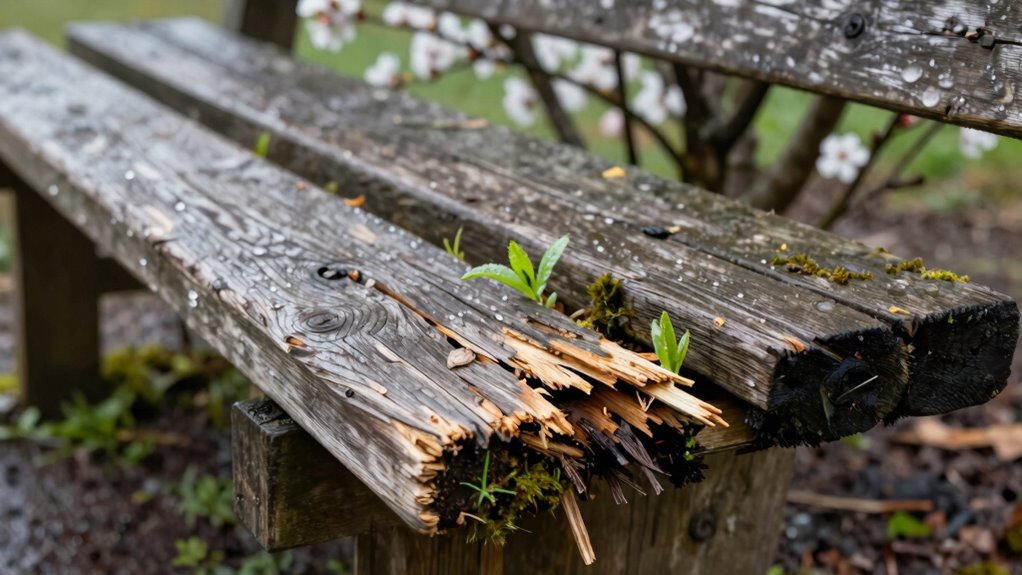

In spring, fluctuating temperatures and increased moisture speed up outdoor wood deterioration more than you might expect. Warm days, cold nights, heavy rains, and dew cause wood to expand, contract, and absorb water, leading to cracks, warping, or rot. Without proper treatment beforehand, your projects are more vulnerable to early failure. If you want to stay ahead of the damage, understanding these seasonal impacts can help you protect your wood effectively. Keep going to discover more tips to extend your outdoor project’s lifespan.

Get business pricing on tools and workshop supplies
- Business-only prices and quantity discounts
- Tax-exempt purchasing
- Multiple users, one account, clear invoices
Key Takeaways
- Increased moisture from rain and dew accelerates wood absorption, leading to faster decay.
- Temperature fluctuations cause expansion and contraction, resulting in cracks and structural damage.
- Lack of prior treatment leaves wood vulnerable to water damage and rot during spring rains.
- Rapid environmental changes undermine untreated or poorly maintained wooden surfaces.
- Seasonal maintenance delays allow moisture and thermal stresses to cause quicker deterioration.
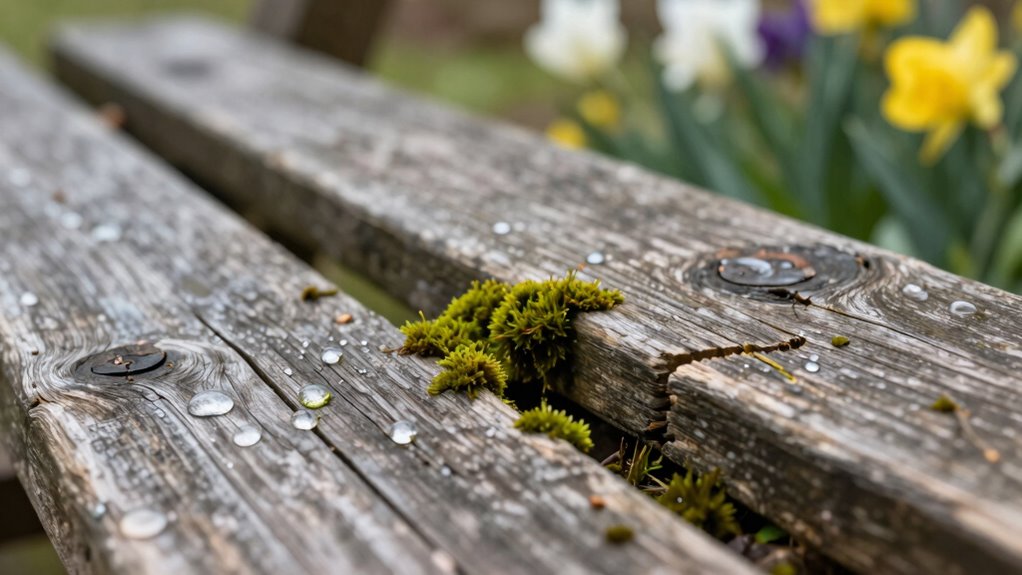
Spring’s warmer temperatures and increased moisture can catch even experienced DIYers off guard, causing outdoor wood projects to fail faster than expected. As the seasons shift, the environmental conditions change rapidly, and if you haven’t prepared your wood properly, those changes can lead to quick deterioration. It’s easy to assume that once you’ve built or stained your outdoor wood, it’ll hold up through the season. But spring’s moisture and fluctuating temperatures demand that you stay on top of seasonal maintenance to keep your projects in good shape.
One of the biggest mistakes you can make is neglecting proper wood treatment before spring arrives. Wood that isn’t sealed or treated correctly becomes vulnerable to the increased moisture in the air. When rain or dew hits untreated wood, it seeps in, causing swelling, warping, and even rot over time. To prevent this, you need to apply a high-quality sealant or stain designed for outdoor use, ideally before the season’s heavy rains start. This treatment forms a protective barrier, reducing water absorption and helping your wood resist the elements.
Neglecting proper treatment before spring exposes wood to moisture damage and costly deterioration.
Once spring is here, ongoing seasonal maintenance becomes essential. Regularly inspecting your outdoor projects for signs of damage or moisture intrusion can help you catch problems early. If you notice areas where the finish has worn away, reapply wood treatment promptly. Don’t wait until the damage becomes extensive, as moisture can quickly penetrate deeper, leading to more costly repairs or replacements. Cleaning your wood surfaces before applying any new treatment also ensures that dirt, algae, or mold don’t compromise the effectiveness of the sealant. Proper wood protection techniques can significantly extend the lifespan of your outdoor projects. Additionally, understanding environmental factors such as humidity and rainfall patterns can help you plan more effective maintenance routines.
Temperature swings during spring can also accelerate the breakdown of wood if it’s not properly protected. As days warm up and nights cool down, the expansion and contraction of the wood can cause cracks or splits, especially if the surface isn’t well-maintained. This is why consistent seasonal maintenance is crucial. Applying a fresh coat of protective wood treatment at the beginning of spring and checking periodically can help your projects withstand these stresses. Additionally, understanding biodiversity and its impact on local ecosystems can guide you in selecting environmentally friendly treatments that won’t harm surrounding plant and animal life. Proper air quality practices when choosing and applying treatments can also prevent harmful fumes from affecting your outdoor environment.
In essence, your outdoor wood projects need more attention in spring than you might expect. Proper seasonal maintenance, including timely wood treatment, is the key to prolonging their life. By staying proactive—cleaning, inspecting, and reapplying sealants—you prevent small issues from snowballing into major failures. Remember, the effort you put into protecting your wood now will pay off in durability and beauty, allowing you to enjoy your outdoor spaces longer without constant repairs or replacements.
outdoor wood sealant for weatherproofing
As an affiliate, we earn on qualifying purchases.
As an affiliate, we earn on qualifying purchases.
Frequently Asked Questions
How Does Spring Rainfall Affect Outdoor Wood Projects?
Spring rain can substantially impact your outdoor wood projects by increasing moisture levels. When exposed to frequent spring rain, the wood absorbs excess moisture, leading to potential moisture damage. This makes the wood swell, warp, or rot faster than expected. To protect your project, guarantee proper sealing and cover it during heavy rains. Ignoring these precautions allows moisture damage to accelerate, causing your project to fail sooner.
What Are the Best Protective Finishes for Spring Weather?
Think of your outdoor wood as a shielded warrior against spring’s relentless elements. The best protective finishes are weather resistant coatings and protective sealants, which create an invisible armor. These products penetrate and form a barrier, preventing moisture and UV damage. Apply these finishes generously, ensuring every surface is sealed. This approach keeps your project resilient, vibrant, and standing tall through spring’s rain and sun, extending its life far beyond expectations.
Does Increased Sunlight in Spring Impact Wood Durability?
Yes, increased sunlight in spring affects wood durability by accelerating UV degradation, which breaks down the wood’s surface and weakens its structure. Additionally, more sunlight often means fluctuating temperatures, causing moisture absorption and expansion. This combination leads to faster deterioration if you don’t apply protective finishes. To extend your project’s lifespan, guarantee you use UV-resistant finishes and sealants that block moisture ingress, especially during spring’s variable weather.
How Can I Prevent Pests From Damaging My Spring Projects?
Pests can attack your spring projects like a swarm of locusts, but you can stop them. Use pest prevention methods like sealing cracks and applying natural repellents. Incorporate wildlife deterrents such as motion-activated lights or predator decoys to scare off critters. Regularly inspect your wood for signs of damage and clean up debris around your project. These steps will help protect your work and keep pests at bay all season long.
Are There Specific Wood Types Better Suited for Spring Construction?
You should choose wood types with better seasonal durability, like cedar or redwood, for spring projects. Applying wood treatment enhances resistance against moisture and pests, which are more active during spring. These treatments help your wood withstand fluctuating temperatures and humidity, prolonging the lifespan of your outdoor construction. Opt for naturally durable woods or treat softer woods to guarantee your project holds up well through spring’s unpredictable weather.
Conclusion
So, next time spring arrives, don’t rush to finish your outdoor wood projects. Prepare, protect, and maintain your wood just as diligently as you did in other seasons. Because neglecting these steps leads to faster decay, quicker damage, and shorter lifespan. Take care of your projects with patience, with protection, with love—and watch them stand stronger, longer, and more beautiful through seasons to come. Your outdoor space deserves your best effort all year round.
Fall yard work Picks
leaf blowers
As an affiliate, we earn on qualifying purchases.