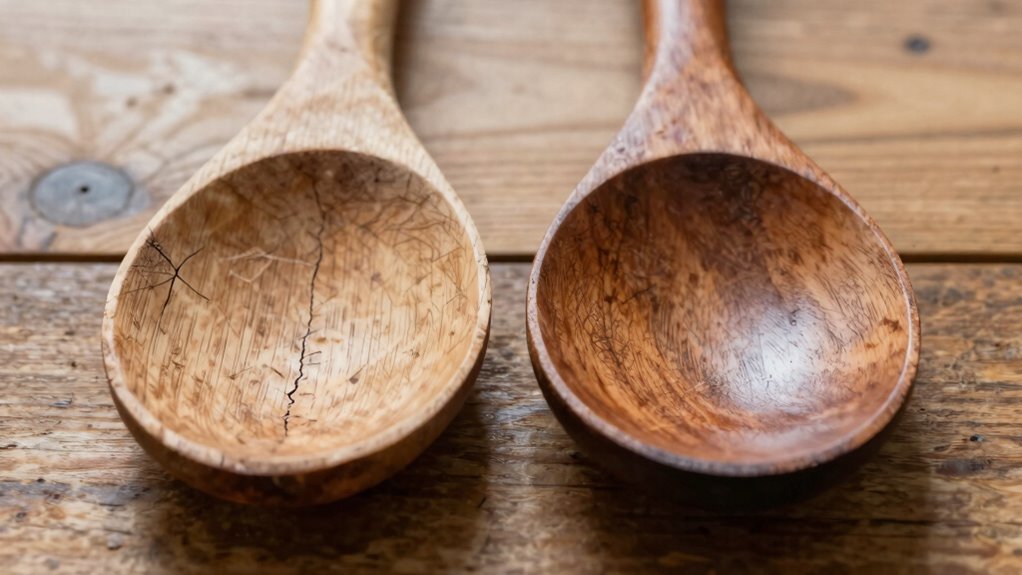

Wooden spoons last longer when you choose those with tight, straight grain patterns, as they’re stronger and less likely to crack. Proper care, like hand washing, drying thoroughly, and applying food-safe oils, helps prevent moisture fluctuations that cause internal stresses. Avoid soaking or exposing your spoon to extreme temperature changes. Well-maintained finishes also create a moisture barrier. If you want to find out how to keep your spoon in top shape, there’s more to discover.

Get business pricing on tools and workshop supplies
- Business-only prices and quantity discounts
- Tax-exempt purchasing
- Multiple users, one account, clear invoices
Key Takeaways
- Irregular or open grain patterns create points of weakness prone to cracking over time.
- Fluctuations in moisture absorption cause internal stresses that lead to cracks.
- Proper sealing and regular oiling form a moisture barrier, preventing damage.
- Consistent, tight grain structures resist environmental changes better and last longer.
- Avoiding extreme temperature and moisture fluctuations reduces internal stresses and prolongs spoon life.
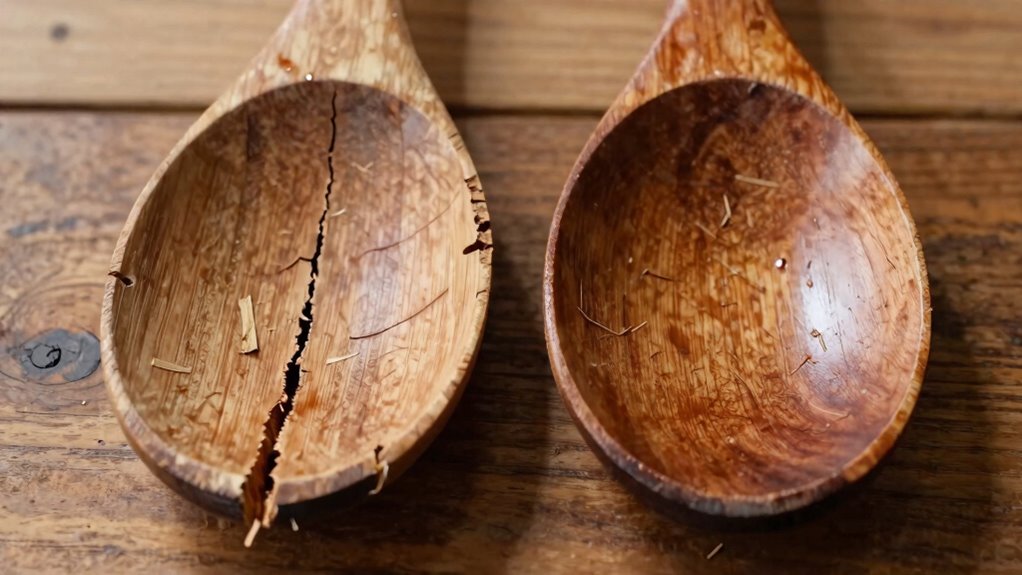
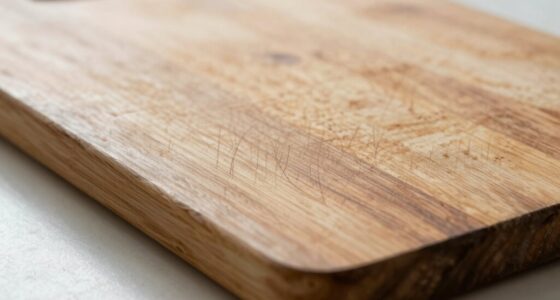
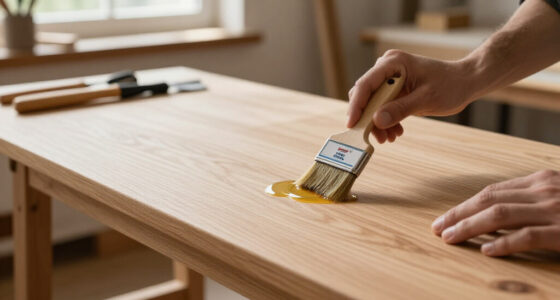
Wooden spoons are beloved tools in the kitchen, but not all of them stand the test of time. The key to their durability often comes down to the qualities of the wood itself. One major factor is the wood grain patterns. When you examine a wooden spoon, you’ll notice that the grain can run in different directions, and this can influence how well it holds up over time. Spoons made from wood with tight, straight grain patterns tend to be stronger because they have fewer natural weaknesses. Conversely, wood with irregular or open grain patterns can develop cracks more easily since the grain creates points of weakness where stress can concentrate. If you’re choosing a spoon, look for one crafted from wood with consistent, tight grain lines—these are less prone to splitting or cracking. Additionally, proper wood selection can significantly influence the lifespan of your spoon. The grain structure also impacts how the wood responds to environmental changes, making it essential to consider when selecting quality wood. Moisture absorption plays a significant role in how long a wooden spoon lasts. Wood naturally absorbs moisture from the environment and your food, and this process can be both beneficial and harmful. When a wooden spoon absorbs moisture unevenly, it causes the wood to swell and contract at different rates, which can eventually lead to cracks. If you often wash your spoons with hot water or leave them to dry in humid conditions, you increase the risk of moisture-related damage. Proper care involves hand washing with mild soap and ensuring complete drying before storing. Avoid soaking your spoons for long periods or exposing them to drastic temperature changes, as these actions increase moisture absorption and the potential for cracking. Another aspect that impacts the longevity of your wooden spoon is how well it’s finished and maintained. Proper sealing or oiling creates a barrier that minimizes moisture penetration and helps prevent cracks. When the surface is well-maintained, it’s less likely to absorb excess moisture, which reduces internal stresses. Regularly applying food-safe oils not only preserves the wood but also enhances its resistance to cracking and damage. Over time, if your spoon starts to develop cracks, it’s often because the wood’s moisture content has fluctuated too much or because the wood grain patterns naturally weaken. To extend its life, you should regularly oil your spoon with food-safe oils and avoid exposing it to extreme conditions. This routine maintenance helps preserve the integrity of the grain and reduces moisture absorption. Understanding the importance of wood grain patterns and moisture absorption can help you make informed decisions about your wooden spoon choices and care routines. When you select high-quality wood with tight grain patterns and keep your spoons properly maintained, you give them the best chance to last for years, even decades. Proper care and maintenance are essential for prolonging the life of your wooden utensils.
As an affiliate, we earn on qualifying purchases.
Frequently Asked Questions
Can the Type of Wood Affect a Spoon’s Durability?
Yes, the type of wood affects your spoon’s durability. Denser woods, with higher wood density, tend to be more resistant to cracking and splitting. Additionally, a tight, consistent grain pattern offers strength and stability, reducing the chance of warping over time. You’ll find that choosing wood with these qualities helps your spoon last longer, even with frequent use and exposure to moisture.
Does Exposure to Sunlight Impact a Wooden Spoon’s Lifespan?
Have you ever wondered if sunlight impacts your wooden spoon’s lifespan? Yes, exposure to sunlight can cause sunlight degradation and UV damage, weakening the wood over time. Direct sunlight can dry out the wood, making it brittle and prone to cracking. To keep your spoon lasting longer, store it in a cool, shaded spot. Guarding it from UV rays ensures it stays sturdy and functional for years.
How Often Should Wooden Spoons Be Resealed or Oiled?
You should reseal or oil your wooden spoons every few weeks, especially if you use them frequently. Incorporate seasoning techniques like applying food-grade mineral oil or beeswax to keep the wood hydrated and prevent cracking. Follow storage tips by keeping your spoons in a dry, well-ventilated area. Regular maintenance guarantees your wooden spoon stays durable and beautiful, extending its lifespan and maintaining its functionality in your kitchen.
Can Dishwasher Cleaning Damage Wooden Spoons?
Dishwasher damage can definitely harm your wooden spoon, causing cracks or warping over time. The high heat and harsh detergents in dishwashers aren’t ideal for wooden spoon care. To keep your spoons in top shape, always hand wash them with mild soap and warm water. Avoid soaking them too long, and regularly reseal or oil them to maintain their durability and prevent cracking.
Are There Specific Cooking Methods That Preserve Wooden Spoons Better?
You’re better off playing it safe with gentle cooking techniques, like simmering or low-heat stir-frying, to keep your wooden spoons in top shape. Proper spoon maintenance involves avoiding prolonged soaking and hand washing instead of dishwashers. By treating your spoons with care, you prevent cracks and extend their life. Remember, a little TLC goes a long way—preserving your wooden tools guarantees they serve you well for years to come.
Conclusion
So, savor the secrets of sustainable spoons by smoothing surfaces, seasoning surfaces, and steering clear of sudden shocks. With mindful maintenance, your wooden wonder will withstand the whims of time, staying sturdy and sweet-smelling for years. Remember, the key to keeping your kitchen’s trusty tools thriving lies in gentle care and consistent caution. Keep your wooden spoons well-worn but never worn out—your culinary companions will thank you with countless cravings satisfied!
Fall yard work Picks
leaf blowers
As an affiliate, we earn on qualifying purchases.