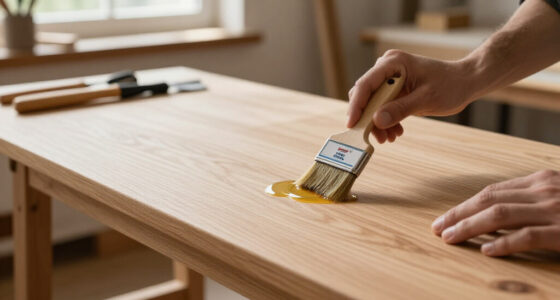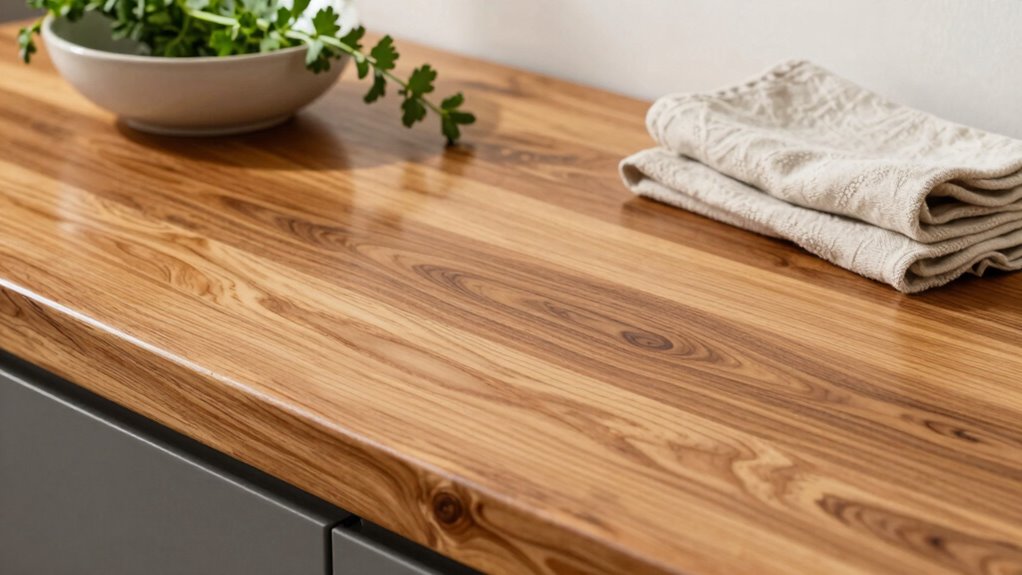

To keep your wooden countertops looking rich without overdoing it, regularly clean with mild soap and warm water, always wiping in the direction of the grain. Protect the surface from moisture and heat by using trivets and coasters. Apply a thin layer of food-safe oil or finish periodically to enhance the wood’s depth and shine—avoid over-application to prevent stickiness. Gentle maintenance and proper protection will preserve their beauty and longevity; continue along this path to learn more tips for ideal care.
Key Takeaways
- Regularly clean with mild soap and water, wiping along the grain to prevent scratches.
- Reapply natural oils periodically to nourish the wood and enhance its richness.
- Use trivets and coasters to protect against heat and moisture damage.
- Avoid harsh chemicals and synthetic cleaners that can strip the wood’s natural luster.
- Inspect and address minor damage early to maintain the countertop’s vibrant, healthy appearance.
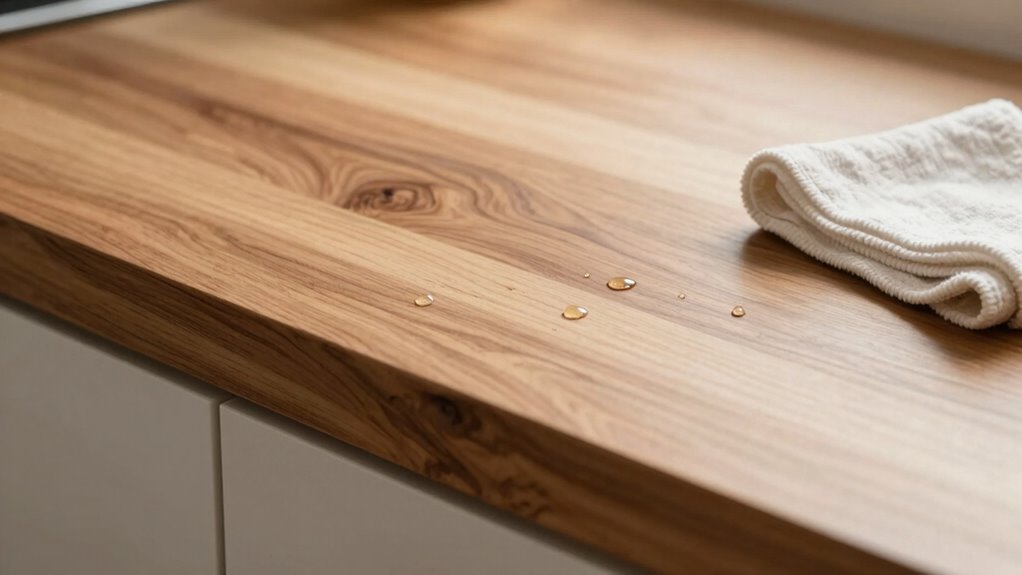
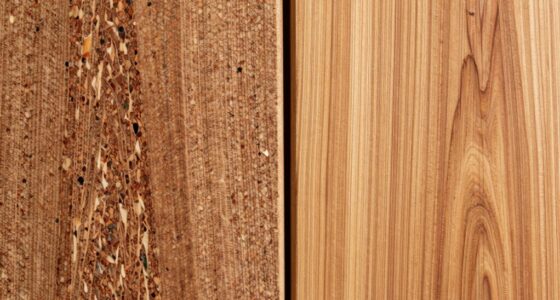
Maintaining wooden countertops requires regular care to keep them looking beautiful and functioning well. One of the key factors in preserving their rich appearance is understanding the wood grain. The natural patterns and textures of the wood grain give each countertop its unique character, and caring for it properly enhances its beauty over time. You should avoid harsh cleaning agents that can strip away the natural luster and damage the delicate grain. Instead, opt for gentle soap and warm water, wiping along the direction of the grain to prevent scratches and maintain its natural flow. Regularly inspecting the surface for any signs of wear or damage allows you to address issues before they worsen, keeping the wood looking fresh and vibrant. Additionally, protecting the wood from excessive moisture and heat is crucial for longevity, as these elements can cause warping or cracking over time. Proper maintenance practices can significantly extend the life of your wooden countertops and preserve their aesthetic appeal. Incorporating sustainable cleaning methods can also help reduce environmental impact while caring for your surfaces. Using natural oils and avoiding synthetic cleaning products supports a more eco-friendly approach to upkeep.
Choosing the right finish options is essential for maintaining the richness of your wooden countertop. There are various finishes available, from food-safe oils to polyurethane coatings, each offering different levels of protection and aesthetic appeal. Oil finishes penetrate the wood, highlighting the grain’s depth and warmth, giving your countertop a more natural, matte look that ages beautifully. Regular reapplication of oil not only preserves the wood’s moisture but also enhances the grain’s visual depth. Alternatively, if you prefer a more polished, glossy appearance, a polyurethane finish can provide a durable, protective layer that resists stains and scratches. However, it’s important to select a finish that complements the wood’s natural beauty without overdoing it—going for too high a gloss can sometimes diminish the organic appeal. Using eco-friendly finishes can also contribute to a more sustainable home environment. Being mindful of the wood grain and how finishes interact with it ensures your countertop maintains its natural charm and character over time.
To keep your wooden countertop looking rich without overdoing it, the key is moderation. Apply oil or finish in thin, even coats, allowing plenty of time for each layer to absorb and cure properly. Avoid over-application, which can lead to a sticky or uneven surface, detracting from the natural beauty of the wood grain. Regular maintenance involves cleaning with mild solutions, reapplying oil or finish as needed, and protecting the surface from excessive moisture or heat. Using cutting boards, trivets, and coasters also prevents unnecessary scratches and stains, helping to preserve the finish and the integrity of the wood. With consistent, gentle care, your wooden countertop can continue to showcase its rich, natural character without the need for heavy-handed treatments. Being mindful of biodiversity and sustainable practices in your maintenance routine can also contribute to eco-friendly living.
food-safe wood oil for countertops
As an affiliate, we earn on qualifying purchases.
As an affiliate, we earn on qualifying purchases.
Frequently Asked Questions
How Often Should I Reapply Finish on My Wooden Countertop?
You should reapply finish on your wooden countertop every 6 to 12 months, depending on use and wear. Regular wood treatment helps maintain its rich appearance, so keep an eye out for signs of dullness or scratches. For ideal finish maintenance, clean the surface thoroughly before reapplying. This ensures your countertop stays protected and looks vibrant, preserving its luxurious look without overdoing it.
Can I Use Vinegar to Clean My Wooden Countertops?
Sure, you can use vinegar for wooden cleaning, but don’t get too excited—it’s not always the safest choice. Vinegar safety is questionable because its acidity can wear down your finish over time. While it might seem like a natural, cheap solution, it’s better to opt for gentle cleaners designed for wood. Trust us, your countertops will thank you for choosing safer, more effective methods rather than risking damage with vinegar.
What Are the Best Oils for Maintaining a Rich Look?
The best oils for maintaining a rich look are mineral oil, tung oil, and Danish oil, as they enhance wood grain and provide a durable finish. To achieve ideal results, use proper oil application techniques: apply a generous coat with a soft cloth, let it soak in, and wipe off excess. Regular reapplication keeps your countertops looking vibrant, protecting the wood while highlighting its natural beauty.
How Do I Remove Stubborn Stains From Wooden Surfaces?
To remove stubborn stains from your wooden surfaces, start by identifying the stain type. For most stains, mix baking soda with water to form a paste and gently rub it into the affected area, following the wood grain. For tougher stains, use a commercial wood stain remover, always testing it on a hidden spot first. Regular stain removal preserves the wood grain’s natural beauty and keeps your countertop looking rich.
Is Sealing Necessary for Every Wooden Countertop?
Sealing isn’t necessary for every wooden countertop, but it greatly aids in maintenance by protecting against moisture and stains. Sealing creates a durable barrier, while oiling keeps the wood nourished and vibrant. For high-traffic or wet areas, sealing is recommended for better longevity. In less demanding spaces, regular oiling may suffice to maintain a rich, natural look. Choose based on your usage and desired maintenance level.
Conclusion
To keep your wooden countertops looking their best, think of regular care as a gentle dance—an effortless flow that preserves their natural charm. By maintaining a light touch with oils and avoiding harsh cleaners, you allow the wood to breathe and flourish. Remember, a subtle upkeep is all it takes to keep your surfaces vibrant and inviting, ensuring they continue to add warmth and elegance to your space without ever feeling overwhelmed.