To build a cleaner shop that matches your real workflow, start by evaluating your layout to identify clutter and inefficiencies. Organize tools and materials for easy access and reduce waste by recycling scrap. Implement smart inventory control and conduct regular audits to maintain supply levels. Train your team on proper tool usage and emphasize shared responsibility for cleanliness. By focusing on these actionable steps, you’ll create a more efficient workspace. There’s more to explore on enhancing your shop’s organization.
Key Takeaways
- Assess the current workflow to identify bottlenecks and clutter, adjusting the layout to enhance efficiency and accessibility.
- Designate specific storage areas for tools and materials, utilizing labels and color-coding for quick identification.
- Involve employees in waste reduction initiatives, encouraging feedback to identify areas for improvement and promote a culture of cleanliness.
- Implement regular training sessions on safety and tool management to instill best practices and shared responsibility among staff.
- Conduct routine inventory audits to ensure adequate supplies, minimizing waste and allowing for swift adjustments to workflow needs.

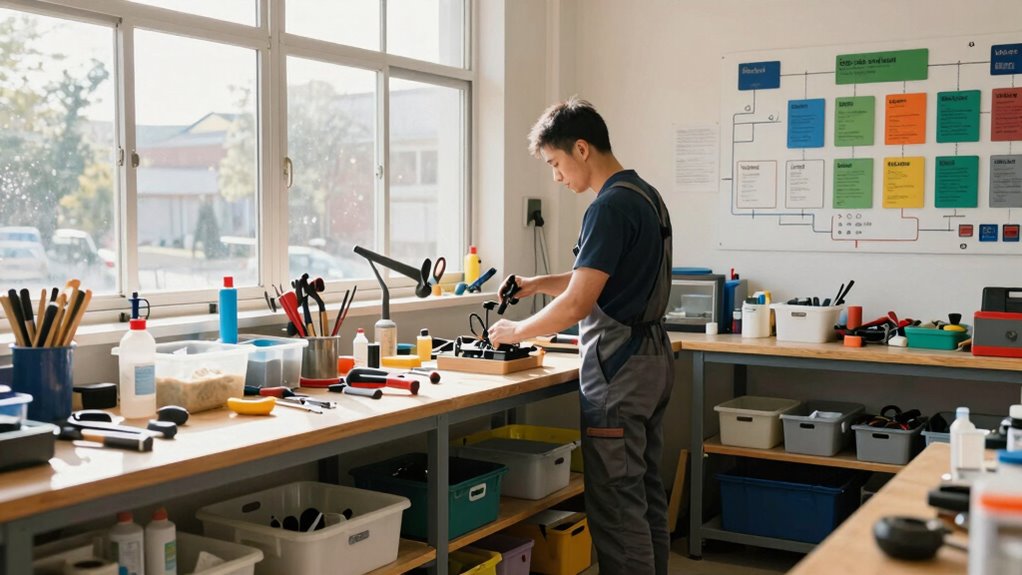
If you want to create a cleaner shop, it’s imperative to develop a systematic approach. Start by focusing on shop organization. A well-organized workspace not only boosts productivity but also reduces the likelihood of accidents and waste. Begin by evaluating your current layout. Identify areas that are cluttered or inefficient, and make changes that support a smooth workflow. Make sure that tools and materials are easily accessible, which will save time and minimize frustration.
Next, prioritize waste reduction. Examine your processes to pinpoint where waste occurs. This could be excess materials, unused tools, or inefficient workflows. By addressing these areas, you can implement strategies that not only keep your shop cleaner but also save money in the long run. For instance, recycling scrap materials or repurposing unused tools can greatly cut down on waste. Encourage your team to share their insights; they often have the best ideas for improvement. Promoting a culture of continuous improvement can motivate everyone to maintain high standards of cleanliness and efficiency.
Employee training is another essential aspect. A cleaner shop is a shared responsibility. Conduct regular training sessions that focus on safety protocols and proper tool management. Make certain your employees understand how to use tools correctly and safely, which reduces the chance of accidents and keeps the workspace tidy. Incorporate best practices into their daily routines, making sure they know how to maintain cleanliness and organization.
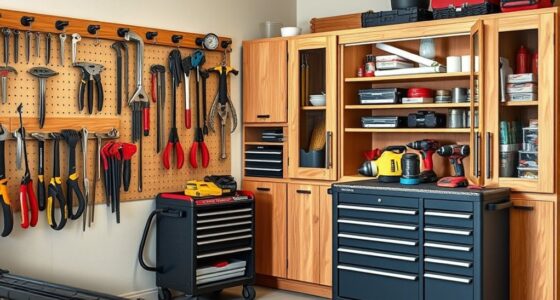
Effective tool management is critical for maintaining a clean environment. Create designated storage areas for tools and materials, assuring everything has its place. Use labels and color-coding for easy identification. This not only aids in quick retrieval but also encourages employees to return tools to their rightful spots after use. When everyone knows where things belong, clutter diminishes and safety improves. Implementing smart inventory control can further enhance organization by automating stock tracking and reducing manual errors. Additionally, utilizing systematic processes can help streamline your operations and prevent chaos.
Additionally, implement strict inventory control measures. Keeping track of supplies helps prevent overstocking or running out of necessary materials. Regular audits will help you maintain appropriate inventory levels, reducing both waste and clutter in your shop. Incorporating smart home solutions into your inventory management can further streamline this process and improve oversight. Remember, a well-maintained inventory system directly contributes to a more organized and cleaner workspace.
Finally, revisit your workspace layout periodically. As workflows evolve, so should your shop design. Make sure that the layout continues to facilitate efficiency and safety. By constantly refining your approach, you’ll create a cleaner, more organized shop that everyone can take pride in. With these strategies in place, you’ll not only enhance productivity but also foster a culture of cleanliness and responsibility among your team.
As an affiliate, we earn on qualifying purchases.
Frequently Asked Questions
What Tools Are Essential for Maintaining a Clean Shop Environment?
To maintain a clean shop environment, you’ll need essential cleaning supplies like disinfectants, brooms, and microfiber cloths. Invest in organization systems, such as shelving units and labeled bins, to keep tools and materials in their designated places. Regularly schedule clean-up sessions to prevent clutter from piling up. By combining effective cleaning supplies with smart organization, you’ll create a workspace that’s not only tidy but also efficient and productive.
How Often Should I Conduct Shop Cleanliness Audits?
You should conduct shop cleanliness audits at least once a month. This regular cleaning frequency helps you stay on top of messes and maintain a safe environment. Use an audit checklist that covers all key areas like tools, workstations, and waste disposal. By doing this, you’ll identify issues early and guarantee your shop remains organized and efficient. Keeping a consistent schedule makes cleanliness a habit, not just a goal.
What Role Does Employee Training Play in Shop Cleanliness?
Think of your shop like a well-oiled machine; employee training is key to keeping it running smoothly. By establishing clear cleaning standards and implementing effective training programs, you empower your team to maintain cleanliness. Routine practices become second nature, fostering employee accountability. When everyone knows their role in maintaining a clean environment, it not only boosts morale but also enhances productivity. Ultimately, a clean shop reflects the dedication of your trained workforce.
How Can I Motivate Staff to Keep the Shop Clean?
To motivate your staff to keep the shop clean, implement cleaning incentives and foster team accountability. Set clear expectations and reward those who consistently maintain cleanliness. Create friendly competitions or challenges that encourage everyone to participate. Regularly acknowledge efforts in team meetings to reinforce positive behavior. When your team feels responsible for their environment and sees the tangible rewards, they’ll be more likely to take pride in keeping the shop tidy.
Are There Any Apps to Help Track Cleanliness Workflows?
Absolutely, there are several cleaning apps that can help you streamline your workflow management. Have you considered using apps like Trello or Asana? They offer task reminders and foster team collaboration, making it easier for everyone to stay on top of cleanliness. You can assign tasks, set deadlines, and even track progress in real time. By utilizing these tools, you’ll not only improve cleanliness but also boost your team’s efficiency.
Conclusion
In crafting a cleaner shop, clarity’s key. By focusing on real workflows instead of wishful thinking, you’re setting the stage for sustainable success. Prioritize practical processes and perfecting performance, and watch as your workspace transforms. With a commitment to continuous improvement and collaboration, you’ll create a culture of cleanliness that fosters productivity. So, take these steps today, and soon you’ll see your shop shining brighter than ever—showcasing the true potential within!