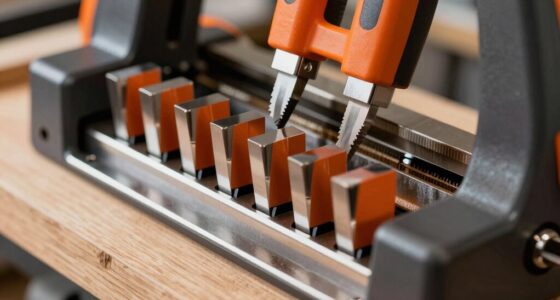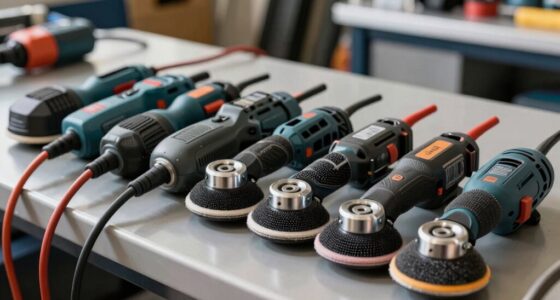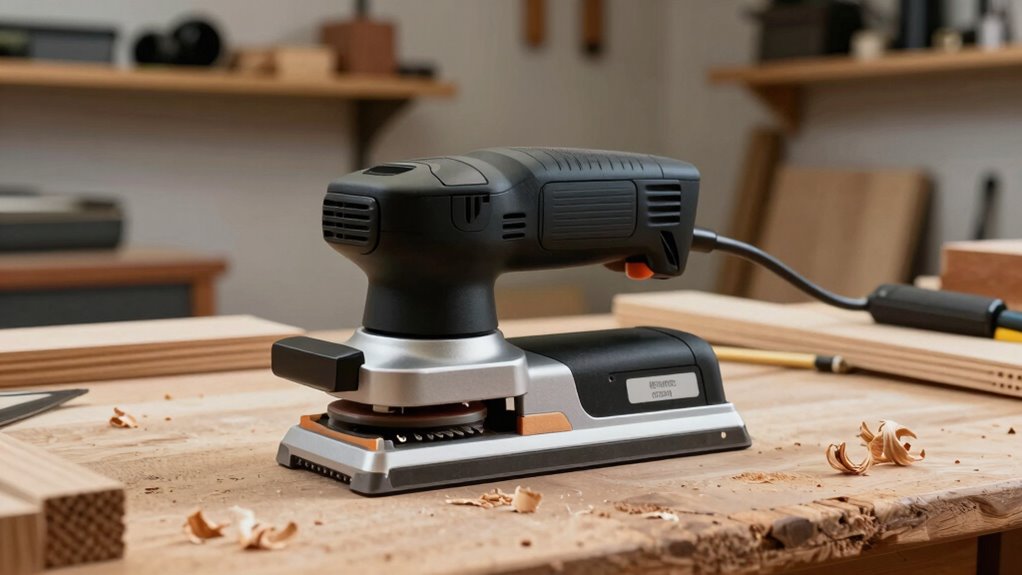
Finding the right edge sander for woodworking can be challenging, as these tools vary widely in power, versatility, and precision. The HYCHIKA Detail Sander stands out for its compact design and affordability, making it ideal for detailed work. For those needing a more robust solution, the WEN Oscillating Belt and Spindle Sander offers versatile sanding options. Meanwhile, the Milescraft 1621 Edge Sander excels in precise edge shaping with its V-groove attachment. However, tradeoffs exist: some models sacrifice power for portability, while others may be more expensive but offer greater durability. Continue reading for a full breakdown of each option and which one fits your woodworking needs best.

Get business pricing on tools and workshop supplies
- Business-only prices and quantity discounts
- Tax-exempt purchasing
- Multiple users, one account, clear invoices
Complete the kit


Key Takeaways
- The top picks balance power, precision, and ease of use, with no single product excelling in all areas.
- Versatility varies, with some sanders suited for detailed finishing and others for heavy-duty edge shaping.
- Build quality and durability are critical for long-term use, especially in demanding woodworking projects.
- Price points reflect tradeoffs between features and robustness; higher cost often means better stability and longevity.
- Many models include accessories or attachments that extend their functionality, which can add value.
| HYCHIKA Detail Sander, 14,000 OPM Compact Electric Sander with 12 Sandpapers |  | Best for Tight Spaces and Precision Detailing | Power: 1.6 amps | Speed: Up to 14,000 OPM | Sandpaper grits: P80, P120, P240 | VIEW ON AMAZON | See Our Full Breakdown |
| Milescraft 1621 Edge Sander – Dual Edge Sanding Tool with V-Groove |  | Best for Simultaneous Edge Sanding of Boards | Model: 1621 | Board Thickness Range: 1/4 in. to 1-1/2 in. | Disc Compatibility: Any 5 in. hook and loop | VIEW ON AMAZON | See Our Full Breakdown |
| Rockler PSA 90-Degree Edge Sanding Block |  | Best for Maintaining Square, Precise Edges | ASIN: B0GVL81WFL | Angle: 90 degrees | Length: 8 inches | VIEW ON AMAZON | See Our Full Breakdown |
| Makita BO3710 1/3 Sheet Finishing Sander, 1.7A, Teal |  | Best for Smooth Finishes and Fine Detailing | Pad Size: 1/3 sheet | Amperage: 1.7 A | Orbits Per Minute: 11,000 OPM | VIEW ON AMAZON | See Our Full Breakdown |
| WEN 6524 Oscillating Belt and Spindle Sander |  | Best for Curves, Contours, and Versatile Sanding | Model: 6524 | Motor: 3.5 amps | Belt Speed: Up to 1575 FPM | VIEW ON AMAZON | See Our Full Breakdown |
| Woodpeckers SandStand Tilting Sander Base, Turns Palm Sanders & Orbital Sanders into Stationary Woodworking Sander |  | Best for Small Workpieces and Space-Conscious Workshops | Compatible Sanders: Most 5″ & 6″ round sanders with 2″-3-5/8″ diameter | Material: Machined aluminum and steel | Mounting Options: Clamp or bolt to workbench or wall | VIEW ON AMAZON | See Our Full Breakdown |
More Details on Our Top Picks
HYCHIKA Detail Sander, 14,000 OPM Compact Electric Sander with 12 Sandpapers
The HYCHIKA detail sander stands out for its compact size and ability to reach into corners and tight spaces more effectively than larger, bulkier sanders like the Makita BO3710. Its lightweight design and soft rubber head make it ideal for precision work, especially in detailed woodworking or finishing touches. While it excels in confined areas, it isn’t suited for heavy material removal or larger surface sanding, which would be better handled by a finishing sander or belt sander. The inclusion of 12 sandpapers across different grits and an efficient dust collection system adds value for detailed projects. However, its wired design and limited grit range mean it’s less versatile for broader sanding tasks or extensive work. Compared to the WEN 6524, it offers more control for small, intricate areas, but lacks the power and capacity for larger curves or edges.
Pros:- Compact size easily reaches tight spaces and corners
- Quiet operation with included sandpapers for versatile grits
- Effective dust collection system keeps work area cleaner
- Hook-and-loop attachment allows quick sandpaper changes
Cons:- Limited to use with drywall or cement surfaces; not suitable for heavy-duty material removal
- Wired design restricts movement around larger workpieces
Best for: Woodworkers focusing on detailed, precision sanding in corners and tight spots.
Not ideal for: Projects requiring heavy stock removal or large surface sanding, where bigger tools are more efficient.
- Power:1.6 amps
- Speed:Up to 14,000 OPM
- Sandpaper grits:P80, P120, P240
- Sandpaper size:140 x 90 mm
- Sandpapers included:12 pcs
- Cord length:2 m
Our verdict“This detail sander is perfect for precise, detailed work in confined spaces but not for large surface or heavy sanding tasks.”
Milescraft 1621 Edge Sander – Dual Edge Sanding Tool with V-Groove
The Milescraft 1621 Edge Sander offers a unique V-Groove that allows users to sand both edges of a board simultaneously, making it faster than single-edge tools like the Rockler PSA 90-Degree Edge Sanding Block. Its ergonomic shape provides consistent pressure, reducing hand fatigue during repetitive edge work. This sander is highly effective for veneer and laminate projects, but its limited board thickness capacity—up to 1-1/2 inches—makes it less suitable for thicker stock. It requires a compatible drill or driver, which might be a drawback for those seeking a standalone device. Compared to the Rockler block, it speeds up edge sanding considerably but sacrifices some control for more delicate, detailed edge finishing. Its versatility with any 5-inch hook and loop discs makes it a flexible choice for general edge sanding tasks.
Pros:- Sands both edges simultaneously, saving time and effort
- Ergonomic design offers comfortable, consistent pressure
- Compatible with any standard 5-inch hook and loop sanding disc
- Ideal for veneer, laminate, and thin stock projects
Cons:- Limited to boards up to 1-1/2 inches thick; not suitable for bulkier stock
- Requires an external drill or driver; not a standalone tool
Best for: Woodworkers needing to quickly sand multiple edges on thin boards or veneers.
Not ideal for: Heavy-duty projects involving thicker stock or complex edge profiles requiring precise hand control.
- Model:1621
- Board Thickness Range:1/4 in. to 1-1/2 in.
- Disc Compatibility:Any 5 in. hook and loop
- Included Grit:150 grit
Our verdict“This dual-edge sander is excellent for quick, efficient edge work on thin materials, but not for thicker or more detailed projects.”
Rockler PSA 90-Degree Edge Sanding Block
The Rockler PSA 90-Degree Edge Sanding Block excels at maintaining perfect 90-degree edges during sanding, a task that the WEN 6524 belt and spindle sander can’t replicate with the same hand control. Its simple, manual operation and ergonomic rubber grip make it ideal for cabinetry or auto body work where precise, sharp edges are essential. While it works with PSA sandpaper rolls—offering flexibility in grit choice—the limited width of 2-3/4 inches may restrict larger edge surfaces. Compared with the Makita BO3710, this block provides superior control for edges but lacks the power to handle large surface areas. It’s best suited for finishing small to medium-sized projects where accuracy matters most.
Pros:- Maintains sharp, square edges during sanding
- Ergonomic, comfortable rubber grip reduces hand fatigue
- Works with a variety of PSA sandpaper grits for different finishes
- Simple manual operation with precise control
Cons:- Limited to 2-3/4 inch wide sandpaper; not suitable for large face surfaces
- Requires separate purchase of PSA sandpaper rolls
Best for: Woodworkers needing to preserve sharp, square edges during finishing or fitting tasks.
Not ideal for: Large surface sanding or projects requiring aggressive material removal, which would demand power tools.
- ASIN:B0GVL81WFL
- Angle:90 degrees
- Length:8 inches
- Sandpaper Compatibility:2-3/4 inch PSA rolls
Our verdict“This sanding block is ideal for precise edge finishing and maintaining squareness but isn’t suited for large surface projects.”
Makita BO3710 1/3 Sheet Finishing Sander, 1.7A, Teal
The Makita BO3710 offers a reliable, lightweight finish-sanding solution with a 1/3 sheet size and 11,000 OPM for smooth, even surfaces. Its built-in counterbalance reduces vibration, making it comfortable for extended use, unlike the smaller HYCHIKA detail sander, which is more suited for intricate spots. While it doesn’t match the versatility of the WEN 6524 for curves and contours, it excels in flat surface refinement and fine finishing. The included #120 abrasive paper and efficient dust collection contribute to a cleaner workspace. However, its corded design limits mobility, and only one grit is included, requiring additional purchase for varied finishes. It’s best for users who prioritize smooth, polished surfaces over aggressive material removal.
Pros:- Ergonomic rubberized grip for comfortable extended use
- Counterbalance system minimizes vibration for smoother operation
- Effective dust collection system keeps workspace cleaner
- Lightweight and easy to maneuver
Cons:- Limited to corded operation, restricting movement around large projects
- Only one grit included; additional grits needed for different finishes
Best for: Woodworkers focused on fine finishing, smoothing large flat surfaces, or detailed cabinetry work.
Not ideal for: Heavy stock removal or projects involving complex curves, where a belt or spindle sander would be more efficient.
- Pad Size:1/3 sheet
- Amperage:1.7 A
- Orbits Per Minute:11,000 OPM
- Weight:2.2 kg
- Includes:Abrasive Paper #120, Dust Bag, Punch Plate
Our verdict“This finishing sander is ideal for achieving smooth, polished surfaces but isn’t suited for heavy or contour sanding projects.”
WEN 6524 Oscillating Belt and Spindle Sander
The WEN 6524 combines belt and spindle sanding functions, making it a flexible choice for shaping curves, contours, and angled surfaces. Its powerful 3.5-amp motor and oscillating feature provide aggressive material removal and smooth operation on complex projects. While the included accessories and multiple spindle sizes expand its versatility, its size and capacity can limit larger workpieces, and it only comes with 80-grit sandpaper, requiring additional grits for finishing. Compared with dedicated edge sanders like the Milescraft 1621, it offers broader capabilities but at the expense of precision in edge-specific tasks. For serious shaping and contour work, this machine offers unmatched versatility, especially when working with irregular shapes.
Pros:- Combines belt and spindle sanding in one machine
- Multiple spindle sizes for diverse curves and contours
- Onboard storage for accessories and sandpaper
- Dust port compatible with collection systems
Cons:- Includes only 80-grit sandpaper; additional grits needed
- Benchtop size limits capacity for large workpieces
Best for: Woodworkers needing a multi-function sander for curves, contours, and general shaping tasks.
Not ideal for: Projects focused solely on flat, detailed edge finishing, which are better served by dedicated edge sanders.
- Model:6524
- Motor:3.5 amps
- Belt Speed:Up to 1575 FPM
- Spindle Speed:Up to 2000 RPM
- Oscillation Rate:58 times per minute
- Belt Size:4 x 24 inches
Our verdict“This multi-purpose sander offers excellent flexibility for shaping and contouring but isn’t optimized for detailed edge finishing or large projects.”
Woodpeckers SandStand Tilting Sander Base, Turns Palm Sanders & Orbital Sanders into Stationary Woodworking Sander
The Woodpeckers SandStand stands out for transforming portable palm and orbital sanders into versatile stationary tools, making it ideal for small projects. Unlike the WEN 6524 Oscillating Belt and Spindle Sander, which offers more overall power and larger capacity, the SandStand excels in precision and safety for delicate parts, thanks to its adjustable angle and secure mounting options. This pick is perfect for those with limited space or who prefer working on smaller pieces without the intimidation of larger stationary sanders. However, it’s not designed for heavy-duty or large-scale sanding tasks, which could be a limitation for professional shop environments. Compared to the Milescraft 1621 Edge Sander, which is more of a handheld tool, the SandStand offers a stable platform but sacrifices some flexibility for stationary control. The tradeoff here is simplicity versus power, making it best suited for hobbyists or small-shop woodworkers who prioritize control and safety over raw throughput.
Pros:- Transforms portable sanders into stable, stationary tools for precision work
- Adjustable tilt for versatile sanding angles
- Compact design ideal for small shops or wall mounting
Cons:- Limited to small workpieces; not suited for large or heavy-duty projects
- Clamping and mounting may require additional tools or setup time
- Compatibility limited to sanders with 2-3-5/8 inch diameter bodies
Best for: Woodworkers with limited space who frequently work on small or intricate pieces and want a safer, stationary setup for handheld sanders.
Not ideal for: Professionals needing high-capacity, large-area sanding or those working on big furniture pieces that require more aggressive, heavy-duty equipment.
- Compatible Sanders:Most 5″ & 6″ round sanders with 2″-3-5/8″ diameter
- Material:Machined aluminum and steel
- Mounting Options:Clamp or bolt to workbench or wall
- Adjustability:Tilt angle adjustable
- Made in:USA
- Weight:Approx. 3 lbs
- Dimensions:Variable based on mounting setup
Our verdict“This fixture is best for hobbyists or small-shop woodworkers seeking a space-saving, controlled sanding solution for small parts.”
How We Picked
Products were selected based on their performance in typical woodworking edge-sanding tasks, with emphasis on usability, build quality, and versatility. We prioritized tools that offer a good balance of power and control, ensuring they can handle different materials and edge shapes. Maintenance, safety features, and accessory compatibility also influenced rankings, as these factors contribute to overall value and ease of use. The final list reflects a mix of budget-friendly options and premium tools, catering to a range of woodworking needs and experience levels.Factors to Consider When Choosing Edge Sander For Woodworking
Choosing the right edge sander involves considering several key factors beyond basic specifications. It’s important to evaluate how much power you need, the types of edges you’ll work on, and how the tool fits into your workflow. A good sander should also be comfortable to handle, durable enough for frequent use, and compatible with your existing tools or accessories. Being aware of common pitfalls, such as overpaying for unnecessary features or selecting a tool that lacks precision, can save you money and frustration. Below are the main considerations to keep in mind when selecting an edge sander for woodworking.Power and Motor Performance
The motor’s strength determines how effectively the sander can handle different materials and edge sizes. For detailed work, lower power models may suffice, but for shaping thicker or harder woods, a more powerful motor ensures faster, cleaner results. Keep in mind that higher power often comes with increased weight and noise, so balancing these factors is key. Avoid models with underpowered motors if you plan to work extensively or on tough hardwoods, as this can lead to frustration and subpar finishes.
Versatility and Attachments
Look for models that offer multiple attachments or adjustable features, as these extend the tool’s functionality. Some sanders come with V-groove or contouring attachments, ideal for shaping edges or working on curves. Choosing a versatile tool can reduce the need for multiple devices, saving space and money. However, beware of overly complicated systems that may be difficult to switch between or require frequent maintenance. Select a model that aligns with your typical projects and offers ease of changing accessories.
Build Quality and Durability
A sander that’s built to last will withstand frequent use and resist wear over time. Pay attention to the materials used, such as metal housings versus plastic, and check for reinforced components in high-stress areas. Cheaper models might be tempting but often sacrifice longevity, leading to more frequent replacements or repairs. Investing in a well-made sander can be more cost-effective in the long run, especially if you use it regularly or on demanding projects.
Ease of Use and Ergonomics
Comfortable handling is essential for precision and safety during extended use. Features such as rubberized grips, lightweight design, and balanced weight distribution enhance control. Consider the size and shape of the sander, especially if you work on intricate edges or tight corners. A tool that’s awkward to maneuver can cause fatigue and reduce work quality. Always check user reviews for insights into how intuitive and comfortable the device is for typical tasks.
Maintenance and Safety Features
Regular maintenance, such as changing sandpaper and cleaning dust collection systems, prolongs the life of your sander. Look for models with easy-access dust ports and simple blade or pad replacement mechanisms. Safety features like overload protection or vibration dampening can prevent accidents and reduce fatigue. Investing in a model with these features helps maintain performance and safety over time, especially during longer work sessions.
Frequently Asked Questions
Can I use a regular orbital sander for edge sanding in woodworking?
While a regular orbital sander can handle some edge finishing tasks, it generally lacks the precision and control needed for detailed edge work. Edge sanders designed specifically for woodworking often feature adjustable angles, V-grooves, or stationary bases that allow for more accurate shaping. Using a dedicated edge sander improves finish quality and reduces the risk of damaging delicate edges or creating uneven surfaces, making it a worthwhile investment for serious woodworkers.
What size should I look for in an edge sander for typical woodworking projects?
Most woodworking edge sanders are compatible with standard sizes like 5-inch or 6-inch discs or belts. The size affects the reach and detail capability; larger sizes cover more area quickly but may be less precise in tight corners. For detailed or intricate work, smaller or adjustable models offer better control. Consider your typical project scope: for general edge shaping, a 5-6 inch model provides a good balance between speed and precision.
Are oscillating edge sanders better than stationary ones?
Oscillating sanders offer the advantage of reducing heat and friction, which can lead to smoother finishes, especially on delicate edges. Stationary sanders, on the other hand, excel in stability and are often more precise for repetitive tasks. Your choice depends on your workflow: oscillating models are versatile for varied projects, while stationary sanders suit dedicated, high-precision edge shaping. Both types can be effective, but understanding your project needs will guide the best choice.
How important is dust collection in an edge sander?
Efficient dust collection is vital for maintaining a clean workspace and ensuring clear visibility during sanding. Poor dust management can clog abrasives and reduce performance, while also posing health risks if dust particles are inhaled. Look for models with well-designed dust ports and compatibility with vacuum systems. Good dust collection enhances safety, extends tool life, and results in cleaner finishes.
Should I prioritize a more powerful motor or a lighter weight sander?
Choosing between power and weight depends on your typical projects and working style. A more powerful motor enables faster, more aggressive sanding, especially on hardwoods or large projects. However, increased weight can cause fatigue during extended use. If you frequently work on detailed, small-scale projects, a lighter sander might be more comfortable. For heavy-duty tasks, prioritizing power while selecting ergonomic features for comfort can provide the best overall experience.
Conclusion
For those seeking a comprehensive, all-around solution, the HYCHIKA Detail Sander offers excellent control and affordability, making it ideal for hobbyists or detailed work. The WEN Oscillating Belt and Spindle Sander stands out for its versatility, suited to intermediate to advanced woodworkers tackling larger projects. If maximum precision and dedicated edge shaping are your priority, investing in a higher-end model like the Rockler PSA 90-Degree Edge Sanding Block or similar stationary tools can provide superior results. Beginners or casual woodworkers should focus on models that balance ease of use and safety, while professionals may prefer more powerful, durable tools with extensive accessories. Ultimately, your choice should reflect your project scope, budget, and comfort with handling different tools.
Fall yard work Picks
leaf blowers
As an affiliate, we earn on qualifying purchases.