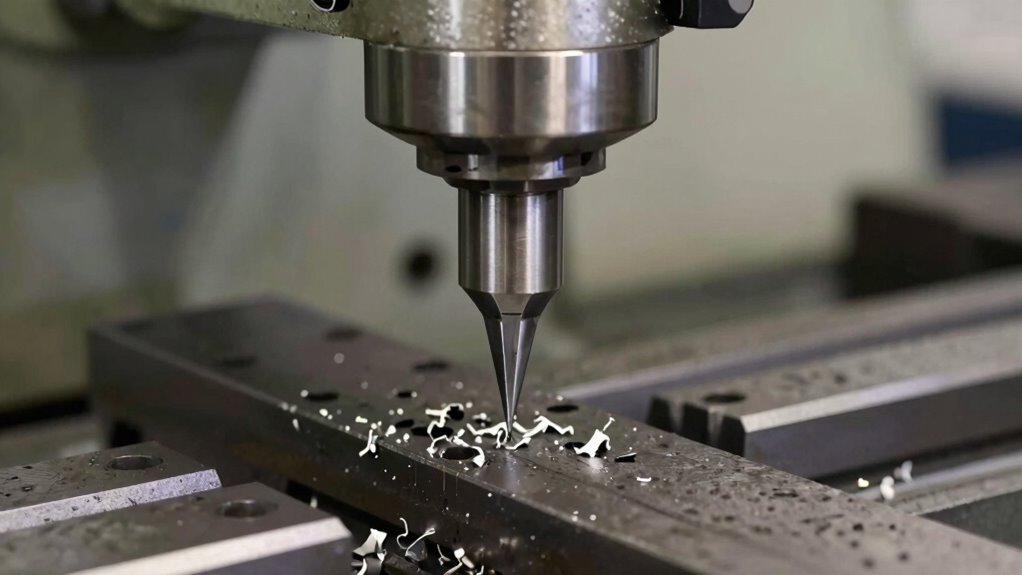

When your lathe tool catches, it’s often due to improper cutting angles or aggressive settings that cause the workpiece to grab. To prevent this, you should adjust the tool’s angle, ensuring it’s sharp and properly aligned for your material. Using the correct tool angle reduces cutting forces and minimizes the risk of catching. By maintaining the right setup, you protect your hands and equipment—if you want to learn more about fixing tool angles for safer machining, keep exploring the tips below.
Key Takeaways
- Proper tool angle reduces cutting forces and minimizes the risk of tool grabbing or catching during machining.
- Adjusting the tool’s cutting angle ensures smoother engagement and prevents sudden jerks that can cause safety hazards.
- Correct tool orientation distributes cutting load evenly, decreasing excessive friction and reducing tool catch incidents.
- Maintaining optimal tool angles helps prevent workpiece damage and protects operators from potential injuries.
- Regularly checking and fixing tool angles enhances machining safety, efficiency, and prolongs tool life.
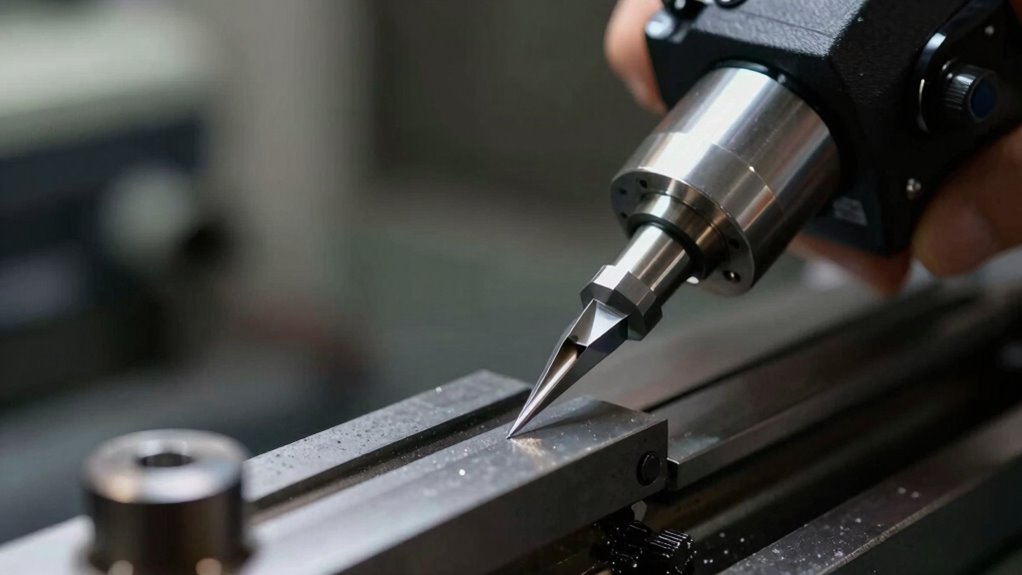
Have you ever wondered what happens when a lathe catches? It’s a sudden, jarring event that can cause damage to your workpiece, your machine, or even injure you if you’re not prepared. When a lathe catches, it usually means that the cutting process has gone awry, often due to improper settings or tool positioning. One vital factor influencing this is the cutting parameters you set before starting the operation. These include spindle speed, feed rate, and depth of cut. If these aren’t optimized for the material and tool you’re using, the chances of a catch increase dramatically. For example, setting a feed rate that’s too high or a spindle speed that’s too aggressive can cause the tool to dig in too deeply or grab hold of the workpiece unexpectedly. Over time, improper cutting parameters also accelerate tool wear, which further complicates the situation. As your tool wears down, its cutting edge becomes dull, leading to increased friction and heat. This not only reduces cutting efficiency but also makes the tool more prone to catching because it can’t cut smoothly anymore. Dull tools tend to cause uneven cutting forces, which can suddenly grab the workpiece and result in a catch. To prevent this, it’s essential to monitor your tool wear regularly and adjust your cutting parameters accordingly. When your tool is sharp and well-maintained, you can set more aggressive yet safe parameters, guaranteeing a smoother cut and less risk of catching. Conversely, when the tool is worn, reducing feed rates and spindle speeds can help minimize the likelihood of a catch. Properly selecting cutting parameters isn’t just about achieving a good finish; it’s also about safety. When you understand how different settings influence tool wear and cutting forces, you can better anticipate potential problems. For instance, cutting too aggressively might seem efficient but can cause the tool to wear out quickly or catch unexpectedly. On the other hand, conservative parameters may extend tool life but could increase machining time. Striking the right balance is key. By paying attention to your cutting parameters and inspecting your tools regularly, you can keep tool wear in check and reduce the chances of a lathe catch. Additionally, employing proper maintenance practices can prolong tool life and improve overall safety. Remember, a well-maintained tool and properly chosen parameters work together to ensure safer, smoother machining—saving you time, effort, and potential injuries. Ultimately, understanding the interplay between cutting parameters and tool wear empowers you to operate your lathe more confidently, making catches less frequent and your work more precise.

BLUEFOX TOOLS A1 Multifix Style 40 Position Quick Change Toolpost 150 – 300(6"- 12") Lathe Swing | 40 Different Angles | Selected From Position Dials | Rigidity Locks, Correct Height Of Cutting Edges
- Brand Introduction: Manufacturer of lathe and engineering tools
- 40 Adjustable Angles: Select from 40 different angles with dials
- Easy Height & Angle Adjustment: Adjust cutting tool height and angle easily
As an affiliate, we earn on qualifying purchases.
As an affiliate, we earn on qualifying purchases.
Frequently Asked Questions
How Can I Tell if My Tool Angle Is Correct?
You can tell if your tool angle is correct by checking tool angle measurements with a protractor or angle gauge, ensuring they match the recommended settings for your project. Use visual inspection techniques to look for consistent contact and smooth cuts, avoiding excessive tool wear or chatter. If the tool glides easily and produces a clean finish, your angle is likely correct. Regularly verify measurements and inspect visually to maintain safety and quality.
What Safety Gear Should I Wear When Adjusting Tool Angles?
When adjusting tool angles, you should always wear protective glasses to shield your eyes from chips and debris, and gloves to protect your hands from sharp edges. Make certain your gloves fit well and don’t interfere with machine operation. Always turn off the lathe before making adjustments, and stay alert to avoid accidents. Safety gear keeps you protected, so never skip wearing protective glasses and gloves during these tasks.
Are There Different Tool Angles for Various Materials?
Absolutely, different materials demand different tool angles—ignore this, and you risk turning a simple job into a disaster! For softer materials like plastics or aluminum, you use gentler angles to boost cutting efficiency without tearing. Harder materials like steel need sharper angles for precision and safety. Adjusting your tool angles based on material differences maximizes cutting efficiency and keeps your work smooth and safe. Don’t overlook this essential step!
How Often Should I Check and Adjust My Lathe’s Tool Angle?
You should check and adjust your lathe’s tool angle regularly, ideally after every few projects or if you notice tool wear. Frequent calibration ensures peak cutting performance and reduces the risk of catches. Keep an eye on tool wear signs, and when you see any, recalibrate the tool angle promptly. This proactive approach maintains precision, prolongs tool life, and keeps your work safe and efficient.
Can Improper Tool Angles Cause Long-Term Machine Damage?
Yes, improper tool angles can cause long-term machine damage by accelerating tool wear and affecting machine calibration. When your tool isn’t set correctly, it puts unnecessary stress on the lathe’s components, leading to misalignments and wear over time. Regularly checking and adjusting your tool angles helps prevent these issues, ensuring your machine stays accurate and lasts longer, saving you money and downtime in the long run.
Conclusion
Think of your lathe like a tightrope walker balancing perfectly. When you fix the tool angle, you’re fundamentally giving your hands a sturdy safety net, preventing sudden catches from knocking you off balance. With this simple fix, you stay steady and confident, gliding smoothly along your project. Remember, mastering this small adjustment is like adding a safety harness—you protect yourself and keep the show going without a stumble.