
Epoxy is your best fix when you need a strong, waterproof bond for repairs, inlays, or filling gaps in woodworking projects. It works well on damaged or uneven surfaces and adds a durable, glossy finish that enhances natural wood. However, it can become a mess if overapplied or used on textured surfaces, as it may obscure details or create spills. To master its proper use and avoid pitfalls, explore further to guarantee professional results.

Get business pricing on tools and workshop supplies
- Business-only prices and quantity discounts
- Tax-exempt purchasing
- Multiple users, one account, clear invoices
Key Takeaways
- Use epoxy for repairs, gaps, or decorative inlays needing strong, waterproof bonds that traditional glue can’t provide.
- Avoid epoxy if a matte or textured finish is desired, as its glossy surface may require additional finishing steps.
- Proper surface prep—clean, dry, dust-free—is essential for successful bonding and avoiding messes.
- Overapplication or uneven spreading can cause spills, obscure wood details, and create a messy appearance.
- Epoxy excels in artistic projects and sealing but may be a mess if not carefully mixed and applied within its working time.

Epoxy has become an indispensable tool for woodworking enthusiasts because of its versatility and strong bonding capabilities. Unlike traditional wood glue, epoxy can fill gaps, bond different materials, and create a durable, virtually waterproof seal. When you’re working on a project that demands extra strength or needs to withstand the elements, epoxy often outperforms standard adhesives. Its ability to penetrate porous surfaces and cure into a hard, resilient finish makes it ideal for repairs, inlays, or decorative accents. Knowing when to use epoxy versus other adhesives is key to achieving professional results, especially when considering finishing techniques. Wood glue is typically sufficient for most joinery, but epoxy shines when you need a more robust bond or are dealing with damaged or uneven surfaces.
Applying epoxy correctly is vital, and understanding its placement within your finishing techniques can make or break your project’s success. For example, if you’re sealing a surface before applying a clear coat or stain, epoxy offers a smooth, glass-like finish that enhances the natural beauty of your wood. It also acts as a protective layer, preventing moisture and environmental damage. However, it’s essential to prepare your surface properly—clean, dry, and free of dust—to guarantee maximum adhesion. Once mixed, epoxy can be tricky to work with because it has a limited working time before it begins to set, so you’ll want to have your project ready beforehand.
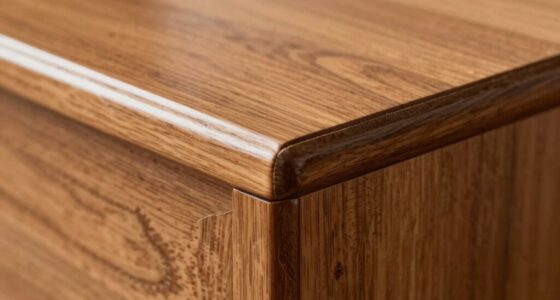
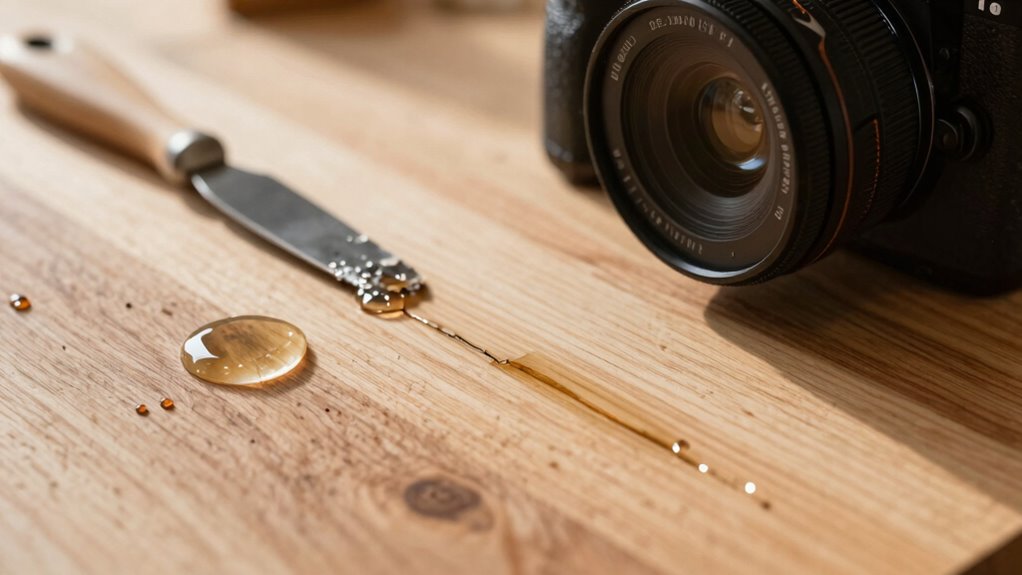
When you’re considering finishing techniques, epoxy can serve as both an adhesive and a topcoat. Its transparent finish adds depth and richness to wood grains, making it popular for river tables, jewelry boxes, and artistic inlays. But keep in mind that epoxy isn’t always suitable for every project. For instance, if you’re aiming for a matte or textured finish, epoxy’s glossy surface might require additional sanding or polishing. Also, be cautious about overusing it; too much epoxy can obscure the wood’s character or create a mess if spilled or applied unevenly.
As an affiliate, we earn on qualifying purchases.
Frequently Asked Questions
Can Epoxy Be Used on Outdoor Wooden Furniture?
Yes, you can use epoxy on outdoor wooden furniture. Just make sure to select an epoxy with outdoor durability and UV resistance, so it withstands weather conditions and sun exposure. Properly applying the epoxy creates a strong, waterproof seal that protects your furniture from moisture and damage. Remember, choosing the right type of epoxy guarantees your outdoor pieces stay beautiful and sturdy for years to come.
How Long Does Epoxy Typically Take to Cure Completely?
Epoxy typically takes 24 to 72 hours to cure completely, but curing time varies based on temperature effects. If you work in a warmer environment, it cures faster; cooler temperatures slow down the process. For best results, follow the manufacturer’s recommended curing time and keep the temperature steady. Patience is key—rushing curing can compromise the bond, so plan accordingly to ensure a strong, durable fix.
Is Epoxy Safe for Food-Contact Surfaces?
Yes, epoxy can be food-safe if you choose food-safe coatings specifically designed for contact with food. However, you need to be aware of epoxy limitations, such as proper curing and sealing, to guarantee safety. Always verify the epoxy’s certification and follow manufacturer instructions closely. If used correctly, epoxy provides a durable, safe surface for food contact, but improper application can lead to health risks.
Can Epoxy Be Sanded or Painted Over After Curing?
Yes, you can sand and paint over epoxy once it’s fully cured. Imagine achieving a smooth, flawless finish through epoxy sanding, which prepares the surface for painting. Just make certain the epoxy is thoroughly cured before you start. Lightly sand the surface to create a good grip for paint, then apply your chosen paint or topcoat. This process allows you to customize your project with a polished, professional look.
What Are Common Mistakes to Avoid When Applying Epoxy?
When applying epoxy, avoid common mistakes like improper mixing ratios and neglecting surface preparation. You should always measure your epoxy and hardener precisely to guarantee proper curing. Also, make sure the surface is clean, dry, and free of dust or oils, as this can cause adhesion issues. Rushing the process or applying epoxy in thick layers can lead to runs or uneven curing. Take your time for a smooth, durable finish.
Conclusion
Epoxy can be your best ally or your worst enemy in woodworking. When used correctly, it’s a seamless fix that restores strength and beauty; when misapplied, it becomes a frustrating mess that’s hard to undo. The key lies in understanding its strengths and limitations. With careful preparation and patience, epoxy elevates your projects. Otherwise, it’s a gamble that could leave your craftsmanship compromised, reminding you that sometimes, the best fixes come with a steep learning curve.
Fall yard work Picks
leaf blowers
As an affiliate, we earn on qualifying purchases.