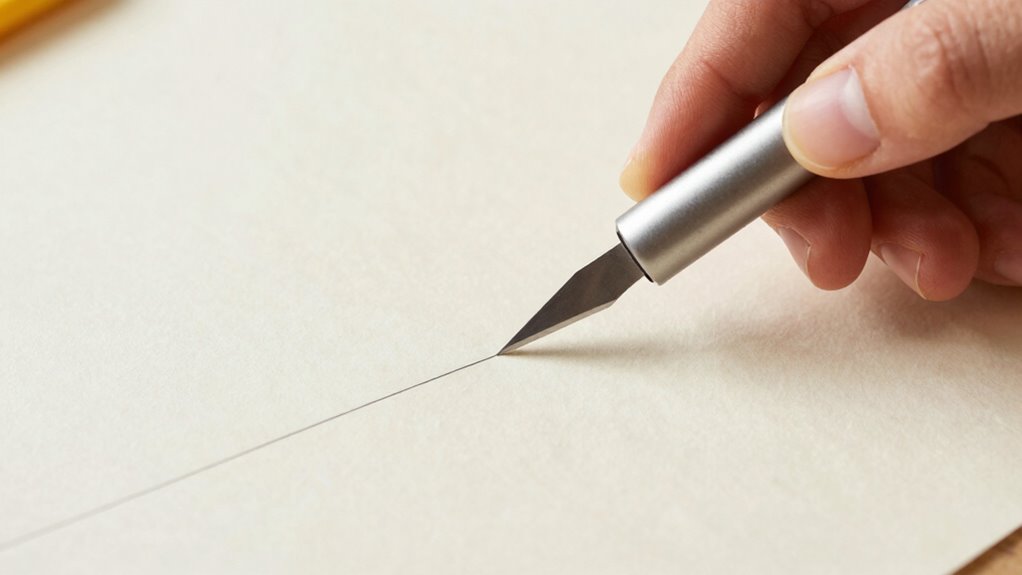

To create layout lines that don’t smudge, use a marking knife for precise scoring instead of pencils. Hold the knife at a consistent angle and apply steady pressure to score clean, sharp lines that stay clear during handling. Keep the blade sharp and lightly score multiple directions for deeper lines. Protect your markings with gentle handling or masking tape, and consider sealing afterward to maintain line integrity. Continue exploring to master this essential technique for accurate, smudge-proof markings.

Get tools and workshop supplies delivered free — and shop member deals
- Fast, free delivery on millions of items
- Access to Prime Big Deal Days deals on October 6–7
- Prime Video, Amazon Music and more included
Key Takeaways
- Keep the marking knife blade sharp for clean, precise lines that resist smudging.
- Hold the knife at a consistent angle and apply steady pressure to score fine, durable lines.
- Use smooth, clean surfaces free of dust and oils to ensure lines stay clear and sharp.
- Lightly score in multiple directions to deepen lines without tearing the material.
- Protect lines with masking tape or a light surface sealant to prevent smudging during handling.
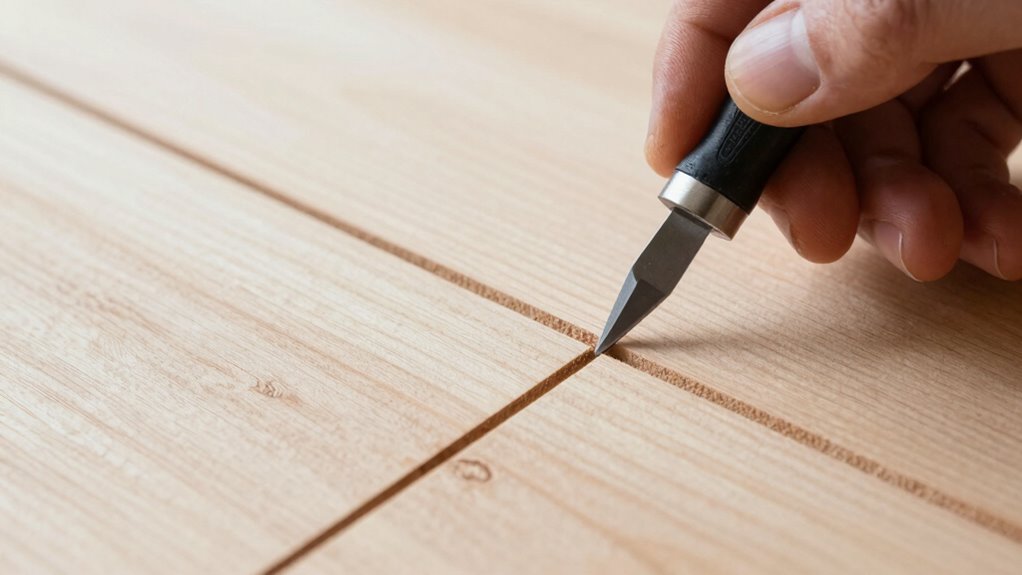
Have you ever struggled with layout lines smudging or fading before you finish your project? If so, you’re not alone. Many beginners face this common frustration, especially when working with delicate or dark materials. The key to avoiding this problem lies in mastering a simple yet effective method: precision marking combined with smudge prevention techniques. Using the right tools and techniques ensures your layout lines stay crisp and clear until you’re ready to cut or assemble.
Struggling with smudging? Precision marking and proper handling keep your lines crisp and clear throughout your project.
One of the most reliable ways to achieve precision marking is by using a marking knife instead of a pencil or pen. Unlike pencils, which can smudge easily and need frequent reapplication, a marking knife scores the surface, creating a fine, precise line. This technique allows you to mark accurately without applying excess pressure that could distort the wood or material. The result? Clean, clear lines that serve as reliable guides for your project.
Smudge prevention begins with how you handle your marking knife. Always make sure your blade is sharp; a dull knife can tear the surface or produce uneven lines, which may tempt you to go over the mark repeatedly, increasing the risk of smudging or accidental damage. When marking, hold the knife at a consistent angle and apply steady pressure to create a thin, precise line. This minimizes the need for multiple passes, reducing the chance of smudging or accidental smears.
Another important aspect of smudge prevention is choosing the right surface to mark on. Smooth, clean surfaces work best because they allow the knife to glide effortlessly and produce crisp lines. Before marking, make sure your material is free of dust, oil, or debris that could cause the knife to slip or produce inconsistent marks. You might also consider lightly scoring the surface in multiple directions to deepen the line, making it easier to see and less likely to fade or smudge during handling.
Furthermore, protecting your layout lines during the project is vital. Use masking tape or painter’s tape over your marked lines if you need to handle or move the material frequently. This prevents accidental smudging or abrasion that could blur your carefully made marks. If you want to preserve your lines for an extended period, you can also lightly seal the surface with a clear finish or wax, but only after double-checking the accuracy of your markings.
For added durability, selecting materials with high color contrast can make your lines more visible and easier to follow, especially in varying lighting conditions. In addition, correct surface preparation ensures your markings remain intact and precise throughout your project. In the end, precision marking with a good quality marking knife, combined with thoughtful smudge prevention practices, makes a noticeable difference. It ensures your layout lines stay sharp, clear, and reliable from start to finish. With a bit of practice, you’ll find this technique not only simplifies your workflow but also elevates the overall quality of your craftsmanship.
As an affiliate, we earn on qualifying purchases.
Frequently Asked Questions
Can Marking Knives Be Used on All Types of Wood?
Yes, marking knives can be used on most types of wood, but your choice depends on wood suitability and marking knife types. For softer woods, a fine-tipped knife works best to avoid tearing. Harder woods might require a sturdier knife with a thicker blade. Always select the right marking knife for your project, ensuring clean, precise lines without damaging the wood’s surface.
What Safety Precautions Should I Take When Using a Marking Knife?
Using a marking knife is like walking a tightrope—you need balance and focus. Always make certain proper hand positioning to avoid slips, keeping your fingers clear of the blade. Wear protective gear like gloves and safety glasses to shield yourself from accidental cuts or flying splinters. Never rush, and work in a well-lit, uncluttered area. Following these safety precautions keeps your woodworking safe and enjoyable.
How Do I Sharpen a Marking Knife Effectively?
To sharpen your marking knife effectively, focus on proper blade maintenance and sharpening techniques. Start by securing the blade and using a fine-grit sharpening stone or diamond plate. Maintain a consistent angle, usually around 20 degrees, and gently hone both sides of the blade. Regularly check for a sharp edge, and clean the blade afterward. This guarantees precise, clean lines without damaging your wood or smudging your layout lines.
Are There Alternative Tools to Marking Knives for Precise Lines?
Imagine drawing a crisp, clean line across your project like a steady river carving through land. Instead of a marking knife, you can use chalk lines or fine pencil markings for precision. Chalk lines snap taut to create straight, visible guides, while sharp pencils deliver detailed, accurate marks. These alternatives give you reliable control, helping you achieve neat, smudge-free layout lines without the need for a marking knife.
How Do I Prevent Tearing or Splitting When Using a Marking Knife?
To prevent tearing or splitting when using a marking knife, pay attention to grain direction—always cut along the wood’s grain. Keep the blade at a shallow angle, around 20-30 degrees, to reduce stress on the wood fibers. Use light, controlled strokes instead of pressing hard. This technique minimizes tearing, guarantees clean lines, and protects the wood, making your markings precise and safe.
Conclusion
Mastering the marking knife technique guarantees your layout lines stay crisp and smudge-free, saving you time and frustration. Did you know that woodworkers who use proper marking tools and techniques report a 30% reduction in layout errors? By following these simple steps, you’ll achieve cleaner, more precise results every time. Keep practicing, and soon your lines will be so accurate, your projects will look professionally finished without the need for constant corrections.
Halloween Picks
halloween
As an affiliate, we earn on qualifying purchases.