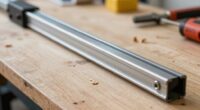
For cutting sheet goods in a small shop, a track saw generally delivers cleaner, more precise cuts thanks to its guided system and ability to make splinter-free edges. It’s safer and easier to control, especially for detailed work, with less setup required. While a table saw can handle larger cuts and ripping, it may produce rougher edges and has safety risks. To discover which option suits your needs best, keep exploring the details below.
Key Takeaways
- Track saws provide more precise, straight, and splinter-free cuts on sheet goods due to guided rails.
- Table saws can handle larger sheets and rip cuts but may require jigs for cleaner, precise edges.
- For detailed, clean cuts on sheet materials, track saws generally deliver superior results.
- Safety features of track saws reduce errors and improve cut quality, especially for beginners.
- Overall, track saws tend to cut cleaner on sheet goods in small shops due to their guided accuracy.
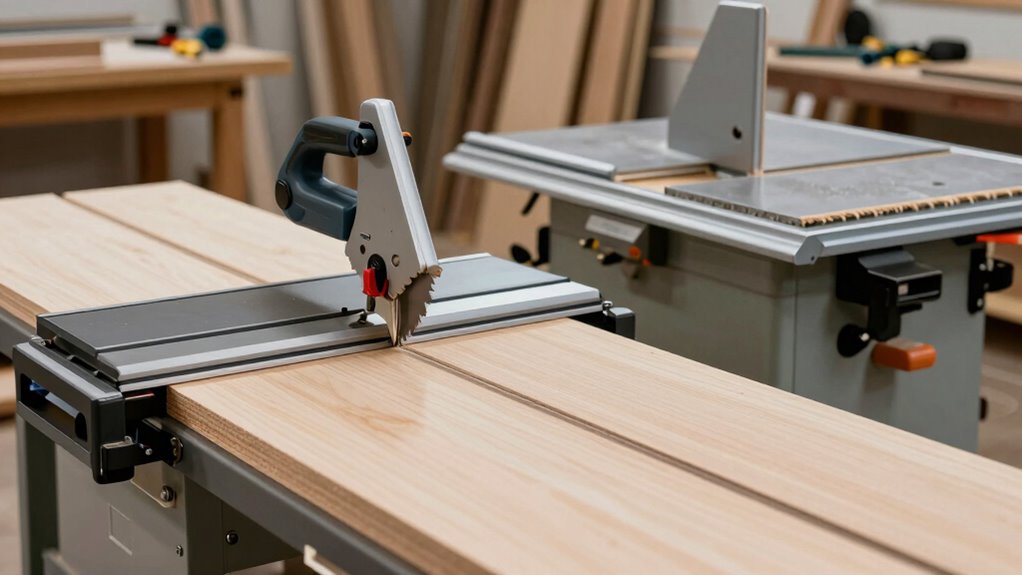
When choosing a tool for cutting sheet goods, understanding the differences between a track saw and a table saw is essential. Both tools serve important functions, but each excels in different areas of precision cuts and safety considerations. As you evaluate which to use in your small shop, consider how these factors influence your workflow and results.
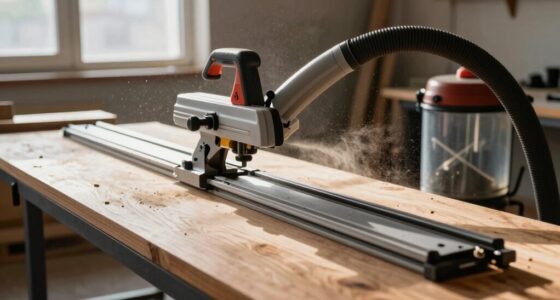
A track saw offers remarkable accuracy for cutting sheet materials. Its guided rail system ensures straight, clean cuts with minimal effort, making it ideal for precise edge work. When you use a track saw, you can achieve smooth, splinter-free cuts, reducing the need for finishing work. This level of precision is especially valuable when working on large panels or when cuts need to fit perfectly into a final project. The portability of a track saw also means you can make cuts directly on your work surface or even at your worksite, adding flexibility to your process. Plus, because the saw remains stationary and only the blade moves along the track, you have better control over the cut, which minimizes the risk of mistakes. Additionally, the dust collection capabilities of a track saw help keep your workspace cleaner and safer.
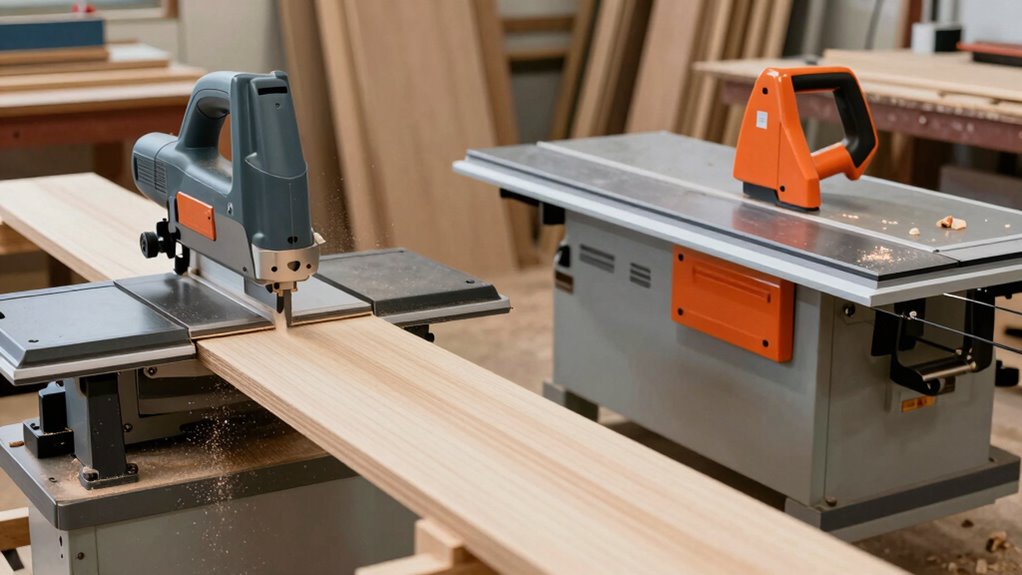
In contrast, a table saw is a versatile powerhouse, capable of handling a variety of cuts beyond sheet goods. It provides stability and power, enabling you to rip large sheets with ease. However, safety considerations become more significant with a table saw, especially for beginners. Its exposed blade and the need for proper push sticks and guards demand careful attention to avoid accidents. When used correctly, a table saw can produce clean cuts, but achieving the same level of precision as a track saw may require additional setup, jigs, or sleds. The inherent safety risks mean you need to stay alert and adopt best practices to prevent injuries.
Ultimately, your choice depends on your priorities. If precision cuts with minimal splintering are your main goal and you value portability, a track saw is likely the better option. It allows you to make accurate, clean cuts with less setup and fewer safety concerns during operation. On the other hand, if you need to rip large sheets regularly and value the versatility of a single machine, a table saw might suit your needs—though you’ll need to be mindful of safety considerations, especially when working with sheet goods.
In a small shop environment, weighing these factors helps you select the right tool for each task. The track saw’s precision and safety advantages make it particularly appealing for detailed work on sheet goods, whereas the table saw’s power and versatility serve broader cutting needs, provided you handle it with care.

Kreg KMA2700 Accu-Cut – Universal Track Saw Guide System – Cuts up to 50" Long – No Clamps Needed – Make Straight, Cross, Rip & Angled Cuts Easily – Circular Saw Guide – Woodworking Tool
- Precision Track Saw Guide: Turns circular saws into guided tools
- Universal Compatibility: Fits right- or left-handed saws
- Portable and Easy to Use: Make splinter-free cuts anywhere
As an affiliate, we earn on qualifying purchases.
As an affiliate, we earn on qualifying purchases.
Frequently Asked Questions
How Does Dust Collection Compare Between Track Saw and Table Saw?
Dust extraction is generally more effective with a track saw because it captures debris at the cut line, reducing airborne dust. A table saw can also manage debris well, especially with a good dust collection system, but it often produces more residual sawdust around the work area. You’ll find that a track saw offers better debris management, keeping your workspace cleaner and safer during cuts.
Which Tool Is More Portable for On-Site Sheet Cutting?
Like a trusty sidekick, a track saw offers unmatched portable convenience for on-site sheet cutting. Its lightweight design and ease of setup give you on-site versatility, allowing you to move quickly from job to job. Unlike bulky table saws, it’s made for portability, fitting into small spaces and tight corners. You’ll appreciate how easily it adapts to various locations, making your work more efficient and flexible wherever your projects take you.
Can a Track Saw Replace a Table Saw Entirely?
A track saw can’t replace a table saw entirely because of cutter precision and setup complexity. While a track saw offers excellent straight cuts and portability, a table saw provides more stability and is better suited for repetitive, precise cuts on large sheets. You’ll find each tool valuable for different tasks, so using both maximizes your shop’s efficiency without sacrificing cut quality.
What Safety Features Are Unique to Each Tool?
Imagine your tools as guardians in your workshop. The track saw boasts a safety mechanism that prevents accidental blade contact, making accident prevention easier. Its blade guard stays close, shielding you as you cut. The table saw, on the other hand, features riving knives and anti-kickback pawls, which act as vigilant protectors against kickbacks. Both tools prioritize safety, but their unique mechanisms keep you safer in different ways.
How Do Blade Costs Differ Between Track and Table Saws?
You’ll find that blade costs differ between track and table saws mainly due to blade durability and replacement expenses. Track saw blades tend to be less expensive and wear out faster, requiring more frequent replacements. In contrast, table saw blades are often pricier upfront but offer greater durability, meaning you’ll face lower replacement expenses over time. Consider your workload and budget to choose the best option for your shop.
Conclusion
Think of choosing between a track saw and a table saw like picking the right tool for a delicate dance. I once watched a small shop owner make perfect cuts with a track saw, like a skilled dancer gliding smoothly across the floor. If you value precision and cleaner cuts, especially on sheet goods, the track saw is your partner. But for bigger projects, the table saw might just lead the way. Choose wisely, and your cuts will always stay in step.