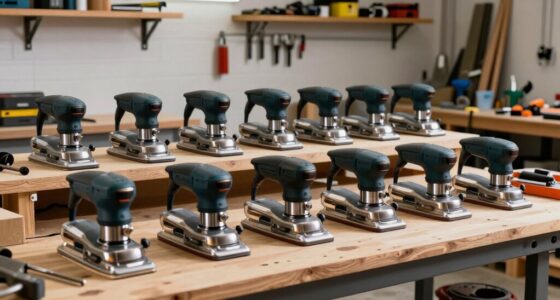
Choosing the right belt disc sander for a garage workshop in 2026 means balancing power, versatility, and space. The WEN Benchtop Belt and Disc Sander offers excellent value with its combination of tilting belt and sturdy cast iron base. The Woodskil 3A Variable Speed Sander stands out for precise control with variable speeds, ideal for detailed projects. For those needing a professional-grade tool, the VEVOR 6-Inch Combo provides a powerful motor and dust collection. Meanwhile, the DEWALT 8-inch Disc Sander balances power with stability for demanding tasks. Each of these options presents unique tradeoffs in power, size, and features, making it easier to pick the best fit for your garage.”

Get business pricing on tools and workshop supplies
- Business-only prices and quantity discounts
- Tax-exempt purchasing
- Multiple users, one account, clear invoices
Complete the kit


Key Takeaways
- The best overall for versatility is the WEN Benchtop Belt and Disc Sander, balancing features and price.
- For precision and control, the Woodskil 3A with variable speed is ideal, though it may be heavier.
- Professional users should consider the VEVOR combo for its power and dust collection, despite its lighter-duty design.
- The DEWALT offers a larger disc for heavy-duty tasks but is bulkier and less portable.
- Choosing depends on your workload, space, and need for adjustable features.


| belt disc sander for a garage workshop | Belt Size | Motor Power | Disc Diameter |
|---|---|---|---|
| WEN Benchtop Belt and Disc San | 4 x 36 inches | 4.3 Amp | — |
| Woodskil 3A Variable Speed Bel | 4 x 36 inches | — | 6 inches |
| VEVOR 6-Inch Disc Sander & 4-I | 4 x 36 inches | — | 6 inches |
| DEWALT 4" x 36" Belt and 8" Di | 4 x 36 inches | 7.0 AMP | 8 inches |
| Woodskil 4.3A Belt Disc Sander | 4 x 36 inches | 4.3A | — |
More Details on Our Top Picks
WEN Benchtop Belt and Disc Sander with 4 x 36 in. Belt and 6 in. Disc
This model shines as a versatile two-in-one sander, combining a 4×36 inch belt with a 6-inch disc. The belt tilts from 0 to 90 degrees, which is a major advantage for angled sanding tasks. Its sturdy cast iron base minimizes vibrations, resulting in smoother operation. Compared with more specialized units, the WEN offers excellent value for casual workshop use, though it may struggle with heavy-duty jobs due to its limited motor power. Its primary tradeoff is size and power—ideal for small projects but less suited to demanding workloads.
Pros:- Versatile two-in-one design for belt and disc sanding
- Belt tilts for angled sanding
- Sturdy cast iron base reduces vibrations
Cons:- Limited to small-scale projects
- No built-in dust collection system
- Motor may be underpowered for heavy-duty tasks
Best for: Hobbyists and DIY enthusiasts seeking a flexible, space-saving sander
Not ideal for: Heavy industrial or professional shop use with high-volume demands
- Belt Size:4 x 36 inches
- Disc Size:6 inches
- Motor Power:4.3 Amp
- Maximum RPM:3600 RPM
- Base Material:Cast iron
- Belt Tilt Range:0 to 90 degrees
Our verdict“A well-rounded, affordable choice for hobbyists needing versatility without heavy industrial power.”
Woodskil 3A Variable Speed Belt Disc Sander for Wood, 4×36″ Belt, 6″ Disc
The Woodskil 3A offers variable speed control, a feature that makes it stand out for detailed woodworking and finishing tasks. Its ability to adjust belt and disc speeds allows for fine-tuning based on the material and project requirements. The belt and disc can be operated horizontally or vertically, adding flexibility. However, its weight and limited dust collection details mean it’s best for users willing to manage some setup complexity. Compared with fixed-speed models, this sander provides greater control but may be less portable due to its weight.
Pros:- Variable speed control for tailored sanding
- Includes both belt and disc for multiple applications
- Horizontal and vertical operation options
Cons:- Limited info on noise levels
- No integrated dust collection system
- Potentially heavy for smaller workshops
Best for: Woodworkers and DIYers focusing on precision and finish quality
Not ideal for: Heavy-duty industrial applications or those seeking a lightweight, portable unit
- Amperage Capacity:3 A
- Maximum Rotational Speed:4000 rpm
- Disc Diameter:6 inches
- Belt Size:4 x 36 inches
Our verdict“Ideal for detailed woodworking and finishing projects where control outweighs portability.”
VEVOR 6-Inch Disc Sander & 4-Inch x 36-Inch Belt Sander Combo, 400W, Adjustable Worktable, Dust Collection Port
The VEVOR combo provides a powerful 400W motor, making it suitable for light to medium-duty tasks. Its adjustable worktable and multi-angle sanding capabilities give it flexibility for complex projects like knife sharpening or detailed woodworking. An added advantage is the dust collection port, which helps maintain a cleaner workspace, though it requires an external vacuum. This unit’s power and features make it a sound choice for semi-professional use, but its lighter-duty design limits heavy industrial applications.
Pros:- Powerful 400W motor for efficient sanding
- Adjustable worktable and belt angle
- Dust collection port for cleaner environment
Cons:- Limited to light to medium-duty tasks
- Requires external vacuum for dust extraction
- May be less suitable for continuous industrial use
Best for: Semi-professional woodworkers and hobbyists needing power and dust control
Not ideal for: Heavy industrial workshops or large-volume production
- Power:400W
- Disc Diameter:6 inches
- Belt Size:4 x 36 inches
- Disc Speed:3550 RPM
- Belt Speed:600 RPM
- Worktable Tilt:0 to 45 degrees
- Adjustable Angle:0 to 90 degrees
Our verdict“A solid balance of power, versatility, and workspace cleanliness for semi-professional workshops.”
DEWALT 4″ x 36″ Belt and 8″ Disc Sander
The DEWALT sander packs a potent 7.0 AMP motor, making it suitable for demanding and continuous use. Its 8-inch disc allows for larger surface area, speeding up larger projects. The independent adjustable work tables and tilting features provide precise control for complex angles. Despite its power and stability, its bulkier size demands more workshop space, and its weight can be a challenge for portability. Comparing with smaller units, it’s a clear winner for serious workshop environments, though less ideal for tight spaces or frequent moves.
Pros:- Powerful 7.0 AMP motor for demanding tasks
- Large 8-inch disc for faster work
- Independent, adjustable work tables
Cons:- Bulkier and heavier than smaller models
- No specific price info—may be more costly
- Requires ample workspace for operation
Best for: Heavy-duty workshops and professionals needing maximum power
Not ideal for: Small workshops or hobbyists with limited space
- Motor Power:7.0 AMP
- Disc Diameter:8 inches
- Belt Size:4 x 36 inches
- Table Tilt:Up to 45 degrees
- Independent Tables:Yes
Our verdict“A high-powered sander best suited for professional or heavy-duty workshop environments.”
Woodskil 4.3A Belt Disc Sander Combo for Woodworking, 4×36″ Belt, 6″ Disc
This upgraded model offers a 4.3A motor with a focus on safety and efficiency. Its adjustable belt and work table support a wide range of projects, from shaping to finishing. The dust exhaust system is a helpful feature for maintaining a cleaner workspace. While its power is sufficient for most hobbyist tasks, it may not hold up under continuous industrial use. Its heavier build and manual setup requirements make it less portable but still a strong contender for budget-conscious users.
Pros:- Affordable price point
- Adjustable belt and work table for versatility
- Dual dust exhaust ports for cleaner operation
Cons:- Heavy and bulky for small workshops
- Manual setup required for some adjustments
- Limited motor power for large projects
Best for: Beginner woodworkers or hobbyists on a budget
Not ideal for: Heavy-duty or industrial applications requiring maximum power
- Motor Power:4.3A
- Belt Size:4 x 36 inches
- Disc Size:6 inches
- Speed:3570 rpm
- Adjustable Belt Angle:0-90 degrees
- Adjustable Work Table:0-45 degrees
Our verdict“A cost-effective choice for beginners and hobbyists needing basic functionality.”

How We Picked
Our selection process focused on selecting models that balance power, versatility, and suitability for a garage workshop. I prioritized sanders with a combination of belt and disc functionality, adjustable features, and space-efficient designs. We evaluated motor power, build quality, ease of use, and dust collection options, aiming to recommend options for hobbyists and semi-professionals alike. Consideration was also given to price, user control, and durability, ensuring each product offers a clear advantage for specific workshop needs.
Factors to Consider When Choosing Belt Disc Sander For A Garage Workshop
When selecting a belt disc sander for your garage workshop, the key considerations include motor power, size, versatility, and dust management. I recommend thinking about your typical projects—whether you prioritize precision, power, or space-saving features. Adjustable components like belt tilt and worktable angles add flexibility, while dust collection improves workspace cleanliness. Understanding these factors helps in narrowing down options that match your workload and workshop constraints.
Motor Power and Performance
For garage workshops, a motor between 4 to 7 amps generally provides enough power for most hobbyist and light to medium tasks. Higher power models like the DEWALT are better suited for demanding, continuous use, while lower-power units like Woodskil are sufficient for occasional projects. Keep in mind that more powerful motors tend to be heavier and bulkier, which can impact portability and workspace requirements.
Size and Space Considerations
Space is often limited in a garage, so compact models like the WEN or Woodskil are advantageous for saving room. Larger units, such as the DEWALT, deliver more power but require dedicated space and may not be easily moved once set up. Consider your workshop dimensions and whether mobility or fixed installation better suits your needs.
Versatility and Adjustability
Features like tilting belts, adjustable worktables, and dual operation modes (horizontal/vertical) enhance the sander’s usefulness across different projects. Variable speed control, as seen in the Woodskil, allows more precise finishing, especially on delicate materials. However, more adjustable features often come with increased complexity and potential for maintenance or setup challenges.
Dust Collection and Safety
Effective dust management is vital for a clean and safe workspace. Models with built-in dust ports or exhaust systems, like VEVOR and Woodskil, help keep your workshop tidy. External vacuum setup might be necessary for some units, adding to the initial cost but improving overall safety and air quality. Always prioritize a model with good dust control, especially if you work with fine or hazardous materials.
Frequently Asked Questions
What size belt and disc should I consider for my garage workshop?
For most garage workshops, a 4×36 inch belt combined with a 6-inch disc strikes a good balance between versatility and space efficiency. These sizes are large enough for shaping and finishing tasks but compact enough to fit comfortably in a typical garage. Larger discs, like 8 inches, are better for bigger projects but take up more space and may be less maneuverable in tight quarters.
Is motor power really important for a garage sander?
Yes, motor power directly affects the sander’s ability to handle different materials and project sizes. A motor between 4 and 7 amps provides enough torque for hobbyist and light industrial tasks. Higher power models like the DEWALT are more suitable for demanding use, while lower-power units are sufficient for occasional or light projects. Keep in mind that more powerful motors tend to be heavier and less portable.
Should I prioritize adjustable features in my garage sander?
Absolutely, adjustable features such as tilting belts and worktables significantly increase a sander’s versatility. They allow you to perform angled cuts, detailed finishing, and complex shaping. However, more adjustments can sometimes introduce complexity, so consider your comfort with setup versus the benefits of flexibility. For hobbyists, easy-to-use tilt and height controls often make a big difference.
How important is dust collection in a garage sander?
Dust management is vital for maintaining a healthy and clean workspace. Models with built-in dust ports or exhaust systems help contain fine particles, reducing cleanup time and health risks. If a sander lacks a dust collection feature, you’ll likely need an external vacuum system, which adds to setup complexity and cost. Prioritize dust control if you work with fine or hazardous materials regularly.
Are heavier models better for garage use?
Heavier models often feature more robust construction and powerful motors, making them suitable for demanding projects. However, their weight can limit portability and ease of setup, especially in small garages. If you need a sander that stays put and handles larger tasks, a heavier unit makes sense. Conversely, for limited space or occasional use, lighter, more compact models are easier to handle and store.
Conclusion
For hobbyists and DIYers with limited space, the WEN or Woodskil models offer excellent versatility and control without overwhelming your garage. Those needing a balance of power and adjustability should consider the VEVOR combo, especially if dust management is a priority. Professionals or serious woodworkers requiring maximum power and stability will find the DEWALT a fitting choice, despite its size. Ultimately, your project scope, space, and budget should guide your pick, ensuring you select a sander that enhances your workshop without clutter or compromise.