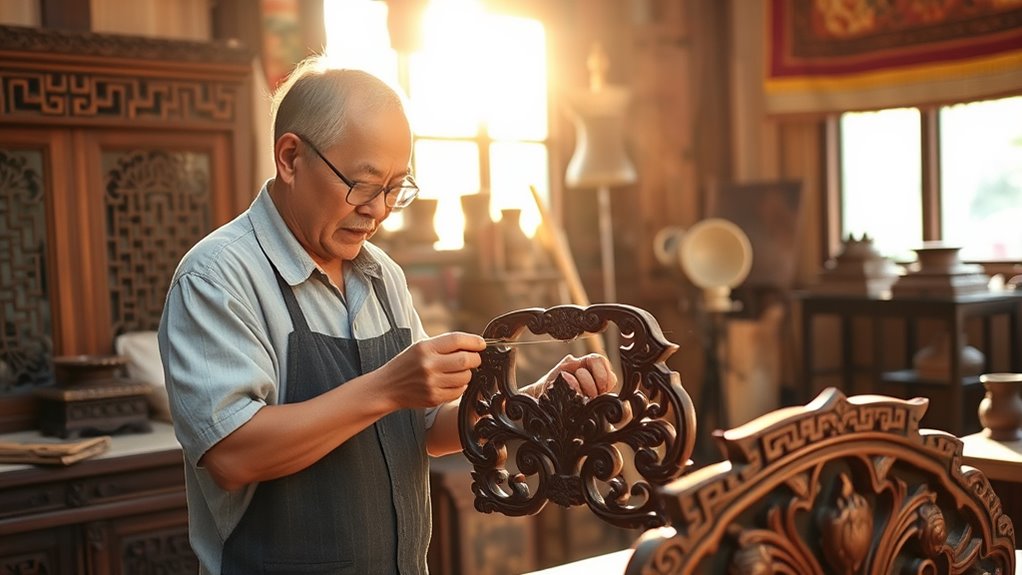

Exploring woodworking abroad reveals how different cultures prioritize craftsmanship, traditions, and environmental respect. You’ll notice unique techniques like Japan’s intricate joinery or Scandinavia’s focus on functionality and simplicity. Many crafts reflect deep cultural values, storytelling, and ancestral connections. Artisans often use sustainable materials and methods to honor land and resources. As you continue, you’ll discover how these diverse approaches preserve heritage and foster global appreciation for meaningful craftsmanship.

Get business pricing on tools and workshop supplies
- Business-only prices and quantity discounts
- Tax-exempt purchasing
- Multiple users, one account, clear invoices
Key Takeaways
- Different cultures showcase unique woodworking techniques that reflect their historical, environmental, and aesthetic values.
- Traditional methods often incorporate symbolic motifs and storytelling, preserving cultural identity through craftsmanship.
- Sustainable practices, such as local sourcing and durable designs, are integral to many regional woodworking traditions.
- Regional styles, like Japanese joinery or Scandinavian simplicity, exemplify distinct philosophies and technical approaches.
- Global exploration of woodworking highlights shared values of environmental respect, cultural expression, and craftsmanship mastery.
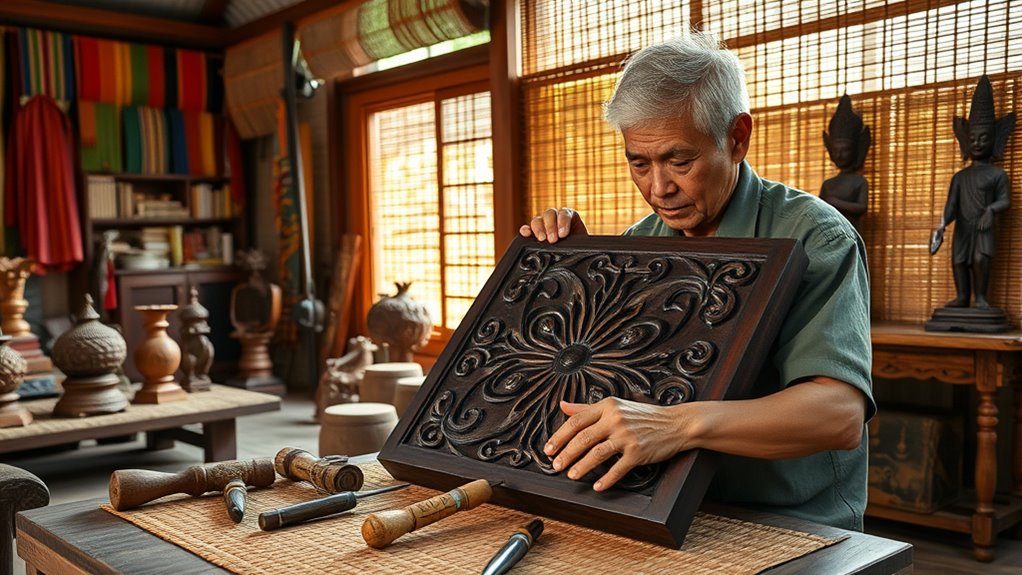
Have you ever wondered how woodworking traditions differ around the world? Every culture approaches craftsmanship with its own set of values, techniques, and philosophies, shaping the way woodworkers create their pieces. When you explore these diverse traditions, you gain insight into how deeply rooted they are in history and environment. For example, many communities emphasize sustainable practices, guaranteeing they honor nature while crafting functional and beautiful objects. This means using locally sourced, responsibly harvested wood, and designing pieces that last for generations, reducing waste and environmental impact. Such practices reflect a deep respect for the land and resources, often passed down through generations as part of cultural heritage. Engaging with traditional woodworking can also inspire creative exploration and innovative techniques that blend old and new methods. Traditional techniques play a significant role in defining woodworking styles across different regions. These methods are not merely about tools but embody a way of life, a connection to ancestors, and a reflection of local resources. In Japan, woodworking is characterized by intricate joinery that avoids nails and glue, showcasing precision and patience. These techniques are learned through apprenticeship and emphasize harmony with the natural properties of wood. Conversely, Scandinavian woodworking often highlights simplicity and functionality, using techniques that prioritize clean lines and durability, suitable for harsh climates. Indigenous communities in North America incorporate natural dyes, carvings, and symbolic motifs into their woodworking, blending artistry with storytelling.
As you explore international craftsmanship, you’ll notice that many cultures maintain a strong respect for traditional techniques. These methods are often resistant to mass production, emphasizing handcraftsmanship and unique detailing. They serve as a bridge between past and present, preserving cultural identity amid modern influences. Furthermore, these techniques often incorporate sustainable practices, such as selecting specific wood types that grow quickly or are abundant, and employing methods that minimize waste. By valuing traditional techniques and sustainable practices, artisans ensure their crafts remain relevant while respecting the environment.
Understanding these diverse approaches can deepen your appreciation for woodworking as a universal art form rooted in cultural identity. When you adopt or learn from these traditions, you’re not just creating objects—you’re participating in a lineage that honors history, environment, and community. Whether it’s the meticulous joinery of Japanese carpentry, the functional elegance of Scandinavian design, or the symbolic carvings of Indigenous artisans, each tradition offers a unique perspective on how woodworking can be a sustainable and culturally meaningful pursuit. Exploring these practices encourages you to see woodworking not just as a craft but as a way to connect with different ways of life around the world.
Japanese woodworking joinery tools
As an affiliate, we earn on qualifying purchases.
As an affiliate, we earn on qualifying purchases.
Frequently Asked Questions
How Do Local Customs Influence Woodworking Styles Abroad?
Local customs deeply influence your woodworking styles abroad by shaping how you incorporate cultural symbolism into your designs. You often adopt traditional techniques passed down through generations, which reflect the community’s values and history. These customs guide your choice of materials, motifs, and craftsmanship methods, creating unique pieces that honor local traditions. Embracing these influences helps you produce authentic work that resonates with the cultural identity of the place you’re working in.
What Are Common Challenges Faced by Foreign Woodworkers?
You might face challenges like language barriers that make communication with locals and suppliers difficult. Sourcing difficulties can arise when you struggle to find authentic or suitable materials, especially in unfamiliar regions. These obstacles may slow your progress, cause misunderstandings, or increase costs. To overcome them, learn basic local phrases, build relationships with trusted suppliers, and adapt your methods to the available resources, ensuring your craftsmanship remains authentic and efficient.
How Do Legal Regulations Affect Woodworking Exports Internationally?
Legal regulations substantially impact your woodworking exports internationally. Tariff barriers can increase costs, making your products less competitive abroad. You also need to navigate export licensing requirements, which can be time-consuming and complex. Failing to comply may result in delays or fines. To succeed, stay informed about these regulations, work with legal experts, and ensure all documentation is accurate and complete to smoothly export your craftsmanship worldwide.
What Tools Are Unique to Specific Cultural Woodworking Traditions?
Imagine a master’s hand guiding a chisel—here, traditional joinery becomes your symbol of precision, unique to each culture’s craftsmanship. You’ll notice that in Japan, intricate decorative carvings adorn furniture, reflecting spiritual beliefs, while in Scandinavia, the use of specific hand tools emphasizes simplicity and durability. These tools aren’t just instruments; they embody cultural identity, telling stories through every joint and carved motif you create.
How Does Climate Impact Wood Selection in Different Countries?
Climate greatly impacts your wood selection by influencing wood moisture levels and the types of tree species available. In humid regions, you’ll find denser, moisture-resistant wood suited for high humidity, while in dry areas, lighter, more prone to cracking timber is common. You should choose tree species adapted to local climate conditions to guarantee your projects remain durable and stable, reducing warping and splitting over time.
Conclusion
As you explore woodworking around the world, you’ll discover unique techniques and rich cultural stories shaping each craft. Did you know that over 60% of artisans in some countries pass down their skills through generations? Embracing these diverse approaches not only deepens your appreciation but also inspires your own craftsmanship. So, keep exploring, learning, and connecting with these cultural traditions—you’ll find that every piece tells a story worth sharing.
Fall Picks
fall essentials
As an affiliate, we earn on qualifying purchases.