Pine is an affordable and highly versatile wood perfect for various projects around your home. Its natural, attractive grain makes it ideal for furniture, paneling, shelves, and decorative accents. Thanks to its softness, it’s easy to cut, shape, and customize with stains or paint, making it great for beginners and DIY enthusiasts. Plus, sustainably sourced pine supports eco-friendly projects. Keep exploring to discover how you can get the most out of this popular wood.
Key Takeaways
- Pine is an affordable, versatile wood suitable for furniture, paneling, and decorative projects.
- Its soft, easy-to-work nature makes it ideal for DIY projects and beginner carpentry.
- Pine’s attractive grain and ability to be stained or painted enhance its decorative appeal.
- It is a sustainable, fast-growing resource, supporting eco-friendly harvesting practices.
- Common applications include shelves, furniture, paneling, and decorative accents across various styles.
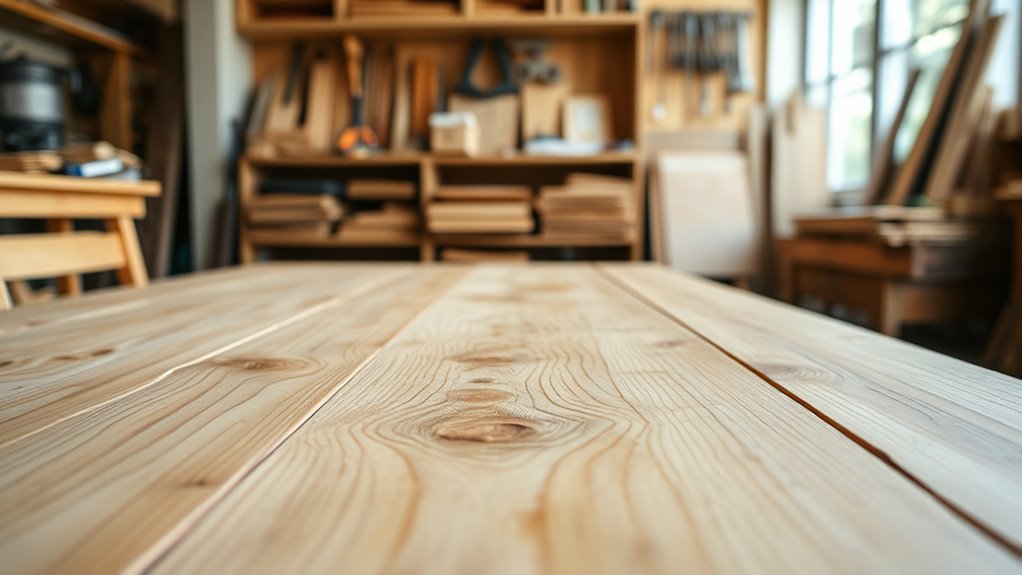
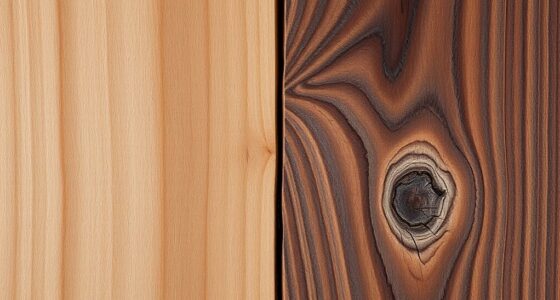
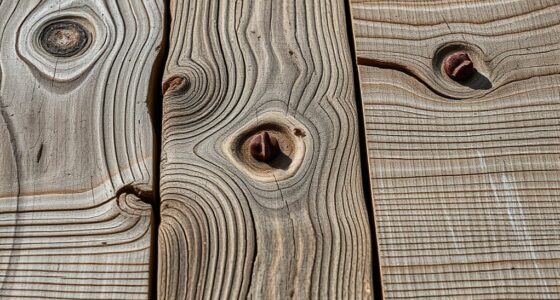
Pine is one of the most affordable and versatile woods available, making it a popular choice for countless projects. Its attractive wood grain features subtle knots and a warm, inviting appearance that can be easily stained or painted to match any style. When you work with pine, you’ll notice how its natural patterns add character to furniture, paneling, or decor, giving each piece a unique touch. Its softness makes it easy to cut, shape, and assemble, which is especially helpful if you’re a beginner or working on intricate designs. Because of its affordability and ease of use, pine remains a top option for DIY enthusiasts, carpenters, and hobbyists alike.
In addition to its aesthetic appeal, pine is recognized for its positive sustainability factors. If environmental impact matters to you, you’ll be pleased to know that pine grows quickly compared to many hardwoods, making it a renewable resource. Its rapid growth cycle allows for more sustainable harvesting practices, reducing long-term environmental stress. When sourcing pine, you can often opt for certified products that adhere to responsible forestry standards, ensuring that your project supports eco-friendly practices. This sustainability factor is increasingly important as you look for ways to minimize your carbon footprint while still achieving beautiful results. Pine plantations can be managed in a way that maintains healthy ecosystems, providing a sustainable supply without depleting natural forests.
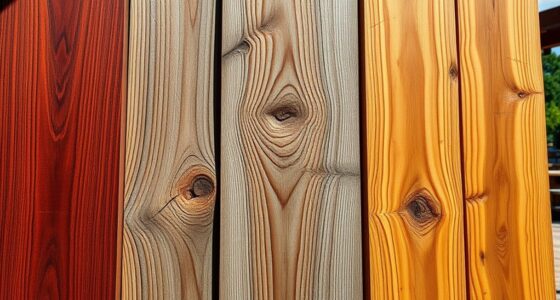
The wood grain of pine plays a significant role in its versatility. Its straight, uniform grain makes it easy to work with, and it can be sanded smooth or left textured for rustic looks. The natural grain pattern adds visual interest, especially when finished with a clear coat or stain that highlights its inherent beauty. Whether you’re creating a simple shelf, a detailed piece of furniture, or decorative accents, pine’s wood grain offers a consistent yet characterful appearance that complements a variety of styles. Plus, because it absorbs stains and finishes well, you can customize its look to suit your project’s aesthetic. Additionally, easy to stain or paint qualities allow for flexible design options that match any decor.

Boncart Wood Furniture Repair Kit-Set of 31
- All-in-One Repair Kit: Includes putty, pastes, markers, tools
- Multi-Color Matching: 10 pastes and 8 markers for seamless blending
- Wide Application: Repairs scratches, dents, cracks on various wood surfaces
As an affiliate, we earn on qualifying purchases.
As an affiliate, we earn on qualifying purchases.
Frequently Asked Questions
Is Pine Suitable for Outdoor Furniture?
Yes, pine is suitable for outdoor furniture if you select treated or weather-resistant varieties. You should also apply a protective finish to enhance garden durability and weather resistance. Pine’s affordability makes it a popular choice, but keep in mind it requires regular maintenance to withstand outdoor elements. Proper sealing and finishing will help your furniture last longer and resist damage from rain, sun, and humidity.
How Long Does Pine Furniture Typically Last?
Pine furniture usually lasts about 5 to 10 years if you consider durability considerations and maintenance tips. To extend its lifespan, regularly clean it, apply protective finishes like sealants or paint, and keep it sheltered from harsh weather. Proper care helps prevent damage from moisture and pests. With consistent upkeep, your pine furniture can stay attractive and functional for many years, making it a smart, affordable choice.
Can Pine Be Stained or Painted Easily?
Like a vintage vinyl, pine takes stain and paint easily, making it a versatile choice for your projects. You’ll notice the beautiful wood grain enhances the finish, giving your furniture a rich look. Just make certain proper preparation—sanding smooth and applying a primer boosts paint adhesion. This way, your painted or stained pine piece will look fresh and last longer, transforming your space with minimal fuss.
Is Pine a Sustainable Wood Choice?
Yes, pine is a sustainable wood choice if you focus on eco-friendly sourcing and proper wood preservation. Look for suppliers committed to responsible harvesting practices to reduce environmental impact. Pine grows quickly, making it a renewable resource. By choosing sustainably sourced pine, you support eco-friendly practices while enjoying its affordability. Proper wood preservation also helps extend its lifespan, ensuring your investment remains environmentally conscious over time.
What Are Common Pests That Affect Pine?
You should watch out for pests like pine beetles, sawflies, and borers that commonly affect pine trees. To protect your trees, use pest prevention techniques such as proper pruning and maintaining healthy growth. Consider planting pest-resistant varieties when possible, as they help reduce infestations. Regular inspections and early treatment are key to managing these pests, ensuring your pine trees stay healthy and vibrant over time.
Conclusion
Pine wood is like a trusty friend that’s always there—affordable, versatile, and easy to work with. Whether you’re crafting furniture or adding a rustic charm to your home, it’s the canvas for your creativity. Think of it as a blank slate, waiting for your touch to bring warmth and character. With pine by your side, you can turn simple ideas into beautiful realities, making every project feel like a walk in a sunlit forest.