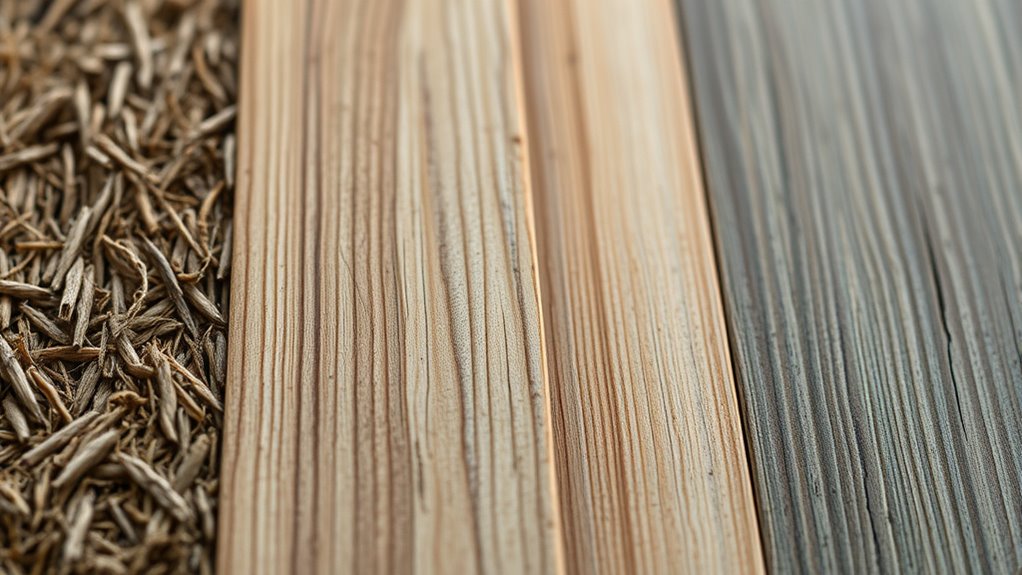

Natural fiber boards made from hemp, flax, and other plant-based materials are great eco-friendly options. They come from renewable resources that require less energy during manufacturing, helping reduce your environmental impact. These boards emit fewer VOCs, improve indoor air quality, and are biodegradable or recyclable. Their strength, insulation, and lightweight design make them practical for various projects. To discover how these sustainable materials can fit into your eco-conscious plans, explore more about their benefits.
Key Takeaways
- Natural fiber boards made from renewable materials like hemp, flax, and other plant fibers offer eco-friendly alternatives to traditional wood-based panels.
- These boards are produced using natural adhesives, reducing reliance on toxic chemicals and lowering environmental impact.
- They contribute to improved indoor air quality by emitting fewer VOCs and supporting healthier living environments.
- Known for their strength, insulation, and resistance to pests and mold, they are versatile for sustainable construction and design projects.
- Their biodegradability and recyclability support circular economy principles, promoting long-term environmental benefits.
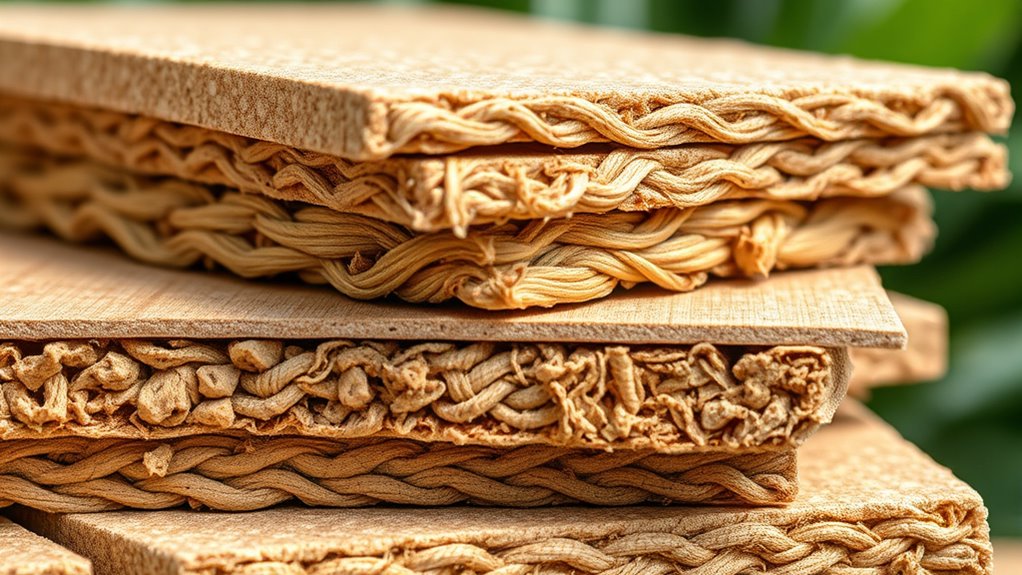
Are you looking for sustainable alternatives to traditional building materials? If so, natural fiber boards made from hemp, flax, and other plant fibers could be exactly what you need. These materials are gaining popularity because they align with the principles of sustainable manufacturing, which aims to reduce environmental impact while maintaining durability and functionality. Unlike conventional wood-based boards, natural fiber boards are produced using renewable resources and require less energy during manufacturing. This not only helps conserve non-renewable resources but also minimizes greenhouse gas emissions, making them a more eco-friendly choice.
Natural fiber boards from hemp and flax offer eco-friendly, sustainable building solutions.
When you choose natural fiber boards, you’re opting for materials that have a considerably lower environmental impact. Hemp and flax, for instance, grow rapidly and require minimal pesticides or fertilizers, making their cultivation less damaging to ecosystems. Their fast growth rate means they can be harvested multiple times a year, providing a continuous supply without depleting natural forests. This sustainable cycle reduces deforestation and helps preserve biodiversity. Additionally, the manufacturing process for these fiber boards often involves using natural binders or adhesives, further decreasing reliance on toxic chemicals that can pollute air and water sources.
Using natural fiber boards also supports healthier indoor environments. Since they’re made from organic materials, they tend to emit fewer volatile organic compounds (VOCs) compared to synthetic alternatives. This means less off-gassing and better air quality in your living or working space. Furthermore, these boards are often biodegradable or recyclable, which means they won’t contribute to long-term waste in landfills, unlike some traditional materials that persist for decades. If you’re committed to eco-conscious building practices, natural fiber boards fit seamlessly into sustainable design strategies that aim to reduce waste and promote circular economy principles. Moreover, advancements in material innovation are continually improving the durability and aesthetic appeal of natural fiber boards, making them an even more viable option for various applications.
In terms of performance, natural fiber boards are quite versatile. They offer good strength, insulation properties, and resistance to pests and mold when treated properly. Their lightweight nature makes them easier to handle and install, reducing the energy needed during transportation and construction. As the demand for environmentally responsible construction materials grows, manufacturers are investing in innovations to improve the durability and appearance of natural fiber boards, making them even more attractive for eco-conscious projects. When you select these alternatives, you’re not just choosing a sustainable product — you’re actively contributing to a cleaner environment and a healthier planet, all while benefiting from a versatile, high-performance building material.
eco-friendly hemp fiber board panels
As an affiliate, we earn on qualifying purchases.
As an affiliate, we earn on qualifying purchases.
Frequently Asked Questions
How Do Natural Fiber Boards Compare in Cost to Traditional Wood Panels?
Natural fiber boards generally cost more than traditional wood panels, but their affordability varies based on the material and supplier. In a cost comparison and affordability analysis, you’ll find that hemp and flax boards might initially seem pricier due to processing and sourcing, but they can offer long-term savings through durability and eco benefits. Consider your project needs carefully to determine if the higher upfront cost aligns with your sustainability goals and budget.
Are Natural Fiber Boards Suitable for Outdoor Construction Applications?
You might wonder if natural fiber boards can handle outdoor use. While they’re eco-friendly, their weather resistance and durability vary. Hemp and flax boards offer some resistance, but prolonged exposure to moisture and UV rays can weaken them over time. For outdoor construction, you’d need to take into account protective coatings or treatments, as natural fiber boards generally aren’t as durable as traditional materials in harsh weather conditions.
What Are the Best Practices for Maintaining Natural Fiber Boards?
To maintain natural fiber boards, you should regularly clean them with gentle, dry brushes or damp cloths to remove dirt. Use sealing techniques like applying breathable sealants to protect against moisture and weather damage. Avoid harsh chemicals that can degrade the fibers. Periodically inspect for cracks or damage, and reapply sealant as needed to extend their lifespan and preserve their appearance in outdoor settings.
Can Natural Fiber Boards Be Recycled or Repurposed Easily?
You can definitely repurpose natural fiber boards, but recycling them isn’t always a walk in the park due to recycling challenges. You might find it tricky to break down or process the materials, but repurposing methods like turning old boards into art, furniture, or garden beds are great ways to extend their life. With some creativity, you turn waste into worth, giving these boards a second chance instead of hitting the landfill.
How Do Natural Fiber Boards Impact Indoor Air Quality?
Natural fiber boards improve indoor air quality by emitting fewer volatile organic compounds (VOCs), leading to better air quality benefits. They also support emission reduction efforts, as their natural materials produce fewer harmful emissions compared to synthetic alternatives. When you choose these boards, you help create a healthier indoor environment, reducing potential respiratory issues and ensuring cleaner, safer air inside your home or workspace.
Conclusion
By exploring natural fiber boards like hemp and flax, you open the door to a more sustainable future. These eco-friendly alternatives gently hint at a world where you can make a difference without sacrificing quality or style. Embrace these innovative materials and discover how small choices can lead to a brighter, greener tomorrow. After all, sometimes the most subtle changes can create the most meaningful impact—so why not start today?