Building a wooden headboard lets you choose from styles like rustic, modern, or vintage, and personalize your space. Start by selecting the right materials, such as hardwoods or softwoods, based on your skill level and decor. Measure your bed, sketch your design, and gather tools. Carefully cut, sand, and assemble your pieces, then finish with stain or paint. Continue exploring to discover tips that’ll help you create a stunning, functional headboard tailored to your style.
Key Takeaways
- Choose a style that complements your bedroom decor, such as rustic, modern, or vintage, to guide design and installation.
- Select appropriate wood materials (hardwood or softwood) based on durability, budget, and desired finish.
- Accurately measure your bed to determine the headboard’s size and design details before construction.
- Use proper tools and techniques, including pre-drilling and sanding, for a sturdy and smooth headboard.
- Securely install the headboard to the wall or bed frame, ensuring proper height and stability for long-term use.
Ever wondered how to create a stylish and functional headboard for your bed? Building your own wooden headboard not only adds a personal touch to your bedroom but also allows you to choose a style that perfectly fits your space. To start, you’ll want to gather some design inspiration. Browse through furniture magazines, online design boards, or visit local home decor stores to see what styles catch your eye. Whether you prefer a rustic, modern, or vintage look, pinpointing your preferred aesthetic will guide your project. Once you’ve decided on a style, you can focus on material selection, which is *vital* for both durability and appearance.
Design your own wooden headboard by gathering inspiration and choosing the right materials for style and durability.
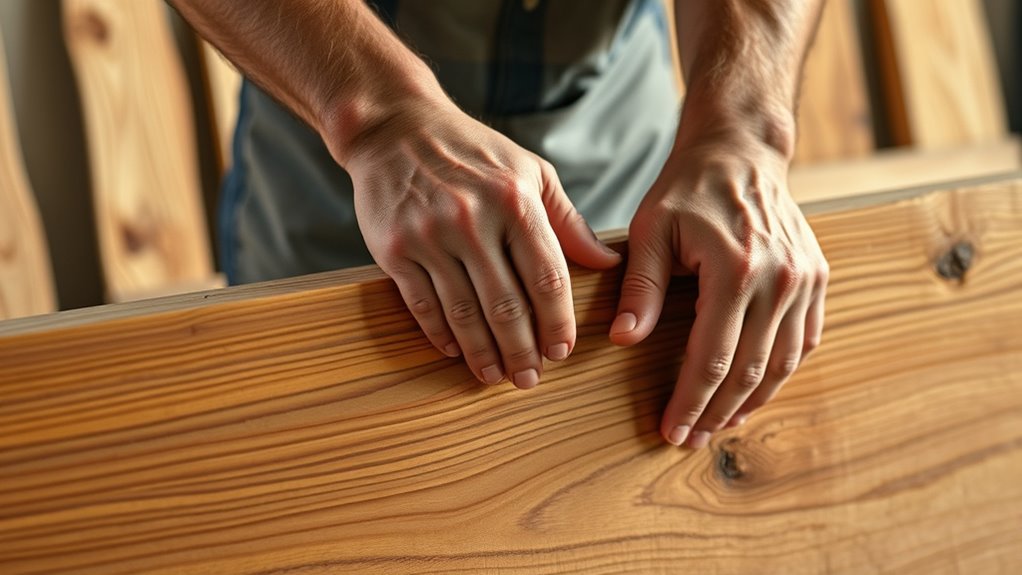
When selecting materials, think about the type of wood that complements your room’s decor and fits your skill level. Hardwoods like oak, walnut, or maple are popular because they’re sturdy and age beautifully, but they can be heavier and pricier. Softwoods like pine or cedar are easier to work with, more budget-friendly, and still provide a charming finish. Consider also the grain pattern and color of the wood, as these elements will influence the overall look of your headboard. For a sleek, contemporary vibe, smooth, painted or stained wood works well, while a distressed or reclaimed wood finish offers a rustic charm.
Once you’ve nailed down your design inspiration and material selection, you can start planning the construction. Measure your bed to determine the proper height and width, ensuring your headboard will fit comfortably behind your mattress. Sketch your design to outline the dimensions and details, such as decorative accents or paneling. If you’re aiming for a minimalist look, a simple rectangular panel might suffice. For a more elaborate style, consider adding carved details, insets, or mixed wood finishes.
Choosing the right type of wood and design details will influence the tools and techniques you’ll need for assembly. For example, if you opt for a layered or inlaid design, you’ll want to plan for precise cuts and joining methods. Pre-drilling holes can prevent splitting, especially with softer woods. Sanding the surface thoroughly will give your headboard a smooth finish before applying stain or paint. Additionally, understanding wall organization options can help you incorporate hooks or shelving into your headboard design for added functionality. Remember, the key to a successful project is blending your creative ideas with practical material choices, ensuring your headboard isn’t just beautiful but also sturdy and long-lasting. With a clear plan rooted in good design inspiration and thoughtful material selection, you’ll be well on your way to creating a custom wooden headboard that enhances your bedroom’s style and comfort.

WOODCRAFT Project Paper Plan to Build Storage Headboard – Material Not Included
- Material Not Included: Paper plan only
- DIY Project: Build it yourself
- Headboard Dimensions: Full: 59-3/4" wide, 8-3/8" deep, 36" high
As an affiliate, we earn on qualifying purchases.
As an affiliate, we earn on qualifying purchases.
Frequently Asked Questions
What Tools Are Essential for Headboard Installation?
You’ll need essential tools like a drill, screwdriver, measuring tape, level, and possibly a saw. Always follow safety precautions, such as wearing goggles and gloves, to prevent injuries. While wood is common, consider alternative materials like MDF or metal if you want an easier installation. These tools help guarantee your headboard is securely and accurately installed, making the process safer and more efficient.
How Do I Choose the Right Wood Type?
You should choose a wood type based on its wood grain and durability, which directly affect the headboard’s appearance and longevity. Opt for hardwoods like oak or maple for a strong, durable headboard with attractive grain patterns. If you want a softer option, pine can work, but it may show dents more easily. Consider your style preferences and how much wear and tear the headboard will endure to pick the best wood type.
Can I Customize Headboard Dimensions Easily?
Yes, you can easily customize headboard dimensions for your space. To do so, measure your desired headboard height and width, then modify your design accordingly. When planning your headboard, consider the overall room decor and comfort. Use quality wood and tools for precise cuts, and don’t forget to sand and finish your piece for a polished look. Customizing design and size ensures your headboard fits perfectly and matches your style.
How Do I Maintain the Wood Finish Over Time?
Think of your wood finish like a delicate dance, needing the right steps to stay in rhythm. To maintain it over time, regularly clean your headboard with a soft cloth to avoid dust settling into the wood grain. Apply protective coatings like wax or furniture polish every few months to shield against scratches and moisture. This keeps your headboard looking fresh, vibrant, and beautifully preserved, dance-worthy for years to come.
Is It Necessary to Secure the Headboard to the Bed Frame?
Yes, you should fasten the headboard to the bed frame for safety considerations and to guarantee bed frame compatibility. Securing it prevents wobbling or tipping, especially if you tend to move a lot during sleep. Use brackets or bolts designed for your bed frame and headboard type. Doing this keeps your bed stable, reduces accidents, and prolongs the headboard’s lifespan, making your sleep space safer and more comfortable.
Conclusion
As you finish installing your wooden headboard, it feels like the perfect finishing touch, much like finding that missing puzzle piece you didn’t realize was missing. The warm glow of your bedside lamp now highlights the rich grain of your craftsmanship, making your bedroom feel truly yours. Sometimes, the simplest projects lead to the most satisfying results—just like this one. Now, every night, as you settle in, you’ll appreciate how your hands brought this cozy, stylish space to life.