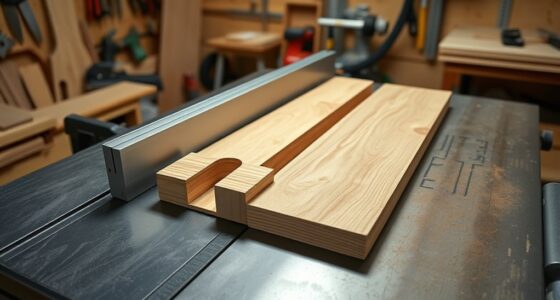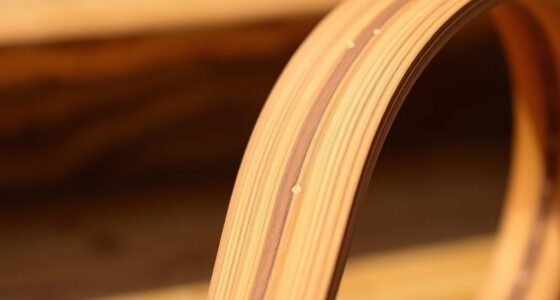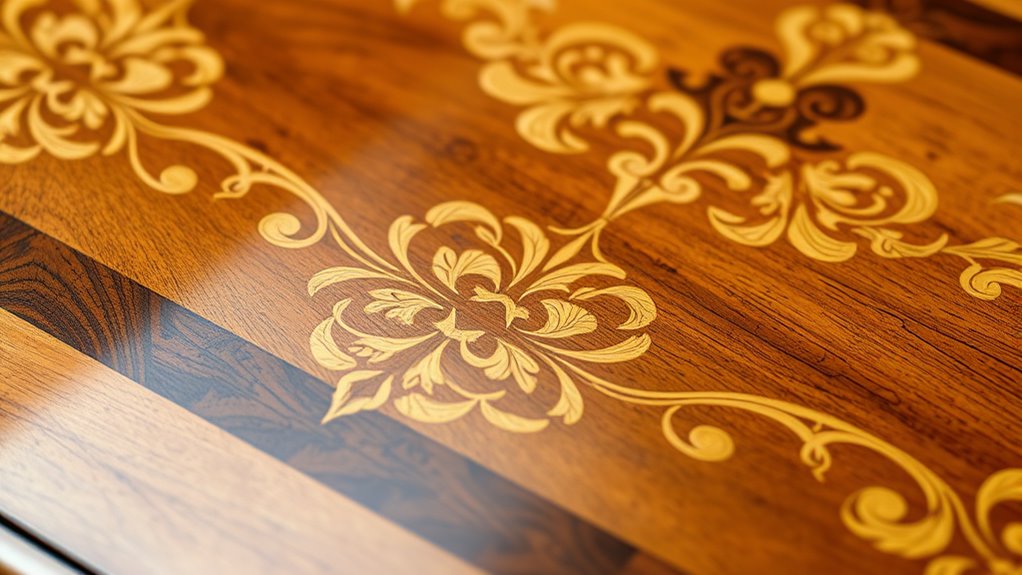

Inlay and marquetry are elegant techniques that add decorative veneer work to furniture and art pieces. With inlay, you carve cavities into a surface to embed contrasting materials like ivory or mother-of-pearl, creating a smooth, embedded design. Marquetry involves assembling tiny veneer pieces to form detailed patterns or images, resembling mosaic artwork. Both methods highlight craftsmanship and beauty, each offering unique visual effects. Exploring these techniques further will reveal their rich history and intricate craftsmanship.
Key Takeaways
- Inlay involves carving cavities in a surface to embed contrasting materials, creating smooth, embedded decorative designs.
- Marquetry assembles small veneer pieces to form detailed patterns or images, resembling a mosaic effect.
- Both techniques require specialized tools and skills, emphasizing craftsmanship in adding decorative veneer work.
- Inlay provides depth and richness through embedded contrasting materials, while marquetry offers intricate visual imagery.
- These methods have historical origins in luxury arts across cultures and continue to be refined in modern craftsmanship.

Inlay and marquetry are intricate decorative techniques that transform plain surfaces into stunning works of art. Both methods involve adding contrasting materials to a base, but they differ markedly in their approaches. Understanding these differences can help you appreciate the craftsmanship behind each technique. When you compare techniques, you’ll notice that inlay involves carving out a cavity in the base material and filling it with a different material, such as ivory, mother-of-pearl, or colored woods. Marquetry, on the other hand, consists of assembling small pieces of veneer to create detailed patterns or images, which are then glued onto the surface. This distinction in techniques comparison highlights inlay’s emphasis on embedding materials into a single surface versus marquetry’s focus on intricate assembly of multiple veneer pieces.
Inlay carves cavities for filling, while marquetry assembles veneer pieces into detailed patterns.
Exploring the historical origins of these techniques reveals fascinating insights into their development. Inlay dates back thousands of years, with roots in ancient Egypt, China, and the Middle East. Its early use was often reserved for luxury furniture and religious artifacts, where the contrast of materials symbolized wealth and status. By contrast, marquetry’s origins can be traced to the Islamic world around the 10th century, particularly in Persia and Spain. It gained prominence in Europe during the Renaissance, especially in Italy and France, where artisans refined the craft to produce elaborate geometric and floral patterns. The historical origins of both techniques show how they evolved parallelly, influenced by different cultures and artistic traditions, yet both serving as symbols of craftsmanship and opulence.
As you observe these techniques in practice, you’ll see inlay’s precision and depth, creating smooth surfaces with embedded designs, often giving a sense of depth and richness. Marquetry, however, offers a mosaic-like appearance, with each veneer piece carefully cut and fitted to produce intricate, detailed images. The tools used also differ: inlay requires precision carving tools to create cavities, while marquetry depends on fine saws and knives to cut veneer pieces accurately. Both techniques demand patience and skill, but their historical origins and methods define their unique aesthetic qualities. Additionally, modern adaptations continue to innovate within these traditional crafts, blending old techniques with contemporary design.
Ultimately, whether you prefer the elegant depth of inlay or the detailed complexity of marquetry, understanding their techniques comparison and historical origins deepens your appreciation for these centuries-old crafts. Each technique showcases the skill and creativity of artisans who have elevated simple materials into extraordinary decorative art, enriching furniture, musical instruments, and decorative objects with their craftsmanship.
inlay and marquetry woodworking tools
As an affiliate, we earn on qualifying purchases.
As an affiliate, we earn on qualifying purchases.
Frequently Asked Questions
What Types of Wood Are Best for Inlay and Marquetry?
You should choose exotic woods like rosewood, ebony, or cocobolo for inlay and marquetry, as they offer rich colors and fine grain details. These woods take dye infiltration well, which helps in creating vibrant, contrasting designs. Their durability and beauty make them ideal for intricate work. Keep in mind, working with exotic woods requires careful handling due to their density and potential toxicity, but the stunning results are worth it.
How Long Does It Take to Complete an Inlay or Marquetry Project?
Time flies when you’re immersed in detailed inlay or marquetry work, and the duration depends on complexity. You should plan carefully, allocating days or even weeks for intricate designs. By managing your time well and breaking the project into stages, you can avoid surprises. Rely on solid project planning to keep your progress steady. Remember, patience turns craftsmanship into art, so don’t rush—your masterpiece will be worth the wait.
What Tools Are Essential for Inlay and Marquetry Work?
You’ll need sharp tools like a craft knife or a fine saw for precision cutting, ensuring your veneer pieces fit perfectly. A high-quality adhesive is essential for secure bonding without excess mess. You might also want a sanding block for smooth edges and a cutting mat to protect your workspace. These tools help you achieve crisp, detailed inlay and marquetry designs, making your project both beautiful and durable.
Can Inlay and Marquetry Be Done on Curved Surfaces?
Absolutely, you can inlay and marquetry on curved surfaces! With curved surface techniques, you adapt your methods to follow the shape’s flow, making your design truly stand out. Using flexible veneer options allows you to mold and conform your decorative veneer work seamlessly around bends and contours. This approach turns flat veneer into a dynamic, three-dimensional masterpiece, giving your project a stunning, custom look that defies the ordinary.
How Do You Repair Damaged Inlay or Marquetry Pieces?
To repair damaged inlay or marquetry pieces, you should start with proper restoration techniques like carefully removing the broken sections and cleaning the area. Select an appropriate adhesive, such as wood glue or veneer cement, to guarantee a strong bond. Apply the adhesive precisely, press the pieces firmly in place, and wipe away excess glue. Finish by sanding lightly and applying matching finish to blend the repair seamlessly.
decorative veneer inlay kit
As an affiliate, we earn on qualifying purchases.
As an affiliate, we earn on qualifying purchases.
Conclusion
By mastering inlay and marquetry, you turn simple wood into a canvas of art, transforming everyday pieces into treasures. These techniques are like the brushstrokes of a skilled painter, adding depth and personality to your work. So, don’t be afraid to experiment and let your creativity shine through. With patience and practice, you’ll see your projects blossom into stunning masterpieces, a demonstration of your craftsmanship and a reflection of your unique style.
marquetry veneer sheets
As an affiliate, we earn on qualifying purchases.
As an affiliate, we earn on qualifying purchases.
inlay carving tools
As an affiliate, we earn on qualifying purchases.
As an affiliate, we earn on qualifying purchases.