
To succeed at craft fairs, plan your logistics carefully by organizing transportation, packing essentials, and preparing your display. Promote your presence on social media with sneak peeks and eye-catching signage to attract visitors. Set up an inviting booth with vibrant displays and clear pricing. Engage genuinely with customers, share your story, and gather feedback. After the event, follow up with buyers and reflect on what worked best. Keep these tips in mind, and you’ll find yourself more prepared for future shows.

Get business pricing on tools and workshop supplies
- Business-only prices and quantity discounts
- Tax-exempt purchasing
- Multiple users, one account, clear invoices
Key Takeaways
- Plan transportation and pack essential tools to ensure smooth setup and quick restocking at the craft fair.
- Promote your presence on social media with sneak peeks, location details, and engaging hashtags to attract visitors.
- Arrange your booth attractively using height, color, clear signage, and unique elements to draw attention and encourage browsing.
- Interact genuinely with visitors, share product stories, and gather feedback to enhance future sales and customer relationships.
- Post event follow-ups via social media or email to build relationships, encourage repeat business, and analyze what strategies worked.

Traveling to craft fairs can be an exciting way to discover unique handmade goods and connect with artisans, but it also requires careful planning. One of your first priorities is to set up logistics that guarantee your booth runs smoothly from the moment you arrive. This means thinking about how you’ll transport your goods, what display materials you’ll need, and how you’ll organize your inventory. Consider packing a toolkit with essentials like scissors, tape, and a cash box, so you’re prepared for any situation. Planning your setup in advance helps you avoid last-minute stress and assures you can focus on engaging with customers once you’re at the fair.
Another critical aspect is developing effective marketing strategies that draw attention to your booth. Before the event, promote your presence on social media, sharing sneak peeks of your products and location details. Use targeted hashtags and tag the event to increase visibility. Creating eye-catching signage and promotional materials also draws people in. Offering special discounts or limited-edition items can encourage visitors to buy on the spot. Remember, your goal is to stand out among other vendors, so think about what makes your work unique and highlight that prominently.
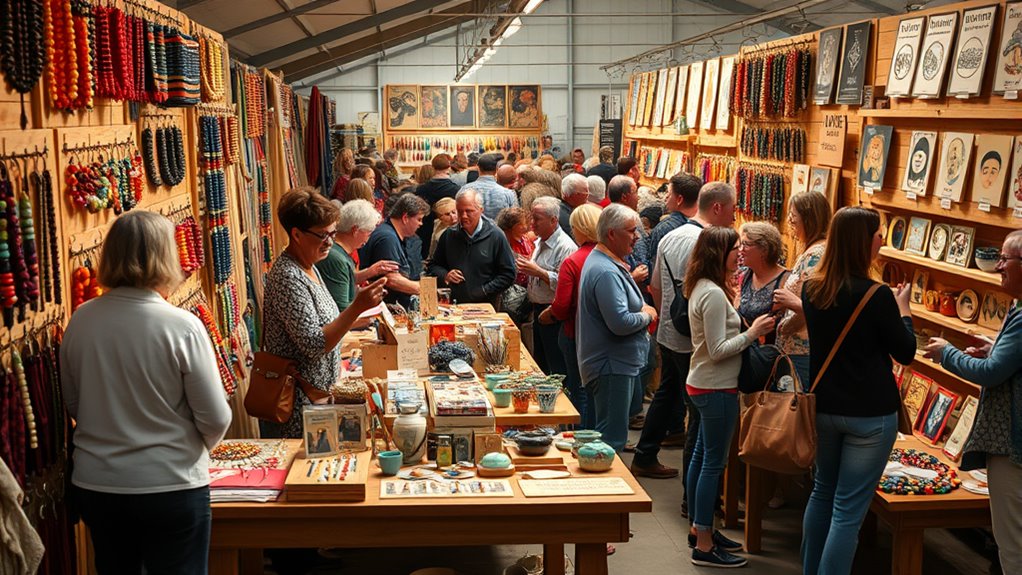
When you arrive at the craft fair, take time to set up your space thoughtfully. Arrange your items in a way that’s inviting and easy to browse, and consider using height and color to create visual interest. Make sure your price tags are clear, and display your business card or social media handles so visitors can follow up later. The way you present your work can greatly influence sales, so put effort into creating an attractive, professional-looking booth. Incorporating antiques into your display can add character and a distinctive touch that sets your booth apart.
Throughout the event, engage with visitors genuinely. Share the story behind your creations and listen to their feedback. This personal connection can turn a casual browser into a loyal customer. Also, keep your booth tidy and well-stocked, so it remains inviting throughout the day. If you’ve prepared marketing strategies beforehand, you can leverage social media during the event by posting live updates and behind-the-scenes photos, encouraging more visitors to stop by.
Finally, after the craft fair ends, review what worked well and what could be improved. Follow up with new customers via social media or email to build relationships and increase your chances of repeat sales. Traveling to craft fairs is a fantastic opportunity to grow your audience and sell your work, but it’s your careful planning of logistics and marketing that truly maximizes your success. With the right prep, you’ll not only enjoy the experience but also make meaningful connections and boost your craft business.
portable display shelves for craft fairs
As an affiliate, we earn on qualifying purchases.
As an affiliate, we earn on qualifying purchases.
Frequently Asked Questions
How Early Should I Arrive Before the Craft Fair Starts?
You should arrive at least an hour before the craft fair starts. This gives you enough time for parking tips, finding a good spot, and setting up your booth without rushing. Arriving early guarantees you can organize your space, handle unexpected issues, and get comfortable before visitors arrive. Plus, it helps you connect with other vendors and get a feel for the event, setting you up for a successful day.
What Should I Do if It Rains on the Event Day?
If it rains on the event day, you should be prepared with rain protection like waterproof covers or tarps for your booth and merchandise. Consider bringing weather contingency plans such as portable umbrellas and waterproof signage. Keep an eye on the weather forecast beforehand, and be flexible—if heavy rain persists, you might need to adjust your setup or plan to pack up early to protect your work.
How Do I Handle Difficult or Unruly Customers?
When dealing with difficult or unruly customers, stay calm and maintain customer patience. Listen attentively to their concerns, and use conflict resolution skills to de-escalate the situation. Show empathy and professionalism, offering solutions when appropriate. Remember, your calm demeanor helps set the tone, making it easier to handle the situation smoothly. Ultimately, your patience and conflict resolution abilities protect your reputation and foster a positive experience for all customers.
Is It Better to Bring Backup Inventory or Just My Main Products?
Bringing backup inventory is essential for effective inventory management and to accommodate display variations. You should always carry extra pieces of your main products, ensuring you don’t run out and can adapt your display if needed. This way, you stay prepared for high demand or customer requests, and your booth looks complete and professional. Being flexible with your inventory helps maximize sales and keeps your display fresh and engaging throughout the event.
What Are Some Ways to Attract More Visitors to My Booth?
To attract more visitors, focus on creating eye-catching displays that stand out. Use bright colors, interesting arrangements, and attractive signage. While bribing visitors with small freebies or discounts can draw attention, make certain your booth looks inviting and professional. Engage actively with passersby, smile, and share your story. These strategies motivate visitors to stop, explore, and buy, increasing your chances of a successful craft fair experience.
Conclusion
Now that you’re equipped with these travel tips, you’re ready to make the most of your craft fair experience. Remember, preparation is key to success, but don’t forget to enjoy the journey and connect with fellow artisans. After all, isn’t the real reward in sharing your passion and creativity with others? Keep your enthusiasm alive, stay flexible, and watch your craft business thrive—because each fair is a new opportunity waiting to be seized.
Fall yard work Picks
leaf blowers
As an affiliate, we earn on qualifying purchases.