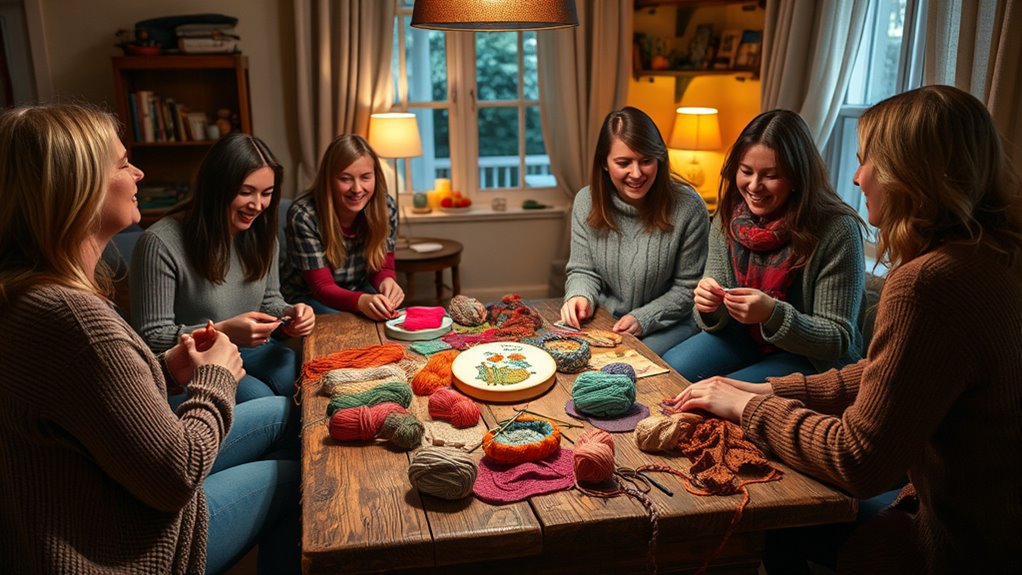

When hosting a craft night, focus on teaching simple, manageable techniques like gluing, cutting, and blending colors to keep everyone engaged. Set up clear stations, demonstrate each step patiently, and encourage questions to foster confidence. Use a variety of supplies to inspire experimentation and help your friends learn from one another. Keep the atmosphere relaxed and supportive—if you stick with these tips, you’ll discover even more ways to make your craft night a creative success.
Key Takeaways
- Demonstrate simple techniques step-by-step, such as cutting with scissors or blending paint colors, ensuring clarity and patience.
- Use visual aids and clear instructions to help friends easily grasp basic craft methods.
- Encourage questions and offer gentle guidance to promote confidence and understanding.
- Incorporate hands-on practice with supervision to reinforce learning of fundamental techniques.
- Foster a relaxed atmosphere with background music and light snacks to enhance engagement and enjoyment.
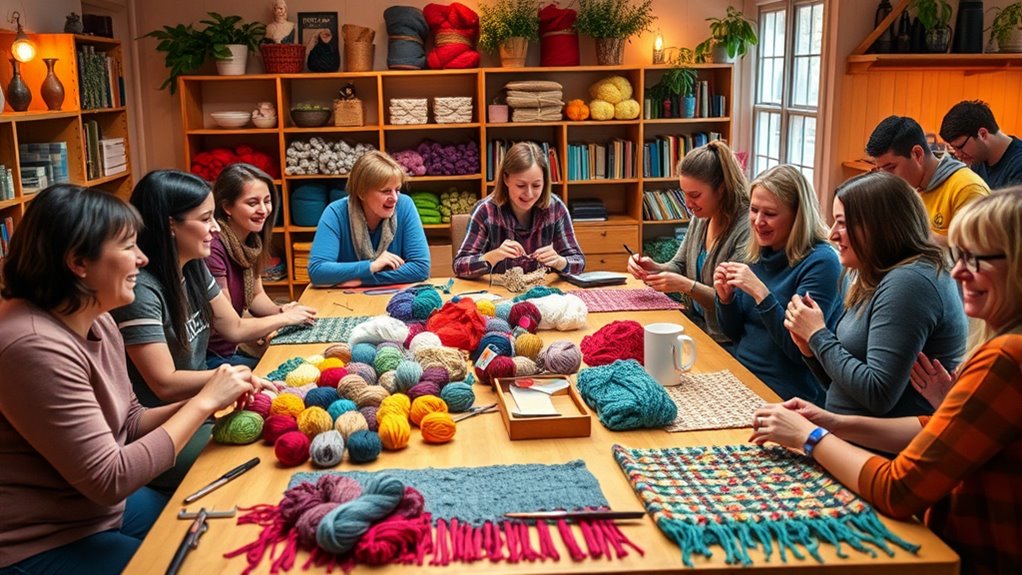
Hosting Craft Nights
Have you ever considered hosting a craft night to bring friends together and set free your creativity? It’s a fantastic way to bond, unwind, and learn new skills all at once. To make it successful, start by gathering essential craft supplies that suit your chosen projects. Think scissors, glue, paint, markers, and an array of colorful papers or fabrics. Stocking up on versatile craft supplies guarantees everyone has what they need, whether they’re into paper crafts, painting, or simple DIY projects. The goal is to create an inviting environment where your friends feel comfortable experimenting and expressing themselves.
When planning your craft night, choose DIY projects that are fun, manageable, and inclusive. No need to pick overly complicated crafts—simple projects like decorating picture frames, creating custom bookmarks, or making friendship bracelets work perfectly. These types of DIY projects are beginner-friendly, quick to complete, and allow everyone to showcase their personality. Plus, they give your guests a sense of accomplishment and something to take home, which keeps the evening memorable.
Teaching basic techniques is the heart of a successful craft night. As the host, demonstrate simple steps clearly and patiently. For example, show how to properly hold scissors or how to blend colors with paint. Encourage your friends to ask questions and share their ideas. Remember, the goal isn’t perfection but enjoyment and learning. Keep the atmosphere relaxed by playing background music and offering light snacks. This makes it easier for everyone to focus and feel at ease trying new techniques.
Providing a variety of craft supplies makes your night more engaging. You might include glitter, stickers, washi tape, or stamps to add flair to projects. When your friends see a range of options, they’re more likely to experiment and put their own spin on their creations. If some guests are more experienced, they can help beginners, fostering a collaborative spirit. This way, everyone learns from each other, and the evening becomes more interactive.
Additionally, being aware of the divorce statistics can remind you of the importance of creating a supportive and friendly environment, ensuring that everyone feels comfortable and included. Lastly, don’t forget to keep things organized. Set up stations with different supplies and clear instructions. Have wipes or paper towels handy for messes, and offer plenty of space for each person to work comfortably. By preparing in advance, you ensure that the focus stays on having fun and learning new techniques. Hosting craft nights centered around teaching basic skills creates a welcoming environment that sparks creativity and friendship. So gather your supplies, pick your projects, and get ready for an evening filled with artistic exploration and shared joy.

RAINFLOW 1700+ Arts & Crafts Supplies – Craft Kit,Supplies & Materials Set for School,Classroom,Family, Party, DIY, Art Creation, Holiday Decoration
- Over 1700 Pieces: Extensive craft supplies for all projects
- Includes Variety of Materials: Pipe cleaners, pom poms, stickers, feathers, sequins, buttons, googly eyes, and more
- Encourages Creativity: Supports fine motor skills and problem solving
As an affiliate, we earn on qualifying purchases.
As an affiliate, we earn on qualifying purchases.
Frequently Asked Questions
How Do I Choose the Right Craft Project for Beginners?
To choose the right craft project for beginners, consider its complexity and how it supports skill progression. Pick simple projects that aren’t overwhelming, like painting or basic knitting, to build confidence. As your friends improve, introduce slightly more complex techniques. Focus on projects that are manageable yet satisfying, helping everyone learn and grow without frustration. This approach keeps your craft night fun and encourages continuous skill development.
What Supplies Should I Prepare Beforehand?
You should prepare essential craft supplies like scissors, glue, paint, and brushes, keeping them organized for easy access. Focus on beginner-friendly projects by selecting simple materials such as paper, beads, or fabric scraps. Use craft supply organization to keep everything tidy and ready to go. This way, your friends can follow along without frustration, enjoying the process and learning basic techniques comfortably.
How Can I Encourage Shy or Hesitant Participants?
Remember, Rome wasn’t built in a day. To encourage shy participants, create a welcoming atmosphere where everyone feels safe to try. Use positive reinforcement to build confidence and avoid pressure. Offer one-on-one assistance if needed and spotlight small successes to motivate participation. By fostering a relaxed environment, you help hesitant friends feel more comfortable, making the craft night enjoyable for all and encouraging everyone to join in.
What Safety Precautions Are Necessary During Craft Nights?
You should guarantee safety by providing safety gear like goggles, gloves, and aprons for all participants. Keep emergency plans visible and accessible, including contact numbers and first-aid instructions. Make sure the workspace is well-lit, organized, and free of hazards. Regularly remind everyone to handle tools carefully and to report accidents immediately. By prioritizing safety gear and emergency preparedness, you create a secure environment where everyone can enjoy crafting confidently.
How Do I Handle Different Skill Levels Among Friends?
You handle different skill levels by embracing skill differentiation and encouraging group engagement. Don’t pretend everyone’s an expert; instead, tailor activities so beginners feel accomplished while veterans stay challenged. Ironically, the more you adapt, the smoother the night runs. You’ll find that mixing skill levels sparks camaraderie, boosts confidence, and turns craft night into a fun, inclusive experience everyone looks forward to.
Conclusion
As you host these craft nights, remember you’re planting seeds of creativity and connection. Each stitch, brushstroke, or glue dab becomes a symbol of friendship growing stronger, a tapestry woven with shared laughter and patience. Your open door and welcoming spirit turn simple supplies into memories that shimmer brighter than any finished project. Keep nurturing this space, and watch how your community blossoms—proof that the true beauty of crafting lies in the bonds you nurture along the way.