
Water-based finishes are eco-friendly and emit fewer VOCs, making them safer for indoor air quality, but they can be more tricky to apply smoothly and might need more coats for lasting durability. Solvent-based options offer superior protection and richer appearance but come with stronger fumes and health risks. Your choice depends on your priorities—if you keep air quality in mind and are willing to learn proper techniques, you’ll find options that suit your project. Want to discover more?
Key Takeaways
- Water-based finishes are eco-friendly, emitting fewer VOCs, but may require multiple coats and careful application.
- Solvent-based finishes provide superior durability and deep appearance, but release toxic fumes and have higher environmental impact.
- Water-based options dry faster, reducing project time, yet can be challenging to apply smoothly without brush marks.
- Solvent-based products offer long-lasting protection and enhanced wood penetration, though they pose health and safety risks during application.
- Advancements in water-based technology are improving their durability and ease of use, making them a viable eco-friendly alternative.
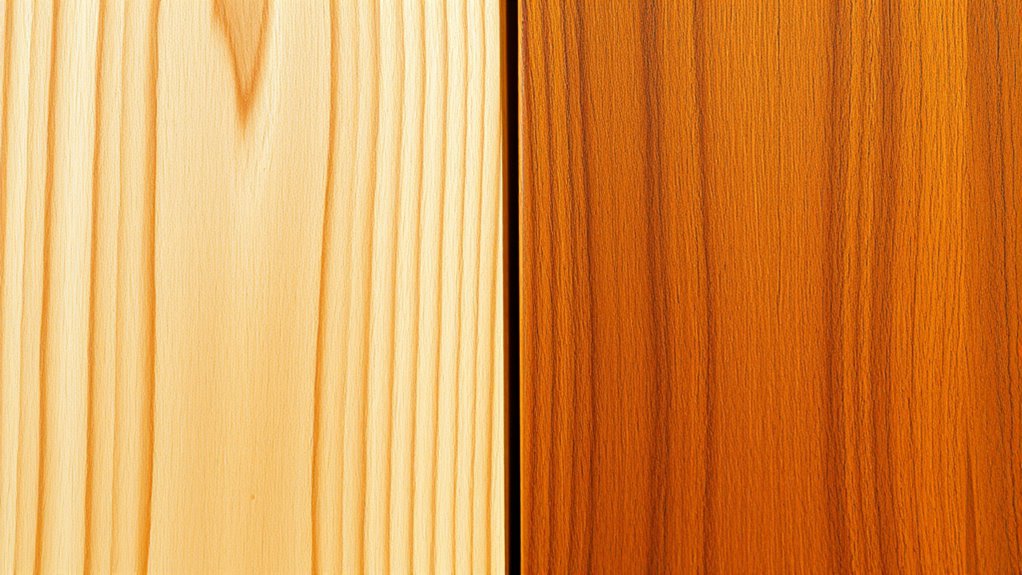
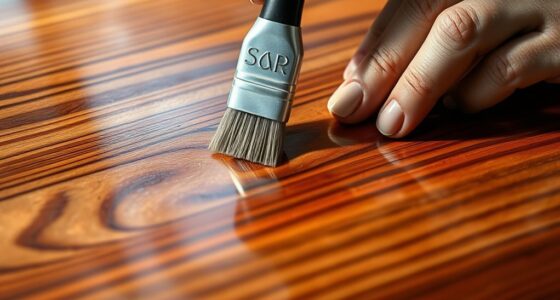
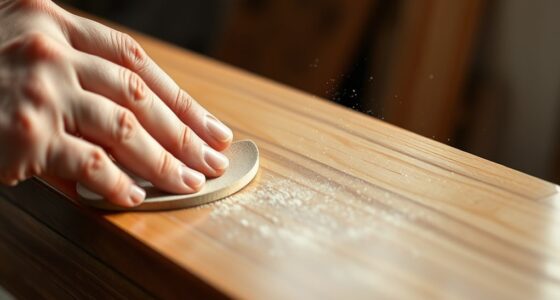
Choosing the right finish for your project can considerably impact its appearance, durability, and environmental impact. When deciding between water-based and solvent-based finishes, it’s essential to contemplate how each option aligns with your goals, particularly regarding environmental impact and application challenges. Water-based finishes are generally more eco-friendly because they emit fewer volatile organic compounds (VOCs), which reduces air pollution and health risks. This makes them a popular choice for indoor projects or spaces where air quality is a concern. However, despite their environmental benefits, water-based finishes can pose application challenges. They often require more careful surface preparation and may need multiple coats to achieve the desired durability and finish quality. They tend to dry more quickly, which can make it tricky to work with them on larger surfaces or in humid conditions, potentially leading to brush marks or uneven coverage if not applied carefully. Proper tools and techniques can help mitigate these challenges and improve the final result.
On the other hand, solvent-based finishes, such as oil or lacquer finishes, are known for their durability and deep, rich look. They tend to penetrate wood more effectively, enhancing the natural grain and providing a long-lasting protective layer. Yet, these finishes come with a higher environmental impact due to their higher VOC content. Applying solvent-based finishes can release toxic fumes that require good ventilation and protective gear. They also tend to smell stronger and take longer to dry, which can complicate the application process, especially if you’re working in enclosed or poorly ventilated areas. The fumes can also be more hazardous to your health during application, requiring extra safety precautions.
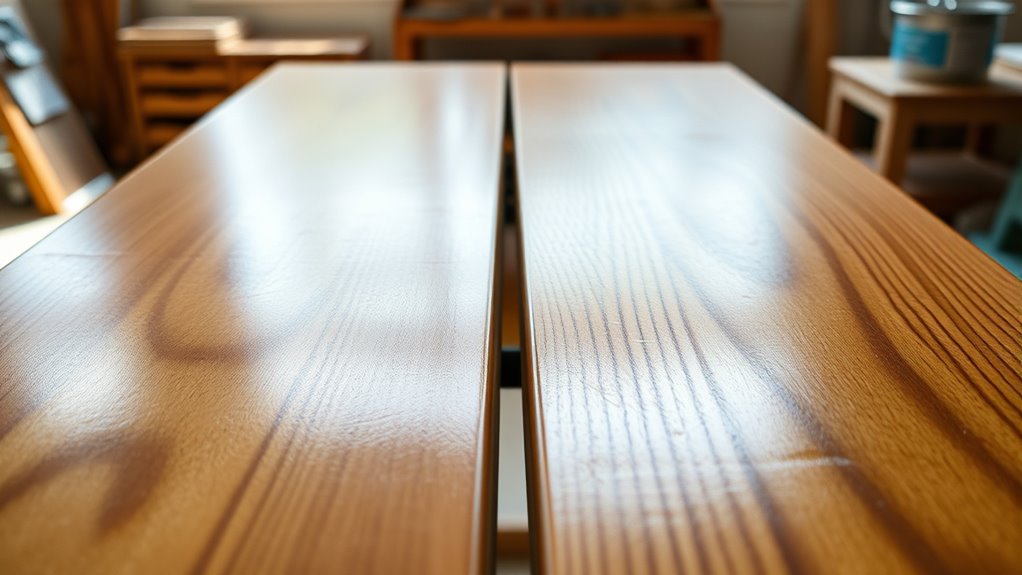
While solvent-based finishes often deliver superior durability and aesthetic qualities, their environmental and health impacts are significant considerations. Water-based options, while sometimes more challenging to apply perfectly and potentially requiring more coats, are a better choice if you’re prioritizing eco-friendliness and indoor air quality. The application challenges associated with water-based finishes can be mitigated with proper surface preparation, patience, and the right techniques, making them a viable option for many projects. Additionally, advancements in finishing technology have improved the ease of application and the quality of water-based finishes over time. Conversely, if you need a finish that offers maximum durability in high-wear environments and are willing to accept the health and environmental trade-offs, solvent-based finishes might be the way to go. Ultimately, understanding these trade-offs helps you make an informed decision that aligns with your project’s needs and your environmental values.

Varathane Water-Based Ultimate Satin Polyurethane
- Indoor wood surface protection: Protects furniture, windows, cabinets, trim
- Water-based formula: Dries quickly, easy soap and water cleanup
- Fast drying time: Touch dry in 30 minutes, recoat in 2 hours
As an affiliate, we earn on qualifying purchases.
As an affiliate, we earn on qualifying purchases.
Frequently Asked Questions
How Do Water-Based and Solvent-Based Finishes Compare in Environmental Impact?
You’ll find that water-based finishes are more eco-friendly, producing fewer VOC emissions and offering a better eco friendliness comparison. They release less harmful fumes, making them safer for indoor air quality and the environment. Solvent-based finishes tend to emit higher VOC levels, contributing more to air pollution. If minimizing environmental impact matters to you, water-based options are the smarter choice, especially considering their lower VOC emissions and overall sustainability.
Which Finish Type Is More Suitable for Outdoor Applications?
If you want your outdoor project to survive Mother Nature’s mood swings, solvent-based finishes are your best bet. They boast superior weather resistance, standing tall against rain, sun, and snow. Plus, they typically require less maintenance over time. Water-based options may be eco-friendly but often need frequent touch-ups. So, for durability and less fuss, go solvent-based—your outdoor furniture will thank you.
Can Water-Based Finishes Be Used on All Wood Types?
Water-based finishes work well on most wood types, but your choice depends on wood compatibility and finish adhesion. For softwoods like pine or cedar, they generally adhere well and provide a clear, non-yellowing coat. However, for oily or dense woods like teak or mahogany, you might need a primer or a different finish to guarantee proper adhesion. Always test a small area first to confirm compatibility and adhesion before the full application.
How Do Drying Times Differ Between the Two Finishes?
You’ll notice that water-based finishes dry faster, often within a couple of hours, making application timing more flexible. Solvent-based finishes take longer, usually 4 to 8 hours or even overnight, which can extend project timelines. The quicker drying speed of water-based options allows for multiple coats in a day, while solvent-based finishes require more patience between coats. Consider your schedule when choosing the best finish for your project.
Are There Health Risks Associated With Solvent-Based Finishes?
Sure, applying solvent-based finishes might turn your workshop into a toxic fumes factory, risking your health. You could end up inhaling harmful chemicals and experiencing skin irritation, all in the name of a shiny finish. It’s like a spa day—if spas were filled with dangerous fumes and skin irritants. So, yes, there are health risks, and it’s wise to wear proper protection or consider safer alternatives.
Conclusion
Ultimately, choosing between water-based and solvent-based finishes depends on your priorities. Water finishes win with their wonderful, washable, and eco-friendly appeal, making your work easier and environmentally better. Solvent finishes, however, offer durability and depth, perfect for demanding projects. Weigh your wants wisely—whether you prioritize practicality or perfection. Whichever you choose, wield your wisdom well, and watch your woodworking wonders truly shine with stunning, sustainable splendor.