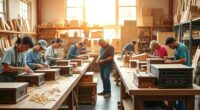
Your journey from tree to table starts with a unified board guiding responsible forest management. They set shared goals, promote sustainable harvesting, and encourage collaboration with experts and communities. The board actively learns and adapts strategies based on new research, guaranteeing healthy forests and ecological balance. Their collective purpose drives impactful actions that benefit both environment and economy. If you keep exploring, you’ll discover how this journey ensures a sustainable future for generations to come.
Key Takeaways
- The board transforms from individual members into a unified force focused on sustainable forest management.
- They establish shared values and strategies to promote responsible timber harvesting and ecosystem conservation.
- Active collaboration with experts, communities, and environmental groups guides informed decision-making.
- Continuous learning allows the board to adapt strategies based on new research and environmental changes.
- Their collective purpose drives impactful actions that balance ecological health with economic benefits.

Have you ever wondered how a board transforms from a group of individuals into a cohesive driving force for change? It’s a process that involves shared goals, clear communication, and a strong sense of purpose. When it comes to issues like forest conservation and timber harvesting, this transformation becomes even more essential. Your board members need to align their values and strategies to guarantee sustainable practices that protect the environment while supporting economic needs. They start by setting a vision that emphasizes responsible forest management, balancing the demand for timber with the imperative to conserve ecosystems. This vision guides every decision, from policy development to community engagement.
As the board works to foster forest conservation, they recognize that sustainable timber harvesting is indispensable. Instead of viewing logging as solely extractive, they see it as a resource that must be managed carefully to guarantee future generations can benefit from healthy forests. To do this, they implement strict guidelines and best practices, emphasizing selective harvesting and reforestation efforts. These practices help maintain biodiversity, prevent erosion, and promote the overall health of the forest. The board’s role is to oversee this process, guaranteeing that harvesting methods do not compromise ecological integrity.
Active communication is key. The board members engage with forestry experts, environmental organizations, and local communities to gather diverse perspectives. They hold regular meetings to discuss progress and challenges, making sure everyone stays on the same page. This collaborative approach creates a unified front, transforming individual opinions into collective action. They also educate stakeholders about the importance of forest conservation, emphasizing how sustainable timber harvesting benefits the economy and the environment alike. Additionally, integrating predictive analytics can help anticipate future environmental impacts, enabling more proactive decision-making.
The board’s journey involves constant learning and adaptation. As new research emerges or environmental conditions change, they revise their strategies accordingly. This flexibility is indispensable to maintaining credibility and effectiveness. Through strategic planning, they develop programs that support reforestation, monitor forest health, and promote responsible harvesting practices. They hold themselves accountable by setting measurable goals and tracking progress, guaranteeing that their efforts lead to tangible results.
Ultimately, the transformation of a board into a cohesive force for change hinges on shared dedication to conservation principles. When everyone is committed to responsible forest management and sustainable timber harvesting, they can turn their collective efforts into impactful actions. It’s this unity and clarity of purpose that empowers a board to drive meaningful change—protecting forests today and securing their future for generations to come.

Common Goals for Sustainable Forest Management
- Condition: Used Book in Good Condition
As an affiliate, we earn on qualifying purchases.
As an affiliate, we earn on qualifying purchases.
Frequently Asked Questions
How Do Sustainability Practices Impact the Board’s Sourcing Decisions?
Sustainability practices influence your sourcing decisions by prioritizing supply chain transparency and ethical labor. You actively seek suppliers that demonstrate responsible practices, ensuring products are ethically sourced and transparently traced. This approach helps you reduce risks, build trust with consumers, and meet environmental and social standards. By committing to sustainability, you make sourcing choices that support long-term sustainability goals and align with your company’s social responsibility commitments.
What Role Do Local Communities Play in the Board’s Journey?
Think of local communities as the roots anchoring your journey. You actively engage with these communities, valuing their insights and traditions. By supporting local craftsmanship, you guarantee your sourcing decisions reflect cultural authenticity and sustainability. Their input helps shape responsible choices, creating a bond that enriches both your board’s journey and the community’s well-being. This collaboration fosters trust, transparency, and a shared commitment to a more sustainable, connected future.
How Are Environmental Risks Assessed During the Process?
You assess environmental risks by prioritizing supply chain transparency and conducting carbon footprint analysis at each step. You identify potential ecological impacts by examining sourcing practices, transportation, and processing methods. This helps you spot areas where emissions or environmental harm could occur. You then implement strategies to mitigate these risks, ensuring sustainable practices throughout the journey from tree to table. This proactive approach safeguards the environment and promotes responsible sourcing.
What Certifications Ensure Responsible Forestry and Manufacturing?
Eco labels and forest certifications guarantee responsible forestry and manufacturing by setting strict standards. When you see certifications like FSC or PEFC, you’re assured that the wood comes from sustainably managed forests. These labels serve as proof that environmental, social, and economic criteria are met, balancing resource use with conservation. They help you make eco-conscious choices, ensuring your products support responsible practices from forest to table.
How Does Consumer Feedback Influence the Board’s Development?
Your feedback shapes the board’s development by influencing its aesthetics and manufacturing techniques. When you share your thoughts about design, durability, or functionality, the board’s appearance and build quality improve. This direct input helps manufacturers refine their processes, ensuring the final product aligns with your preferences. By actively participating, you contribute to creating a board that’s both visually appealing and crafted with techniques that enhance longevity and performance.
Conclusion
Your journey from tree to table is like watching a story unfold—each step a chapter in nature’s grand narrative. You’ve seen how raw wood transforms into nourishing food, a proof of craftsmanship and care. As you savor the final dish, remember it’s more than just a meal; it’s a symphony of effort and nature’s generosity. With every bite, you’re part of a timeless cycle that connects you to the earth and everything it gives.