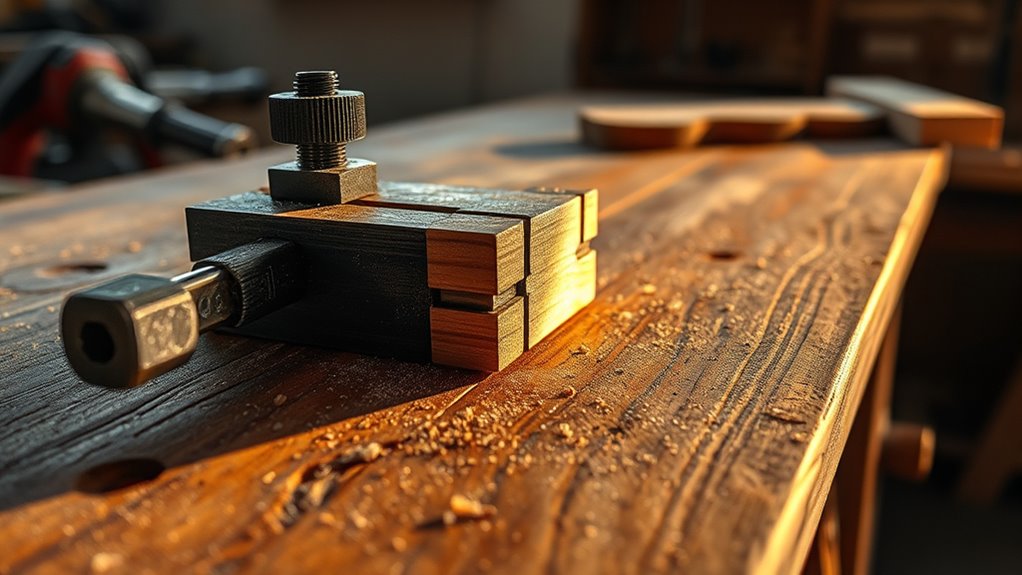

Building a shop-made jig brings surprising benefits that go beyond simple accuracy. You gain greater control over dimensions and fit, making your projects look and function better. It also boosts safety by ensuring stable setups and reducing slip-ups. Plus, creating your own jig saves money and lets you customize tools to your specific needs. The best part? These advantages often lead to a more enjoyable, efficient woodworking experience. Keep exploring to discover how these benefits can elevate your craftsmanship even more.
Key Takeaways
- Custom jigs improve woodworking accuracy and ensure consistent, professional results.
- Building your own jig allows tailored solutions for specific projects and tasks.
- A shop-made jig can enhance safety by guiding cuts and minimizing errors.
- Creating jigs boosts confidence and skill, leading to more efficient and enjoyable woodworking.
- Well-designed jigs offer long-term value by making future projects faster and more precise.

Creating a shop-made jig is one of the most effective ways to improve your woodworking accuracy and repeatability. When you decide to build your own jig, you gain control over the dimensions, fit, and function of your tools, making your projects more precise and efficient. The first step is choosing the right jig materials. You want materials that are durable, stable, and easy to work with. Common options include plywood, hardwoods like maple or oak, and sometimes MDF for less critical parts. Plywood is cost-effective and stable, but hardwoods offer superior strength and longevity. MDF can work for jigs that don’t endure heavy use, but keep in mind it can be prone to swelling if exposed to moisture. Selecting the appropriate jig materials depends on your project’s demands and budget. Once you’ve gathered your materials, safety precautions become paramount. Always wear safety glasses when cutting or drilling, and secure your workpiece firmly to prevent slipping. Use push sticks or clamps to keep your fingers away from blades and bits. When working with power tools, double-check that blades, bits, and guards are correctly installed and functioning properly. Dust collection is also essential—wear a mask and ensure your workspace is well-ventilated to avoid inhaling fine particles. It’s easy to overlook safety, but even small mistakes can lead to injuries or compromised jig quality. Take your time to plan your cuts and setups carefully, and don’t rush through the process. Properly securing your jig materials during cutting and assembly helps ensure accuracy and reduces the risk of accidents. You should also familiarize yourself with the operation of your tools and follow manufacturer safety guidelines. When building your jig, keep the work area organized and free of clutter to minimize hazards. Remember that the reliability of your jig depends on your attention to detail during construction, so measure twice and cut once. Additionally, considering the material properties of your jig components can influence the overall performance and safety of your projects. Proper safety precautions not only protect you but also ensure that your jig turns out exactly as planned, providing consistent results for your woodworking projects. By choosing suitable jig materials and observing safety protocols, you set a solid foundation for creating a dependable, high-quality jig. This investment pays off in the long run, making your woodworking more precise, less frustrating, and ultimately more enjoyable. Building your own jig might seem like a small task, but the benefits—accuracy, safety, and customization—are well worth the effort. It’s a simple yet powerful way to elevate your craftsmanship and produce professional-looking results every time.

POWERTEC 71127 128 Piece Set T Track Knob Kit w/ 5 Star Knob, 1/4-20 Threaded bolts and Washers, T Track Accessories for Woodworking Jigs and Fixtures
Function: A comprehensive selection of hardware perfect for your creating your own t-track woodworking jigs and fixtures
As an affiliate, we earn on qualifying purchases.
As an affiliate, we earn on qualifying purchases.
Frequently Asked Questions
How Do I Choose the Right Materials for My Jig?
To choose the right materials for your jig, focus on material selection based on your project’s needs. Opt for durable materials like hardwood or metal for longevity and precision, especially if you’ll use the jig repeatedly. Consider durability considerations such as resistance to wear and environmental factors. Balance strength with ease of working—select materials that are easy to cut and shape, ensuring your jig performs well and lasts over time.
What Safety Precautions Should I Follow When Building a Jig?
When building a jig, you should always wear safety gear like goggles and gloves to safeguard yourself. Keep your workspace organized, with tools and materials neatly arranged, to prevent accidents. Make sure your workspace is well-lit and free of clutter. Use proper procedures when cutting or drilling, and stay focused. Taking these precautions helps avoid injuries and ensures your jig is built safely and accurately.
Can Jigs Be Used for Different Types of Woodworking Projects?
Think of jigs as the Swiss Army knives of woodworking—they’re incredibly versatile. You can use them for everything from precise dovetails to intricate curves, making them highly adaptable to different project requirements. Their versatility means you can customize jigs to fit various tools and tasks, ensuring project compatibility. So, yes, jigs can be your trusty sidekick across a wide range of woodworking projects, turning complexity into simplicity with each cut and carve.
How Do I Maintain and Store My Homemade Jig?
To keep your homemade jig in top shape, regularly check for wear and tighten any loose parts as part of your jig maintenance. Store it in a dry, organized space to prevent rust and damage. Use storage tips like labeling jigs clearly and stacking or hanging them to save space and ensure easy access. Proper maintenance and storage help extend your jig’s lifespan and keep your woodworking projects precise.
What Are Common Mistakes to Avoid When Building a Jig?
Don’t bite off more than you can chew when building a jig. To avoid common mistakes, double-check jig alignment before assembly, ensuring everything is square and true. Use durable materials to prevent warping or damage over time, and don’t rush the process—precision is key. Remember, a well-built jig with proper alignment and sturdy material will serve you well and save headaches down the road.

Beaiguna Self Centering Dowel Jig Kit, Drill Guide Jig Block for Straight Holes with 6PCS Drill Bushings, Premium Self Centering Doweling Jig Kit for Woodworking, Adjustable Width Biscuit Joiner Tool
FLEXIBLE ADJUSTMENT: Our wood dowel jig can clamp a wide range of wood blocks from 0.4 to 2…
As an affiliate, we earn on qualifying purchases.
As an affiliate, we earn on qualifying purchases.
Conclusion
So, don’t hesitate to build your own jig. Sure, it might seem like extra work at first, but once you see how it streamlines your projects and boosts accuracy, you’ll wonder why you didn’t do it sooner. Imagine confidently lining up cuts or drilling precisely every time—no more frustration or wasted material. With a simple shop-made jig, you’ll save time, money, and frustration, making every project more enjoyable and professional-looking.

Chfine 10 Pack Toggle Clamps, Hold Down Clamp 220Lbs Holding Capacity Quick Release Horizontal Clamps with Rubber Pressure Tip for Woodworking Jigs and Fixtures, Welding, Drill Press, Crosscut Sled
【Fixed Clamps】 quick-release horizontal holdfast clamp with rubber tip, cam lever hold down clamp for CNC fixtures/workholding clamps….
As an affiliate, we earn on qualifying purchases.
As an affiliate, we earn on qualifying purchases.
woodworking safety gear
As an affiliate, we earn on qualifying purchases.
As an affiliate, we earn on qualifying purchases.