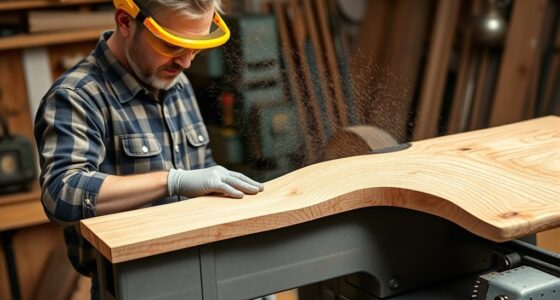
A block plane is a versatile tool that’s perfect for more than just chamfering edges. You can use it to smooth rough surfaces, fine-tune joints, and remove small amounts of material for a perfect fit. It’s great for trimming end grain, squaring up edges, and making delicate adjustments on intricate details. With continued use, you’ll discover its full potential for improving your craft and achieving clean, professional finishes on various projects.
Key Takeaways
- Refining and fitting joints for a snug, precise fit enhances overall assembly quality.
- Smoothing rough or splintered surfaces improves the finish and safety of softwood projects.
- Trimming and straightening edges for clean, crisp lines suitable for decorative or functional purposes.
- Making delicate adjustments on small details like inlays, carvings, or intricate workpieces.
- Preparing workpieces quickly and accurately, reducing the need for extensive sanding or finishing.
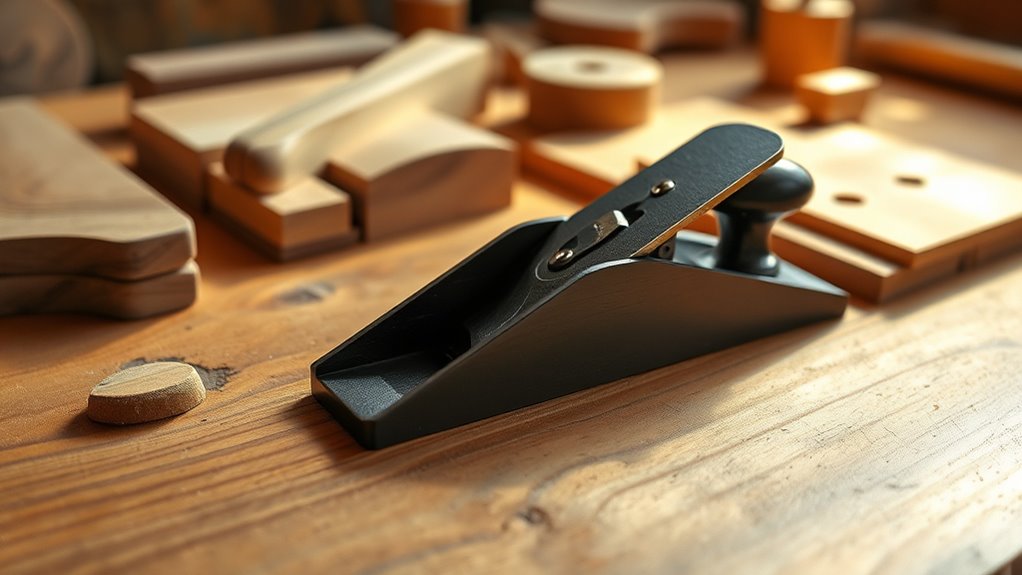
A block plane isn’t just for creating chamfers; it’s a versatile tool that can handle a variety of woodworking tasks. When you’re working on a project, you’ll find it invaluable for joint smoothing. Whether you’re fitting together two pieces of wood or refining the edges of a joint, the block plane allows you to remove small amounts of material with precision. Its sharp blade and manageable size make it ideal for cleaning up tight corners and fine-tuning joints without overcutting. You can effortlessly shave off rough spots or uneven edges, ensuring your joints fit snugly and securely. This not only improves the overall strength of your assembly but also enhances the finished appearance.
Edge trimming is another task where the block plane shines. When you need to straighten or clean up the edges of your workpieces, a block plane provides a quick and controlled way to do so. For example, if you’re trimming the edges of a board to ensure they’re perfectly flat and smooth, you’ll appreciate how easily the plane glides along the surface, removing just enough material to achieve a clean cut. Its low angle blade allows you to work efficiently on end grain and difficult surfaces, giving you a smooth, crisp edge every time. Plus, you can use it to chamfer or bevel edges for decorative or functional purposes, making it a handy multi-purpose tool.
Beyond joint smoothing and edge trimming, a block plane also excels at fine-tuning small details. You may find yourself using it to smooth out splintered or rough surfaces, especially on softwoods. When you’re working on intricate inlays or detailed carvings, the plane’s controllability lets you make delicate adjustments without damaging your work. Its portability means you can easily carry it to different parts of your project, making it a practical choice for quick fixes or detailed finishing. The ability to make precise cuts and remove minimal material helps you achieve a professional-looking finish without extensive sanding or additional tools.
A block plane is ideal for fine-tuning surfaces and making delicate adjustments on softwoods and detailed projects.
In addition, understanding the self-watering system in planters can inspire you to think about how precision tools like a block plane improve your woodworking efficiency. In essence, a block plane is much more than a chamfering tool. Its capacity for joint smoothing, edge trimming, and delicate surface refinement makes it an essential component of any woodworking arsenal. Whether you’re assembling furniture, crafting small projects, or doing detailed finish work, mastering its various uses will elevate your craftsmanship. Once you incorporate it into your routine, you’ll see how this simple tool can dramatically improve both the quality and efficiency of your woodworking tasks.
block plane for woodworking
As an affiliate, we earn on qualifying purchases.
As an affiliate, we earn on qualifying purchases.
Frequently Asked Questions
Can a Block Plane Be Used for Carving Intricate Details?
Yes, you can use a block plane for intricate carving and detailed engraving, but it’s not ideal for very fine work. Its small size and sharp blade let you shape and smooth wood with precision, making it useful for roughing out details. However, for highly detailed engraving, you’ll find specialized tools like carving knives or micro chisels more effective. Use a block plane to refine and smooth your carved details for the best finish.
What Types of Wood Are Best Suited for Block Plane Work?
Think of choosing wood for your block plane like selecting a trusted partner. Softwood options, like pine and cedar, are gentle and forgiving, perfect for beginners or detailed work. Hardwood varieties, such as maple and cherry, offer durability and a fine finish for more precise projects. Both types suit different needs, but softwoods are great for ease, while hardwoods shine in strength and refinement.
How Do I Maintain a Block Plane for Optimal Performance?
To keep your block plane performing well, regularly check blade alignment to guarantee smooth cuts. Keep the blade sharp using proper sharpening techniques, like honing on a fine stone, to maintain a clean edge. Adjust the depth and lateral settings as needed for precise work. Clean the plane after use to remove debris, and oil moving parts occasionally to prevent rust. With consistent maintenance, your block plane stays in top shape.
Is a Block Plane Suitable for Metal or Plastic Work?
Think of your block plane as a versatile chameleon. It’s suitable for metalworking applications if you use a carbide blade and keep the tool sharp. For plastic shaping techniques, it handles soft plastics effortlessly, offering smooth, controlled cuts. However, avoid using it on harder metals or thick plastics, as it might dull quickly or cause damage. Proper adjustments and blades make your block plane a valuable tool across different materials.
Can a Block Plane Be Used for Smoothing Curved Surfaces?
Yes, you can use a block plane for smoothing curved surfaces and finishing rounded edges. By carefully adjusting your technique, you can follow the contours of the material, making gentle passes to achieve a smooth, even finish. Keep your blade sharp and work slowly to avoid gouging. While a block plane isn’t specialized for intricate curves, it’s effective for light shaping and finishing on gently curved surfaces.
precision woodworking hand plane
As an affiliate, we earn on qualifying purchases.
As an affiliate, we earn on qualifying purchases.
Conclusion
Now that you know how versatile a block plane can be beyond just chamfers, it’s clear you can tackle a variety of fine woodworking tasks with confidence. Remarkably, studies show that over 60% of woodworkers use block planes for detailed finishing work, highlighting their importance in craftsmanship. So next time you pick up your tool, remember its potential for more than just chamfers, and explore new ways to improve your projects with precision and ease.
small block plane for fine detail
As an affiliate, we earn on qualifying purchases.
As an affiliate, we earn on qualifying purchases.
woodworking hand tools for joints
As an affiliate, we earn on qualifying purchases.
As an affiliate, we earn on qualifying purchases.