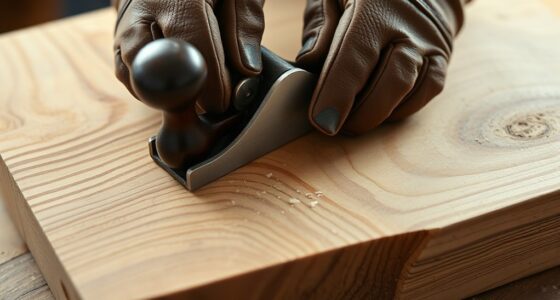
To taper legs with hand planes and sleds, start by carefully examining the grain to work with it, not against it. Keep your blades sharp for smooth cuts, and use a sled to stabilize your workpiece for consistent shaping. Carefully align your cuts with the grain to prevent tear-out and achieve a clean taper. Paying attention to technique now will help you master a polished finish—continue exploring for more tips to perfect your process.

Get business pricing on tools and workshop supplies
- Business-only prices and quantity discounts
- Tax-exempt purchasing
- Multiple users, one account, clear invoices
Key Takeaways
- Examine the wood grain pattern to align planing strokes with the grain for smooth, tear-out free tapers.
- Use a stable sled to guide the hand plane consistently along the leg, ensuring uniform tapering.
- Keep hand planes sharp and well-maintained to achieve clean cuts and reduce effort during tapering.
- Check grain orientation frequently during planing to prevent splintering and maintain control.
- Combine proper grain work, tool maintenance, and sled stability for professional, aesthetically pleasing tapered legs.
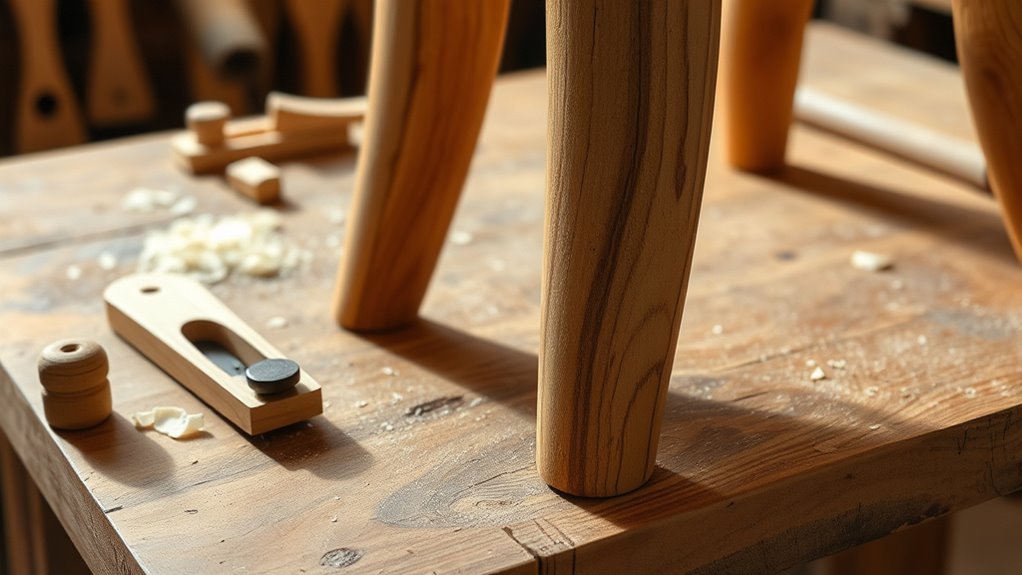
Tapering legs for furniture pieces can markedly enhance their appearance, and using hand planes along with sleds makes this process more precise and efficient. When you’re working on tapering legs, understanding grain orientation is vital. Grain direction influences how the wood responds during planing; working with the grain prevents tear-out and results in a smoother finish. Before you begin, examine your wood carefully, noting the grain pattern. If you plan to use hand planes effectively, aligning your cuts with the grain ensures cleaner results and reduces the effort needed. Mistakes here can cause splintering or uneven tapers, which can be hard to fix later. To get the best results, always check the grain direction before every pass, especially when working on different sections of the leg.
Understanding grain direction ensures cleaner, smoother tapered legs and reduces planing effort.
Equally important is maintaining your tools properly. Sharp, well-tuned hand planes produce cleaner cuts and make the tapering process much easier. Dull blades require more force and tend to tear the wood fibers, which ruins the smoothness you’re aiming for. Regular tool maintenance, like honing blades and cleaning out dust and pitch buildup, keeps your hand planes in prime condition. When your tools are sharp and properly aligned, you can work more confidently, making precise adjustments to your taper without worrying about damaging the wood. Proper maintenance also extends the lifespan of your tools, saving you money and time in the long run.
Using sleds in conjunction with hand planes adds to your accuracy. A sled acts as a stable platform that keeps the leg steady and guides your hand plane along a consistent path. This setup helps you maintain uniformity in the taper, ensuring each leg looks symmetrical and professional. When setting up your sled, make sure it’s secure and adjusted to the correct height, matching your desired taper angle. As you work, pay attention to the grain orientation—planing with the grain and maintaining the right tool condition will produce a cleaner, more refined taper. The combination of proper grain awareness, diligent tool maintenance, and the stability provided by the sled allows you to craft tapered legs that elevate your furniture’s aesthetic.
In the end, mastering these details transforms a simple woodworking task into a precise craft. By paying close attention to grain orientation, keeping your tools sharp and clean, and utilizing sleds for consistency, you’ll produce tapered legs that look not only beautiful but also professionally finished. This careful approach gives your furniture a polished, high-quality appearance that showcases your skill and attention to detail. Additionally, understanding the regional availability of tools and resources can further streamline your project, ensuring you have everything you need close at hand.
As an affiliate, we earn on qualifying purchases.
Frequently Asked Questions
What Types of Wood Are Best for Tapered Legs?
You should choose hardwoods like maple, cherry, or oak for tapered legs because their grain orientation provides strength and stability. These woods have a moderate to high wood density, ensuring durability without excessive weight. Look for straight, tight grain to prevent warping during tapering. Avoid softwoods, which tend to be less stable. Picking the right wood will make your tapered legs both beautiful and long-lasting.
How Do I Prevent Chipping When Planing Thin Sections?
Chipping can ruin your project faster than you think, but you can prevent it easily. Always check the grain direction first—plan with the grain, never against it. Keep your tools razor-sharp; dull blades are a chip’s best friend. Take light, controlled passes instead of forcing the plane through. These simple tricks will save your thin sections from splitting and ensure smooth, professional results every time.
Can I Taper Legs Without Specialized Sleds or Jigs?
Yes, you can taper legs without specialized sleds or jigs by using precision tools and alternative methods. Clamp your work securely and mark the taper carefully. Use a hand plane or a saw to gradually shape the leg, checking your progress frequently. For more accuracy, consider creating simple guides or using a template to guarantee consistent angles. Patience and careful measurement are key to achieving a smooth, even taper.
How Do I Achieve Consistent Taper Angles?
Achieving consistent taper angles is like threading a needle—precision is key. You should set up your jig carefully, ensuring angle consistency with precise measurements. Use a square or angle gauge to double-check your setup before starting. Keep your hand planes steady and always follow the same cutting angle. Regularly recheck your jig setup during work to maintain that perfect taper, turning your project into a smooth, symmetrical masterpiece.
What Safety Precautions Are Recommended During Planing?
You should always wear safety gear like goggles and a dust mask to protect your eyes and lungs. Keep your work area clean and well-lit to prevent accidents, and confirm your tools are sharp and in good condition. Stay focused and use proper technique to avoid slips or cuts. Never rush, and always unplug or turn off the planer when adjusting or pausing work. Safety comes first to ensure a smooth, injury-free project.
Conclusion
Tapering legs with hand planes and sleds is a straightforward, effective method that doesn’t require fancy tools or experience. Some might think it’s too time-consuming or difficult, but with patience and practice, you’ll see great results. Plus, it’s satisfying to craft with your own hands. Give it a try—you’ll enjoy the process and end up with beautifully tapered legs that truly elevate your project. Just take your time and stay patient!
Columbus Day / Indigenous Peoples' Day Picks
long weekend sales
As an affiliate, we earn on qualifying purchases.