To guarantee safe and effective lathe use, set up your tool rest to the correct height and close to your workpiece for essential control. Always consult the speed chart for guidance, choosing RPM based on your wood’s size and type. Starting at a lower speed and gradually increasing helps prevent accidents and produces better results. Proper setup and speed selection are vital, and exploring these tips further will help you master safe turning techniques.
Key Takeaways
- Always consult the lathe’s speed chart to select the appropriate RPM based on workpiece size and wood type.
- Set the tool rest close to the workpiece at a proper height to maximize control and safety during turning.
- Ensure all lathe components are secure, including the tool rest, headstock, and tailstock, before operation.
- Start at lower speeds and gradually increase to a safe, stable RPM to prevent vibrations or kickbacks.
- Regularly inspect and maintain the lathe, including cleaning, lubricating, and verifying belt alignment for optimal safety.
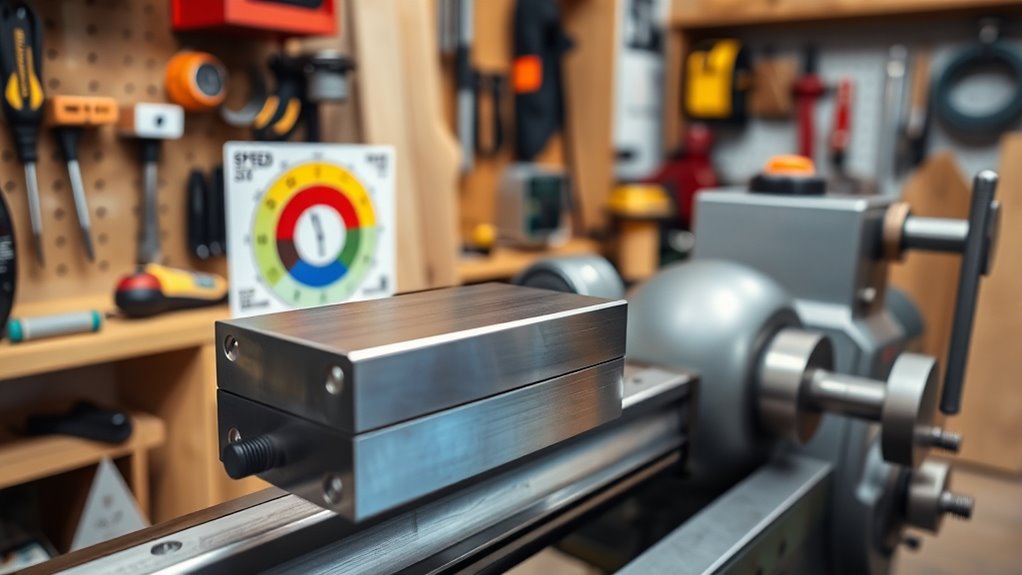
Setting up a lathe properly is essential for safe and efficient operation. Whether you’re a beginner or an experienced woodturner, understanding how to prepare your lathe ensures that your projects turn out well and that you stay safe during the process. One of the key aspects of setup involves selecting the right speed and maintaining your equipment. Proper speed charts for your lathe help you choose the correct RPM based on the size and type of wood you’re working with, which is vital for control and safety. Using too high a speed can cause vibrations or even kickbacks, while too low a speed might lead to inefficient cutting and uneven results.
When you’re setting up for woodturning techniques, you want to start by inspecting your lathe. Check that all components are secure, especially the headstock, tailstock, and tool rest. Regular lathe maintenance is crucial here; it keeps everything in optimal condition, reduces the risk of mechanical failure, and prolongs the life of your tools. Clean any dust or debris from the machine, lubricate moving parts as recommended, and verify that your belts are tight and aligned. This attention to detail ensures smooth operation and consistent performance. Remember, a well-maintained lathe not only improves safety but also enhances your ability to execute precise woodturning techniques.
Next, adjust your tool rest to the appropriate height and position it close to your workpiece without interfering with the spinning wood. The tool rest should be sturdy and locked in place to prevent movement during turning. When setting the speed, consult the lathe’s speed chart, which typically lists recommended RPMs based on the diameter of your workpiece. Smaller pieces can be turned at higher speeds, while larger or denser woods require slower speeds for better control and safety. Always start at a lower speed and gradually increase if everything feels stable. This approach minimizes the chances of accidents and helps you develop confidence with different woodturning techniques.

BMWOOD 1" Dia Post 4pcs Set Horizontal Support Tool Rest for Woodturning Lathe.
Ultra smooth, round hardened steel rod top will let you effortlessly glide your chisel or other lathe tool…
As an affiliate, we earn on qualifying purchases.
As an affiliate, we earn on qualifying purchases.
Frequently Asked Questions
How Often Should I Inspect Lathe Components for Safety?
You should inspect your lathe components for safety before each use, ensuring all parts are secure and functioning properly. Regular lathe maintenance includes checking for wear, damage, or looseness. Follow a safety checklist during these inspections, focusing on the spindle, belts, and tool rest. Frequent inspections help prevent accidents, keeping your workspace safe. If you notice any issues, address them immediately before operating the lathe again.
What Are Common Signs of Lathe Malfunction?
You’ll notice lathe malfunction signs like excessive vibration and irregular noise during operation. Vibration that feels unusual or shakes the machine indicates imbalance or worn components. Irregular noises, such as grinding or squealing, often point to misaligned parts or dull tools. If you observe these signs, stop immediately, inspect the machine, and address the issue to prevent further damage or safety hazards. Regular maintenance helps catch these problems early.
Can I Use the Same Speed Chart for Different Lathe Models?
Matching speed charts across different lathe models isn’t recommended. You could cause calamity by assuming compatibility where there isn’t any. Always check your lathe model’s manufacturer guidelines before switching speeds. Different models demand different speeds, so using the right chart guarantees safety and success. Don’t gamble with general guides—go for specific, dedicated charts designed for your particular lathe to prevent problems and promote precision.
What Personal Protective Equipment Is Essential During Lathe Operation?
During lathe operation, you must wear essential personal protective equipment like eye protection and hearing protection. Eye protection, such as safety glasses or goggles, shields your eyes from flying debris and dust, while hearing protection reduces noise exposure that can harm your hearing over time. Always prioritize these safety measures to prevent injuries and make certain of a safe working environment when operating the lathe.
How Do I Properly Secure Irregularly Shaped Workpieces?
To properly secure irregularly shaped workpieces, you should use effective clamping techniques combined with custom jigs. Start by designing or selecting a jig tailored to your workpiece’s shape, guaranteeing it holds firmly without slipping. Use clamps to tighten the jig securely to the lathe, maintaining stability and safety during operation. This method prevents movement, reduces vibration, and ensures precise, safe turning of complex or irregular shapes.

Speeds & Feeds Blueprint Workbook
As an affiliate, we earn on qualifying purchases.
As an affiliate, we earn on qualifying purchases.
Conclusion
Remember, proper lathe setup and safety are vital—over 60% of injuries occur from improper tool use or setup. Always double-check your speed charts and make sure your tool rests are secure before starting. Staying attentive not only protects you but also improves your work quality. By following these simple precautions, you’ll enjoy a safer, more efficient woodworking experience. Keep safety top of mind, and your projects will turn out better and safer every time.

BMWOOD MC-FS8 Woodturning Steady Rest for 10inch and 12inch Swing Size Lathe for Spindle Woodturning.
This steady rest is compatible with 10 and 12 inch Swing lathe. For different sizes lathe, use different…
As an affiliate, we earn on qualifying purchases.
As an affiliate, we earn on qualifying purchases.

Indexable Lathe Turning Tool 21Pcs Kit 3/8'' 10mm Shank 7Pcs Metal Lathe Tools Holder Set with 14Pcs Turning Inserts for Turning Grooving Threading Boring Carbide Inserts Carbide Turning Tool
Patent Pending: Our innovative tool and package design are currently under patent application. Unauthorized copying or imitation will…
As an affiliate, we earn on qualifying purchases.
As an affiliate, we earn on qualifying purchases.