
If you want easy application and quick drying, latex paints are your best choice for wood, especially if you’re doing a DIY project. They’re flexible, resist cracking, and clean up with soap and water, making them ideal for most interior and exterior wooden surfaces. Alkyd paints offer a tougher, more durable finish and are better for high-traffic areas, but they take longer to dry and need solvent cleanup. Keep exploring to discover more about which option suits your project best.
Key Takeaways
- Latex paint offers quick drying and easy cleanup, ideal for DIY projects and frequent touch-ups on wood surfaces.
- Alkyd paint provides a durable, hard finish with stain resistance, suitable for high-traffic or long-lasting wood applications.
- Latex’s flexibility prevents cracking as wood expands or contracts, making it better for weather-exposed or shifting surfaces.
- Alkyd paint’s slower drying time and solvent cleanup make it better for detailed, durable finishes requiring prolonged work time.
- Choose latex for speed and ease, and alkyd for toughness and longevity in wood projects depending on specific needs.

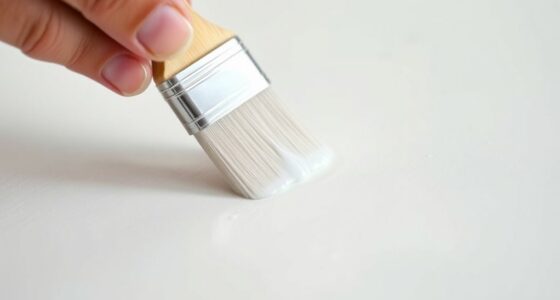
Are you wondering which type of paint is best for your project—latex or alkyd? Choosing the right paint depends on several factors, including how you’ll apply it and how quickly you need it to dry. When it comes to brush application, latex paints are generally easier to work with. They flow smoothly off the brush, allowing for even coats and fewer brush marks, which makes them a popular choice for DIYers. Alkyd paints, on the other hand, tend to have a thicker consistency that can be a bit more challenging to apply smoothly with a brush. They often require more careful technique to avoid streaks or drips, especially on detailed woodwork. However, once you get the hang of it, alkyd paints can produce a beautifully smooth, durable finish.
Drying times are another critical factor when deciding between latex and alkyd paints. Latex paints typically dry faster, usually within 1 to 2 hours for a touch-dry surface, and can often be recoated within 4 hours. This quick turnaround makes latex ideal for projects where time is limited or multiple coats are needed. Alkyd paints tend to dry more slowly, often taking 6 to 8 hours to become touch-dry and requiring longer between coats—sometimes up to 24 hours. The longer drying time can be advantageous if you want more time to smooth out brush strokes or make adjustments, but it also means your project takes longer to complete.
Another consideration is how each type of paint handles on wood surfaces. Latex paints are more flexible, which helps prevent cracking or chipping as the wood expands and contracts with temperature changes. They also clean up easily with soap and water, making cleanup after brush application quick and simple. Alkyd paints, which are oil-based, offer a hard, durable finish that resists stains and wear better over time. They’re perfect for high-traffic wood surfaces or furniture that needs extra protection. However, they require solvent-based cleanup, which can be messier and more time-consuming. Additionally, proper surface preparation is essential to ensure adhesion and longevity, especially for alkyd paints on wood.
Ultimately, your choice depends on your priorities. If you want fast drying times and easy brush application, latex is the way to go. If you prefer a tougher, longer-lasting finish and don’t mind the longer drying process, alkyd might be better suited for your project. Both paints have their strengths, but understanding these differences helps you select the right one for your woodwork.

Rust-Oleum Painter's Touch Latex Brush-On Paint, Semi-Gloss White
- Versatile Surface Compatibility: Suitable for wood, metal, plaster, masonry, ceramic
- Water-Based Acrylic Formula: Low odor, chip-resistant, long-lasting protection
- High Coverage & Fast Drying: Covers 120 sq ft, dries in 30 minutes
As an affiliate, we earn on qualifying purchases.
As an affiliate, we earn on qualifying purchases.
Frequently Asked Questions
Which Paint Type Is More Eco-Friendly for Indoor Use?
You should choose latex paint for indoor use if you’re looking for a more eco-friendly option. Latex paints typically have lower VOCs, which benefits eco-friendly benefits and improves indoor air quality. They emit fewer harmful fumes, making them safer for your home environment. Alkyd paints tend to release more VOCs, so for better indoor air quality and eco-conscious choices, latex paints are the smarter, greener option.
How Do Drying Times Compare Between Latex and Alkyd Paints?
Did you know latex paints dry up to 75% faster than alkyd paints? When you work on your project, you’ll notice latex has a quicker drying process, often within 1-2 hours, making it ideal for quick touch-ups. Alkyd paints, on the other hand, take longer to cure, sometimes up to 24 hours or more, so you’ll need patience during the curing duration. This difference impacts your project timeline considerably.
Can Latex or Alkyd Paints Be Used on Outdoor Furniture?
Yes, you can use latex or alkyd paints on outdoor furniture. Latex paints offer good weather resistance and UV protection, making them ideal for prolonged exposure. Alkyd paints also provide excellent durability and adhesion, especially on surfaces prone to wear. Choose latex for flexibility and quick drying, or alkyd for a tougher, more glossy finish. Proper surface prep and applying a weather-resistant top coat guarantee long-lasting outdoor furniture paint jobs.
Which Paint Offers Better Resistance to Peeling Over Time?
You’ll find alkyd paints generally offer better resistance to peeling over time because they provide superior paint adhesion and durability. To maximize longevity, guarantee proper surface preparation by cleaning, sanding, and priming before applying any paint. Latex paints may peel sooner if the surface isn’t well-prepared, but they’re easier to recoat. So, for long-lasting outdoor furniture, alkyd paints are your best choice if you prioritize resistance to peeling.
Are There Health Concerns Associated With Alkyd Paints?
Yes, there are health concerns with alkyd paints. You might be exposed to chemical fumes, which can cause breathing issues or headaches if you don’t work in a well-ventilated area. Skin irritation is also common, so it’s smart to wear gloves and protective clothing. Always follow safety instructions, use masks if needed, and guarantee proper ventilation to minimize health risks while working with alkyd paints.
Conclusion
When choosing between latex and alkyd paints for wood, consider their strengths. Latex paints dry faster and emit fewer fumes, making your project quicker and safer. Alkyd paints, with their durability and smooth finish, are perfect for high-traffic areas. Did you know that alkyd paints can last up to 15 years longer than latex? Keep this in mind to make a smart choice, ensuring your wood surfaces stay beautiful and protected for years to come.