Designing an efficient sharpening station on any budget involves optimizing safety, layout, and workflow. Start by securing the essential tools like sharpening stones or grinding wheels at proper angles, ensuring blades are well-aligned for precise results. Keep safety gear within reach and organize your workspace free of hazards. Incorporating simple barriers or signage can also create a calm environment. If you keep these tips in mind, you’ll find ways to enhance your setup—more helpful details follow just ahead.
Key Takeaways
- Allocate a dedicated, clearly marked safety zone with signage or barriers to prevent accidents and promote focus.
- Prioritize essential tools and equipment, organizing them for easy access to maximize efficiency without overspending.
- Use adjustable or multi-purpose mounts for sharpening stones and grinding wheels to accommodate varying budgets and needs.
- Incorporate safety gear and calming elements like essential oils within reach to ensure a secure and relaxed workspace.
- Regularly check and maintain equipment alignment to prevent costly repairs and ensure consistent sharpening quality across budgets.
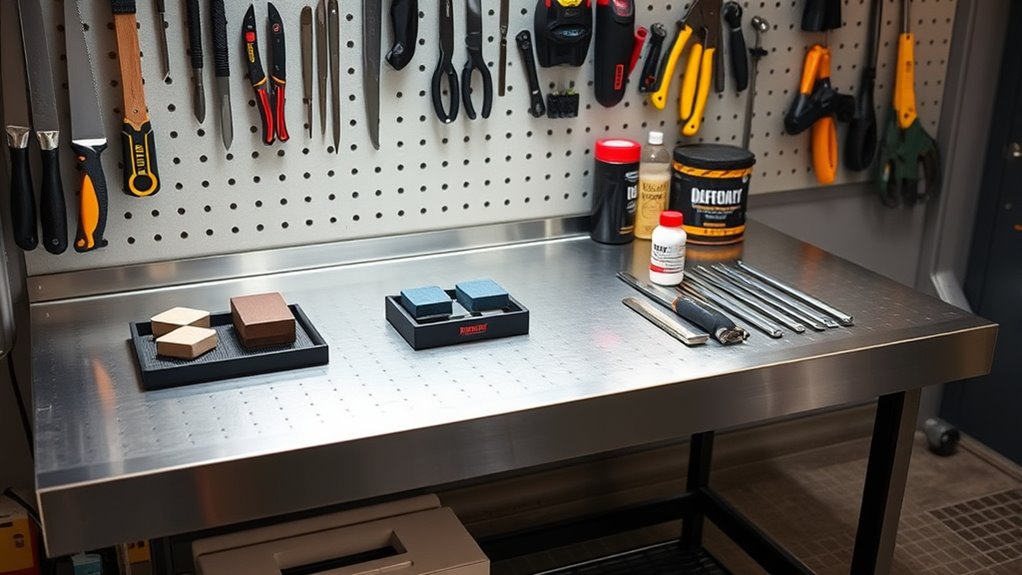
A well-designed sharpening station layout is essential for ensuring safety, efficiency, and ease of use. When setting up your station, paying close attention to blade alignment is crucial. Proper blade alignment ensures that your tools are sharpened accurately, reducing the risk of uneven edges or damage to your blades. An aligned blade not only improves cutting performance but also minimizes undue stress on your sharpening equipment. To achieve this, you should designate a specific area for blade positioning, making sure your sharpening stones or grinding wheels are at the correct angles and securely mounted. This way, you can work confidently, knowing each blade is aligned properly before sharpening begins. Incorporating essential oils for safety like lavender or eucalyptus in your workspace can help promote a calm environment and reduce stress during detailed tasks.
Safety equipment plays a vital role in creating an effective sharpening station. You need to incorporate safety gear like gloves, eye protection, and earplugs to prevent injuries. Position these items within easy reach so you’re encouraged to use them consistently. Safety glasses protect your eyes from sparks, metal shards, or debris, while gloves shield your hands from accidental contact with abrasive surfaces or hot equipment. Ear protection helps to reduce noise exposure, especially when working with grinding wheels or power tools. Establishing a dedicated safety zone with clear signage or barriers can remind you and others to prioritize safety at all times. By integrating safety equipment into your station’s layout, you foster a safer environment that minimizes accidents and promotes more confident, focused sharpening sessions.
Frequently Asked Questions
What Are the Best Materials for Affordable Sharpening Stations?
When choosing materials for an affordable sharpening station, focus on budget-friendly options that still offer durability. You might consider using laminated plywood or MDF with a sealed surface, as these are cost-effective and provide durable surface options. For added longevity, apply a protective coating. These materials are easy to work with, affordable, and can withstand regular use, making them ideal for creating an efficient sharpening station without breaking the bank.
How Can I Maximize Space in a Small Workshop?
You can maximize space in your small workshop by choosing smart storage solutions like wall-mounted shelves and stackable containers to keep tools organized and off the floor. Incorporate good lighting options such as LED strip lights or task lamps to brighten your workspace and improve efficiency. Use multi-purpose furniture and fold-away workbenches to save space, ensuring every inch is utilized effectively without clutter.
What Safety Features Should I Include in My Layout?
When planning your sharpening station, prioritize safety features like accessible emergency shutoff switches to quickly stop machinery if needed. Always include storage for personal protective equipment such as gloves, goggles, and ear protection to guarantee safety. Clear, unobstructed pathways are essential to prevent accidents. Incorporate proper ventilation to control dust and fumes. These measures help protect you and keep your workspace safe and compliant with safety standards.
How Do I Choose the Right Tools for Different Budgets?
Imagine your sharpening station as a finely tuned engine, where choosing the right tools fuels your success. With a clear budget, you can opt for budget-friendly upgrades that still deliver quality. For a premium tool selection, invest in durable, versatile options that elevate your work. Balance your needs and funds, selecting tools that offer the best performance within your budget, ensuring your station runs smoothly and efficiently.
Are There Portable Sharpening Station Options for Mobile Use?
Looking for portable solutions for your sharpening needs? You can find mobile setups designed for easy transport, perfect for on-the-go use. These portable sharpening stations include compact, lightweight tools that fit into bags or cases, so you can set up quickly wherever you are. They’re ideal for maintaining blades at different locations, giving you flexibility and convenience without sacrificing performance. Explore options that match your specific mobility requirements and budget.
Conclusion
Now that you’ve designed your sharpening station, think of it as a well-tuned orchestra, each tool and space working harmoniously. Whether you’re on a tight budget or have more to spend, a smart layout boosts efficiency and safety. Remember, a good setup isn’t just functional — it’s the backbone of your sharpening routine. With a little planning, you’ll find your station as smooth and reliable as a finely tuned instrument, ready to perform whenever you need it.